Startup cost
$2k–$15k
TRUiC Business Ideas
Decision Snapshot
Idea Score
50
Startup cost
$2k–$15k
Profit margin
6%
Break-even
4 mo–12 mo
Time to launch
12 wk–36 wk
Demand trend
Stable
5-yr failure rate
—
Capital intensity
Medium
Time commitment
Full time
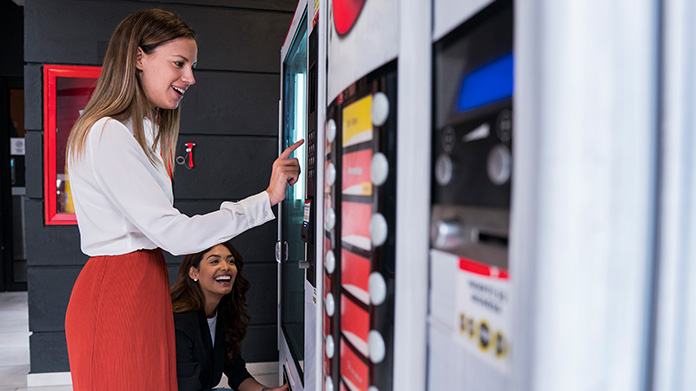
A vending machine business places vending machines in locations where people are likely to want the items these machines sell. According to IBISWorld, the vending machine industry is a $7 billion industry. It’s a large industry that’s not dominated by any one or two companies, which provides a great opportunity for new businesses.
Our guide is in 3 parts:
The startup costs for a vending business are manageable. It’s possible to start a business for a few thousand dollars, and a small business might be started with less than $1,000. Business owners must purchase a vehicle, equipment (vending machines), and supplies (items machines sell).
To save on vehicle expenses, many business owners start out using their own vehicle. As a business grows, a larger vehicle that can hold more supplies may be needed. Such a vehicle can be purchased once the business brings in sufficient revenue.
Vending machines vary in cost from a few hundred dollars to several thousand. VendSoft reports that bulk machines, which sell candy and gumballs, cost between $150 and $450 each. Snack and soda machines run from $1,500 to $8,500.
To keep vending machine costs low, business owners can purchase used or refurbished machines. This is an especially good option for business owners who have learned how to repair machines, for a new machine’s warranty is less important to business owners who can make their own repairs.
With some machines, business owners can enter into contracts with suppliers to get free machines. Sometimes suppliers will agree to furnish and maintain a machine as long as a vending business agrees to purchase supplies from the supplier.
Supplies themselves don’t cost a lot because they’re purchased wholesale. For example, gumballs might cost between 2 and 5 cents each wholesale. Snacks and sodas cost more, but they’re still very affordable.
The ongoing expenses for a vending machine business are similar to the business’ startup expenses. Business owners must pay:
vehicle costs (fuel, maintenance, etc.)
supply costs (to replenish supplies)
equipment costs (to repair machines)
Equipment costs, in particular, shouldn’t be underestimated. Cold, wet weather can cause outdoor machines’ electronics to malfunction, and machines anywhere can be vandalized or stolen. Any broken machines need to be repaired, and any stolen machines need to be replaced.
As mentioned, knowing how to fix machines will keep repair costs low. To reduce the risk of vandalism and theft, business owners should look for safe, high-traffic areas to put their machines.
Vending machines appeal to a wide swath of people. Everyone gets hungry and thirsty (or wants a toy) at some time.
A vending machine business makes money by selling items in the business’ vending machines to customers. Vending machines may sell snacks, soft drinks, hot drinks, sandwiches, hygiene products, candles, toys, and other products.
Most vending machine items sell for anywhere from 25 cents (for candy or gum) to a few dollars (for snacks and drinks). A few vending machines (usually in airports) offer high-end electronics that cost much more, but these are exceptions.
The individual markup on vending machine items is high. For example, the gumball that costs 2 to 5 cents wholesale will sell for 25 (or maybe 50) cents. Snacks and sodas generate $1 or more per sale in profits.
Ultimately how much a business can make is determined by how many products its machines sell. This is why location selection is so important.
A vending machine business can increase its profits by offering service for other company’s vending machines and selling products in larger packages through local retailers.
A typical day at a vending machine business involves four primary activities:
ordering supplies
receiving supplies
filling machines with supplies
servicing broken-down machines
The cash in machines is collected when the machines are filled.
Vending machine business owners should have a basic understanding of business practices and a knowledge of how to repair vending machines.
Business owners who don’t have experience running a business may want to take a business course through a community college or online. Coursera, Open Culture and Harvard Business School offer business courses.
Business owners who don’t have repair knowledge should take a course on repairing vending machines. The National Automatic Merchandising Association (NAMA) offers a training program that leads to certification as a journeyman technician.
In addition to these resources, there are a number of books on starting a vending machine business. Some popular titles include The Truth About Vending and Vending Business. These and similar books provide industry-specific advice that won’t be found in general business classes.
The volume of a vending machine business can be high. It’s not uncommon for a business to operate 25 to 50 machines, and some businesses have many more. Evan Carmichael, for instance, operated a vending machine business that had 200 machines.
As vending machine businesses grow, they usually remain within a single city or region. Businesses that operate high-profit machines might have machines placed throughout a 50-mile radius. Those that operate lower-profit machines often operate within smaller radii. The distance between machines is kept short to minimize drive time and fuel costs when going between machines.
The success of a vending machine business depends largely on where the business’ machines are placed. High traffic spots, such as transportation hubs, large office buildings, schools and grocery stores, generate more sales than areas with less foot traffic. The Secret Formula to Getting High Traffic Vending Locations has suggestions on how to find and secure accounts in high-traffic areas.
Most vending machine businesses start out as one-person operations. Some business owners hire employees as the number of machines they have grow. Gundersen had three employees when his business operated 200 machines.
Gundersen, however, recommends against hiring employees. He explains that the taxes, salaries and training costs reduce the business’ profits too much. Gundersen himself made the most money when he was operating his business alone.
Business Evaluation & Strategy Tool
We'll walk you through the four pillars every business needs: Points of Leverage, Marketing Strategy, Financial Model, and Personal Compatibility. At the end you'll see a personalized report and your action plan below will be tailored to your answers.
Every viable business has natural advantages. Below are common leverage points across four categories. Pick the ones that apply to your Vending Machine business. We've pre-suggested a few based on your idea — review and adjust.
Without a way to connect with customers, even great businesses fail. Pick the channels you plan to use to reach your customers.
Enter your monthly baseline costs — the minimum overhead to keep the business running. Then we'll calculate how many sales per month you need to break even.
A business that doesn't fit your life will fail no matter how good the numbers look. Tell us how this business fits you.
Complete the four pillars and your personalized summary will appear here.
Nine concrete steps to take you from idea to open business, grouped into 30-day phases. Complete the planner above and we'll highlight what's most important for your situation.
An LLC keeps your personal assets separate from business debts and lawsuits — the most common reason small business owners choose this structure. Sole proprietorships and partnerships do not provide this protection.
Apply for your free Employer Identification Number through the IRS, then register for any state or local taxes that apply to your business (sales tax, franchise tax).
A dedicated business account is required to maintain personal asset protection. Mixing personal and business finances ('piercing the corporate veil') can void your LLC's liability shield.
Recording expenses and income from day one makes tax filing easier and lets you see when the business is actually profitable. Use software (QuickBooks, Wave) or a part-time bookkeeper.
State and local requirements vary widely. Brick-and-mortar businesses typically need a Certificate of Occupancy; service businesses may need specific professional licensing; food businesses need health permits.
General Liability Insurance is the most common starting point. If you'll have employees, most states require Workers' Compensation. Specific industries need additional coverage (product liability, professional liability, etc.).
Your brand is how customers perceive and remember you. A clear name, logo, and visual identity make every later marketing decision easier and protect you legally as you grow.
Every legitimate business needs a website. Social media pages are not a substitute — you don't own the platform. Modern website builders mean you can launch a clean site in a weekend without a developer.
A dedicated business number keeps your personal life private, makes the business look legitimate, and lets you route calls professionally. Cloud phone services start under $20/month.
Starting a Vending Machine business typically costs $2,000 to $15,000. It is considered a medium capital-intensity business.
A Vending Machine business runs roughly a 6% net profit margin, and most owners reach break-even in about 4 to 12 months.
You can usually launch a Vending Machine business in about 12 to 36 weeks, and it is commonly run full time.
A Vending Machine business is generally an intermediate-skill business to start, with stable demand. TRUiC rates it 50 out of 100 on our Idea Score.
Most Vending Machine businesses register as an LLC or other legal entity and obtain a general business license. Depending on your state and city you may also need industry-specific permits, sales tax registration, and zoning or health approvals, so check your local requirements before you launch.