Startup cost
$16k–$55k
TRUiC Business Ideas
Decision Snapshot
Idea Score
52
Startup cost
$16k–$55k
Profit margin
6%
Break-even
9 mo–24 mo
Time to launch
2 wk–12 wk
Demand trend
Stable
5-yr failure rate
—
Capital intensity
High
Time commitment
Full time
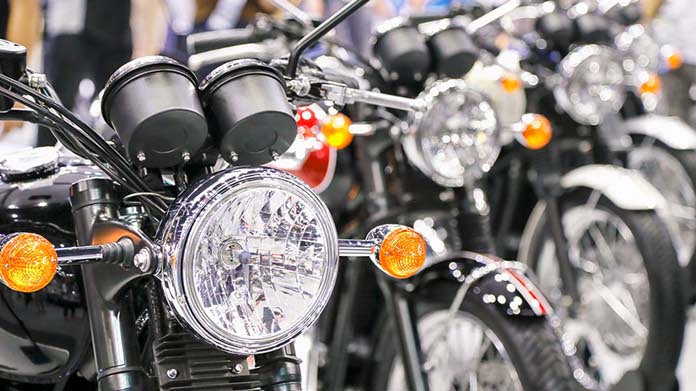
Hitting the open road, with nothing but a motorcycle and a few essentials, has long been a favored American pastime. Those active within the motorcycling community regularly require maintenance and repair on their motorcycles and enjoy spending their hard-earned money on accessories that enhance their riding experience. From selling new and used parts, to bike repair and rebuilds, motorcycle shops offer a variety of goods and services that fit the immediate and long-term needs of bike enthusiasts.
Our guide is in 3 parts:
Veteran motorcycle shop owners recommend a budget of approximately $55,000. This number could vary significantly, depending upon the inventory you choose to carry and services you intend to offer.
Initial investments should include:
Shop location – first and last month’s rent is typically required
Inventory – engine and electrical parts, accessories, parts for repair services, and motorcycles
Display equipment
Legal fees
Marketing supplies and a website
Insurance
If your intention is to manage a larger dealership, your start-up budget should be significantly higher. Prior to writing your business plan, focus on building relationships with wholesale retailers. They set the prices and can offer valuable insight into what your initial and ongoing investment should be.
As a repair and retail establishment, you will be facing a number of ongoing expenses. In addition to the standard rent, utilities, phone, and Internet, you will need to budget for the following:
Payroll
Inventory
Insurance
Marketing
Established shop owners indicate a break even budget of $16,000 per month.
Men falling in the 18 – 25 and 40 – 65 age brackets represent more than 80% of motorcycle sales. While your shop will generate revenue from novice bikers, the bulk of your marketing campaign should be geared towards experienced bikers.
Your shop will generate income based on the goods and services offered. Some businesses operate on a local level only, while others sell goods online, expanding their reach to a much broader audience.
Fees for maintenance, repair, and bike customization are based on labor and parts. Parts and accessory price are generally marked up 100%.
Unlike many businesses, motorcycle shops often see a profit in the first year. While the first three years may generate a profit of $13,000 to $17,000, this is a positive sign and sets the business up for long-term growth and success. Total annual profits vary, depending upon the specifics of what services you offer, what parts and accessories you sell, and how you plan to sell them. Annual profits can range between $35,000 to $64,000 or more.
Many motorcycle shop owners report having significant success operating an online motorcycle parts business. Since bike shops are often a place to congregate, offering food and drinks, along with a comfortable seating area, will ensure your customers are comfortable and happy. This is an effective way to increase your profits without a large increase in overhead costs. Shop owners have also realized success by offering airbrushing services, selling second-hand bikes, and offering motorcycle tutorials to educate those interested in learning more about their hobby.
You and your team’s daily activities will be defined by the services you offer and how you structure your business. In addition to administrative duties, such as paying bills and answering customer questions, the shop must be properly managed and client’s needs should be attended to. Once implemented, marketing strategies will need to be tweaked regularly, to ensure your target audience is reached. Much of your shop’s marketing will require taking advantage of networking opportunities, such as community rides, fundraisers, and meetings.
Those considering embarking on this new business path must possess significant knowledge of motorcycles. You should be educated on parts, repair, various models, and safety, as well as the community and its history. Most motorcycle shop owners have been fully immersed in the culture for many years, having built a positive reputation in the process. Previous experience in repair and sales shops will provide you with the knowledge and experience to care for your customers and maneuver through the obstacles that come with running your own business.
The biking industry has expanded significantly over the last decade, reaching a previously untapped customer base. As the number of motorcyclists increases, so does their need for bikes, both new and used, as well as parts and accessories. Entrepreneurs with strong business acumen should utilize this unique opportunity, expanding their businesses on both a local and national level.
Veteran motorcycle shop owners offer some valuable advice:
While it can prove beneficial to keep some of your inventory on display outside of the shop, consider the elements before doing so. Keep motorcycles outside for short periods of time to avoid a loss in value.
Prior to opening your own shop, work with someone else in the community. Learn as much as you can about every aspect of the business. Even if you are required to work for free, this will prove to be a worthy investment.
Building a successful shop requires stellar service and fair prices. Find out what others in the community are charging and charge 20-30% less.
The retail and service industry requires a really thick skin; particularly in the motorcycle community.
Require all repair jobs to be paid in full before the customer leaves the shop.
Given the family like atmosphere of these establishments, your team will likely build itself organically. As you get to know the skills and knowledge of those within the community, you will be able to assemble a crew that helps solidify your business’ reputation in the industry.
Business Evaluation & Strategy Tool
We'll walk you through the four pillars every business needs: Points of Leverage, Marketing Strategy, Financial Model, and Personal Compatibility. At the end you'll see a personalized report and your action plan below will be tailored to your answers.
Every viable business has natural advantages. Below are common leverage points across four categories. Pick the ones that apply to your Motorcycle Shop business. We've pre-suggested a few based on your idea — review and adjust.
Without a way to connect with customers, even great businesses fail. Pick the channels you plan to use to reach your customers.
Enter your monthly baseline costs — the minimum overhead to keep the business running. Then we'll calculate how many sales per month you need to break even.
A business that doesn't fit your life will fail no matter how good the numbers look. Tell us how this business fits you.
Complete the four pillars and your personalized summary will appear here.
Nine concrete steps to take you from idea to open business, grouped into 30-day phases. Complete the planner above and we'll highlight what's most important for your situation.
An LLC keeps your personal assets separate from business debts and lawsuits — the most common reason small business owners choose this structure. Sole proprietorships and partnerships do not provide this protection.
Apply for your free Employer Identification Number through the IRS, then register for any state or local taxes that apply to your business (sales tax, franchise tax).
A dedicated business account is required to maintain personal asset protection. Mixing personal and business finances ('piercing the corporate veil') can void your LLC's liability shield.
Recording expenses and income from day one makes tax filing easier and lets you see when the business is actually profitable. Use software (QuickBooks, Wave) or a part-time bookkeeper.
State and local requirements vary widely. Brick-and-mortar businesses typically need a Certificate of Occupancy; service businesses may need specific professional licensing; food businesses need health permits.
General Liability Insurance is the most common starting point. If you'll have employees, most states require Workers' Compensation. Specific industries need additional coverage (product liability, professional liability, etc.).
Your brand is how customers perceive and remember you. A clear name, logo, and visual identity make every later marketing decision easier and protect you legally as you grow.
Every legitimate business needs a website. Social media pages are not a substitute — you don't own the platform. Modern website builders mean you can launch a clean site in a weekend without a developer.
A dedicated business number keeps your personal life private, makes the business look legitimate, and lets you route calls professionally. Cloud phone services start under $20/month.
Starting a Motorcycle Shop business typically costs $16,000 to $55,000. It is considered a high capital-intensity business.
A Motorcycle Shop business runs roughly a 6% net profit margin, and most owners reach break-even in about 9 to 24 months.
You can usually launch a Motorcycle Shop business in about 2 to 12 weeks, and it is commonly run full time.
A Motorcycle Shop business is generally an intermediate-skill business to start, with stable demand. TRUiC rates it 52 out of 100 on our Idea Score.
Most Motorcycle Shop businesses register as an LLC or other legal entity and obtain a general business license. Depending on your state and city you may also need industry-specific permits, sales tax registration, and zoning or health approvals, so check your local requirements before you launch.