Startup cost
$2.5k–$5k
TRUiC Business Ideas
Decision Snapshot
Idea Score
63
Startup cost
$2.5k–$5k
Profit margin
14%
Break-even
4 mo–12 mo
Time to launch
2 wk–8 wk
Demand trend
Stable
5-yr failure rate
—
Capital intensity
Low
Time commitment
Full time
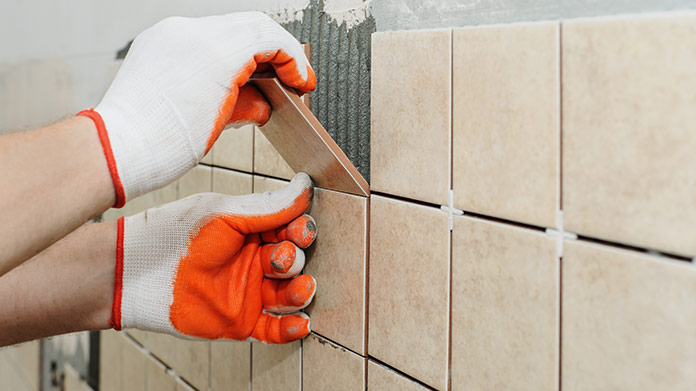
A tile store sells, repairs, and sometimes installs tile. Tile comes in a variety of sizes and shapes and can be used as flooring, as counter tops, a wall surface, and in bathrooms. It is generally sold by the box, with square footage dimensions listed to assist in determining how much product is needed for a project.
Our guide is in 3 parts:
Your greatest investment will be the actual retail space. Take the time to choose a location that’s easily accessible and offers ample parking. Rent and deposit costs vary from region to region, but experienced tile store owners advise budgeting between $2,500 to $5,000 to secure a location.
Once you’ve found a location, it’s time to start designing your showroom. The following items should be factored into your budget:
Fixtures – To reduce costs, consider purchasing used whenever possible. You could also approach the tile distributors you’ve partnered with; many of them have displays designed specifically for showrooms.
Inventory – This number varies depending upon how you wish to serve your customers and the retailers you partner with.
Computer and accessories – $1,000
Point of Sale software – Most software can now be customized to fit your retail needs – $1,000 – $2,800
Marketing materials
Insurance – Speak with a professional to ensure your insurance needs are met.
You’ll need to budget for the following items, above and beyond standard overhead costs:
Payroll – this includes payroll taxes, benefits, and Workman’s Comp
Marketing and networking
Annual insurance policy
Inventory replenishment
It’s recommended that you budget for a minimum of $5,000 monthly, depending upon how many workers you employ and how large your showroom is.
Tile stores make money by selling and installing tile to individual customers and, in some cases, local contractors. Some retail establishments offer tile cleaning and repair services, depending upon the needs of their community.
Pricing varies, depending upon size, manufacturer, and quality of product. Average cost is $2-$5 per square foot.
While is it always advised to budget for little to no profit the first one to three years, many tile stores report a profit of more than $50,000 their first year. Your business’ profits will start to see a steady incline, as your knowledge of the industry starts to grow.
Although it requires additional licensing, adding tile installation to your list of services is the fastest way to increase profits. To remain competitive, most tile businesses offer additional flooring inventory and installation options, such as carpet and wood floors. As you get to know the needs of your clients, you could also consider selling the supplies needed for those do-it-yourself customers.
Most days at a tile store are spent managing retail traffic. Employees will let customers browse the showroom, answering any questions that might come up. Many tile showrooms offer clients an opportunity to actually see their designs before purchasing by making design software available on-site.
Additional daily tasks include stocking the showroom’s inventory, rotating in-store and window displays, processing transactions, and scheduling any services that are required post-transaction. Store managers or owners will also need to handle administrative duties such as managing finances, the marketing strategy, and networking within the community.
A tile store owner should be well-versed in all types of flooring, with tile as their specialty. While it’s not necessary to be an installer, you’ll often be asked questions that require basic installation knowledge. Some experience in interior design would also prove beneficial. It is recommended that you spend a year or two working in a showroom or at a large home maintenance retailer. This will not only provide you with the knowledge needed to run a showroom, it will help in gaining a deeper understanding of how to communicate with consumers.
As the owner, it’s also important to possess strong leadership skills, business acumen, and be able to communicate with a variety of different people. The relationships you build with suppliers will be as important as those built with customers and your staff.
A tile store has significant room for expansion. The key to realizing long-term growth is recognizing that there are many varied design tastes. By offering many tile options, you look to create a buying market for every potential customer. To expand from a local provider to a national retailer, however, your showroom should expand beyond tile, offering carpeting and other flooring options.
The World Floor Covering Association and American Floorcovering Alliance both help members stay abreast of the latest in industry trends, tools, and technology. They can also assist in devising a sound marketing strategy and business plan.
While it’s tempting to fill your showroom with every available tile, consider getting to know the needs of your clients on a more personal level beforehand. Stay current with industry trends to stay current with customers’ needs.
Prior to opening your doors, you’ll want to have compiled a team of professional and knowledgeable employees. As your business starts to realize significant growth, you will need to consider adding to your showroom team.
Business Evaluation & Strategy Tool
We'll walk you through the four pillars every business needs: Points of Leverage, Marketing Strategy, Financial Model, and Personal Compatibility. At the end you'll see a personalized report and your action plan below will be tailored to your answers.
Every viable business has natural advantages. Below are common leverage points across four categories. Pick the ones that apply to your Tile business. We've pre-suggested a few based on your idea — review and adjust.
Without a way to connect with customers, even great businesses fail. Pick the channels you plan to use to reach your customers.
Enter your monthly baseline costs — the minimum overhead to keep the business running. Then we'll calculate how many sales per month you need to break even.
A business that doesn't fit your life will fail no matter how good the numbers look. Tell us how this business fits you.
Complete the four pillars and your personalized summary will appear here.
Nine concrete steps to take you from idea to open business, grouped into 30-day phases. Complete the planner above and we'll highlight what's most important for your situation.
An LLC keeps your personal assets separate from business debts and lawsuits — the most common reason small business owners choose this structure. Sole proprietorships and partnerships do not provide this protection.
Apply for your free Employer Identification Number through the IRS, then register for any state or local taxes that apply to your business (sales tax, franchise tax).
A dedicated business account is required to maintain personal asset protection. Mixing personal and business finances ('piercing the corporate veil') can void your LLC's liability shield.
Recording expenses and income from day one makes tax filing easier and lets you see when the business is actually profitable. Use software (QuickBooks, Wave) or a part-time bookkeeper.
State and local requirements vary widely. Brick-and-mortar businesses typically need a Certificate of Occupancy; service businesses may need specific professional licensing; food businesses need health permits.
General Liability Insurance is the most common starting point. If you'll have employees, most states require Workers' Compensation. Specific industries need additional coverage (product liability, professional liability, etc.).
Your brand is how customers perceive and remember you. A clear name, logo, and visual identity make every later marketing decision easier and protect you legally as you grow.
Every legitimate business needs a website. Social media pages are not a substitute — you don't own the platform. Modern website builders mean you can launch a clean site in a weekend without a developer.
A dedicated business number keeps your personal life private, makes the business look legitimate, and lets you route calls professionally. Cloud phone services start under $20/month.
Starting a Tile business typically costs $2,500 to $5,000. It is considered a low capital-intensity business.
A Tile business runs roughly a 14% net profit margin, and most owners reach break-even in about 4 to 12 months.
You can usually launch a Tile business in about 2 to 8 weeks, and it is commonly run full time.
A Tile business is generally an intermediate-skill business to start, with stable demand. TRUiC rates it 63 out of 100 on our Idea Score.
Most Tile businesses register as an LLC or other legal entity and obtain a general business license. Depending on your state and city you may also need industry-specific permits, sales tax registration, and zoning or health approvals, so check your local requirements before you launch.