Startup cost
$10k–$50k
TRUiC Business Ideas
Decision Snapshot
Idea Score
57
Startup cost
$10k–$50k
Profit margin
14%
Break-even
4 mo–12 mo
Time to launch
12 wk–36 wk
Demand trend
Stable
5-yr failure rate
—
Capital intensity
High
Time commitment
Full time
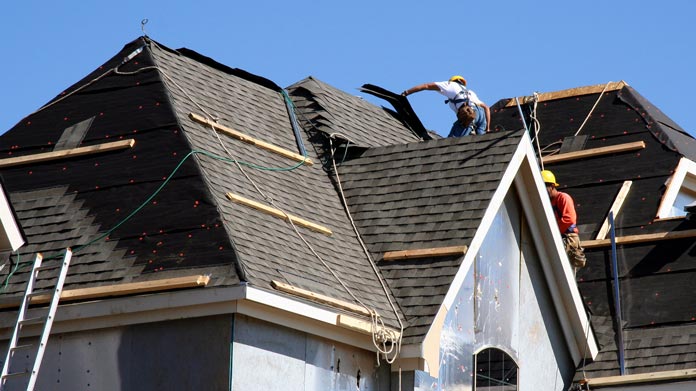
Just about every structure requires a roof, whether it is a house, business, school, or government building. Roofers have a consistent flow of work as roofs do not last forever. In general, the typical roof lasts about 15 years. However, roofs require periodic inspections, maintenance and repairs after installation.
Our guide is in 3 parts:
Though a roofing business can be launched from one’s home, additional space will eventually be necessary as the business grows. Storage space must be available to house roofing materials. Additional expenses range from trucks for the transportation of materials to an leasing/purchasing an administrative office, paying for high-speed Internet, utilities and labor costs. Liability and workers’ compensation insurance premiums must also be paid.
Roofing business owners must pay their employees. Other ongoing expenses include liability and workers’ compensation insurance premiums, utilities, Internet, trucking costs and office sundries such as coffee, lunches, cleaning supplies etc. A new truck will likely cost $20,000 or more. A dumpster rental costs about $350. Alternatively, you can purchase a dumpster for around $3,000. In terms of labor, installers usually receive $15 per hour. Foremen receive around $20 per hour. Laborers typically make between $10 and $12 per hour. If you hire an office manager, he will likely make $15-$20 an hour. Rent for an office/storage space will likely be $1,000 per month. Budget in another $7,000 for liability insurance, $200 for monthly utilities, $1,000 for office supplies and at least a couple hundred dollars per month for advertising.
Roofers tend to favor clients who own property with a flat roof. Roofs with steep angles are much more difficult to work on. Most roofers prefer to do business with individuals who own numerous properties. Establish a business relationship with such an individual and it will likely mean additional projects in the future.
Roofers make money in a variety of ways. Some charge for roof inspections/evaluations. A comprehensive roof evaluation requires much more than examining the roof from ground-level with a pair of binoculars. It requires climbing a ladder to the top of the roof and examining the structure’s shingles, chimney, soffit, gutters, fascia, and so on. Roofers also make money by performing roof repairs, roof replacements and roof installations on new structures.
Some roofers charge upwards of $100 for a comprehensive roof evaluation. Others offer free roof inspections with the hope that the property owner will lean on them for subsequent repairs/replacements. A roof replacement typically costs between $6,000 and $14,000 depending on the materials used, the size of the roof, the roof’s angles and an array of other factors. If a roof is to be replaced, you can charge around $1,000 to tear the old roof off. The cost of roof repairs hinges on the extent of the damage and the type of material to be used for the repair. Be sure to account for additional costs when providing clients with a quote. Such additional costs include fuel, insurance, truck maintenance, advertising, dumpster fees, taxes and so on.
It is possible for roofing businesses to make a six figure profit in the initial year or couple years of operation. Roofing businesses that are in business for years can make several hundred thousand dollars in profit each year. Expand across counties, states and the nation and your roofing business will have the potential to make millions in profit.
The key to maximizing your roofing business’s profitability is to keep material and labor costs down while securing a steady stream of new clients. Establish a reputation as a high-quality roofer and you will eventually be able to charge more than your competitors as customers will be willing to pay a premium for a roof that stands the test of time. It is also possible to have sideline businesses such as a roofing consulting company. Experienced roofers have an abundance of skills and knowledge that others are willing to pay for. If you own a dumpster and won’t be using it on a specific day or week, you can rent it out. If you pay for office/storage space that you do not use in full, this space can be rented to another business owner.
The typical roofing business owner has an incredibly busy workday. They are constantly looking to establish relationships with property owners of all varieties, from business owners to homeowners, apartment complex owners, condominium owners and beyond. Aside from recruiting clients, roofing company owners also search for high-quality, low-cost roofing materials. They ensure an ample supply of these materials are on-hand to meet the demands of each roofing project. Furthermore, roofing business owners assign workers to specific projects to ensure each client’s roofing project is completed in a thorough and timely manner.
If you plan on performing some of the roofing work yourself when first starting out, you must be comfortable working with your hands at high elevations. You should have a mechanical aptitude, be in good physical shape and willing to use your body as well as your mind to complete challenging roofing projects of all varieties. Roofing business owners who elect to remain in a comfortable climate-controlled office must have solid managerial skills. They handle important duties ranging from ordering roofing materials to coordinating logistics, managing work crews and hiring/terminating employees.
Successful, hardworking roofing business owners enjoy unlimited potential for growth. This is especially true of roofers located in urban or suburban areas with large populations. Roofs require plenty of attention and repairs, especially in areas that experience frequent rainstorms, windstorms, snow storms and other inclement weather. The only constraints on a roofing business’s growth are a lack of capital to purchase roofing materials and hire personnel. Most roofers find enough clients to expand their business at their desired growth rate.
The best way to start a roofing business is to learn under the wing of an accomplished roofer. Watch a professional roofer at work, work alongside him, read about roof repair/replacement strategies and hire individuals who have years of experience. Another key component to operating a successful roofing business is pressing the flesh. Get out there and network! Attend industry events, socialize with business owners and spread the word about your roofing company’s merits. Of critical importance is your web presence. Build a visually friendly and informative website that features your company’s services, examples of prior work etc. It certainly helps to create online content with search engine optimization in mind so prospective clients can find your business with ease.
Though you will be able to perform some roof evaluations and repairs on your own in the first weeks and months of your roofing company’s launch, you will eventually need to hire a team of roofers. If your business grows, you will reach the point where you manage a team of roofers from the comfort of your office. Key in on experience and work ethic when hiring roofers. You need skilled individuals who aren’t afraid of hard work. After all, working high up on an angled roof on blazing hot summer days is not easy. Check each candidate’s references and work history to get a gauge as to whether he is cut out for this grueling work.
Business Evaluation & Strategy Tool
We'll walk you through the four pillars every business needs: Points of Leverage, Marketing Strategy, Financial Model, and Personal Compatibility. At the end you'll see a personalized report and your action plan below will be tailored to your answers.
Every viable business has natural advantages. Below are common leverage points across four categories. Pick the ones that apply to your Roofing business. We've pre-suggested a few based on your idea — review and adjust.
Without a way to connect with customers, even great businesses fail. Pick the channels you plan to use to reach your customers.
Enter your monthly baseline costs — the minimum overhead to keep the business running. Then we'll calculate how many sales per month you need to break even.
A business that doesn't fit your life will fail no matter how good the numbers look. Tell us how this business fits you.
Complete the four pillars and your personalized summary will appear here.
Nine concrete steps to take you from idea to open business, grouped into 30-day phases. Complete the planner above and we'll highlight what's most important for your situation.
An LLC keeps your personal assets separate from business debts and lawsuits — the most common reason small business owners choose this structure. Sole proprietorships and partnerships do not provide this protection.
Apply for your free Employer Identification Number through the IRS, then register for any state or local taxes that apply to your business (sales tax, franchise tax).
A dedicated business account is required to maintain personal asset protection. Mixing personal and business finances ('piercing the corporate veil') can void your LLC's liability shield.
Recording expenses and income from day one makes tax filing easier and lets you see when the business is actually profitable. Use software (QuickBooks, Wave) or a part-time bookkeeper.
State and local requirements vary widely. Brick-and-mortar businesses typically need a Certificate of Occupancy; service businesses may need specific professional licensing; food businesses need health permits.
General Liability Insurance is the most common starting point. If you'll have employees, most states require Workers' Compensation. Specific industries need additional coverage (product liability, professional liability, etc.).
Your brand is how customers perceive and remember you. A clear name, logo, and visual identity make every later marketing decision easier and protect you legally as you grow.
Every legitimate business needs a website. Social media pages are not a substitute — you don't own the platform. Modern website builders mean you can launch a clean site in a weekend without a developer.
A dedicated business number keeps your personal life private, makes the business look legitimate, and lets you route calls professionally. Cloud phone services start under $20/month.
Starting a Roofing business typically costs $10,000 to $50,000. It is considered a high capital-intensity business.
A Roofing business runs roughly a 14% net profit margin, and most owners reach break-even in about 4 to 12 months.
You can usually launch a Roofing business in about 12 to 36 weeks, and it is commonly run full time.
A Roofing business is generally an intermediate-skill business to start, with stable demand. TRUiC rates it 57 out of 100 on our Idea Score.
Most Roofing businesses register as an LLC or other legal entity and obtain a general business license. Depending on your state and city you may also need industry-specific permits, sales tax registration, and zoning or health approvals, so check your local requirements before you launch.