Startup cost
$25k–$250k
TRUiC Business Ideas
Decision Snapshot
Idea Score
60
Startup cost
$25k–$250k
Profit margin
41%
Break-even
4 mo–12 mo
Time to launch
12 wk–36 wk
Demand trend
Stable
5-yr failure rate
—
Capital intensity
Very high
Time commitment
Full time
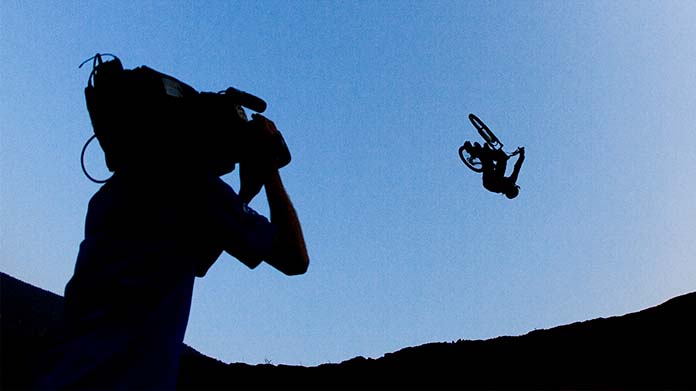
If you turn on the television or attend a movie, chances are you will be entertained by explosions, fight scenes, and fast car chases. Many of us walk out of the theater excited by what we’ve seen but never giving a second thought as to what it took to make all those scenes happen. The truth is there’s an entire stunt team putting great thought and care into ensuring these action scenes are both safe and entertaining. A stunt designer uses their knowledge of mathematics and physics to create a set design that ensures each scene is carried out safely and successfully the first time and every time after, keeping both costs and injuries to a minimum.
Our guide is in 3 parts:
The most significant asset for a stunt design business owner is experience. As mentioned, most individuals entering this industry have up to ten years of experience under their belt. They have put in the work as a stuntman and/or design staff and are ready to move on to the next stage of their career.
Stunt designers should meet with a professional to ensure they have proper insurance coverage should an incident occur. Travel expenses for the entire design staff should be budgeted for, and designers are encouraged to consider the travel budget when determining their fees.
Many designers have a dedicated staff that travels with them from job to job. While this significantly increases startup costs, it often proves invaluable to most as each team member knows their role and are able to communicate amongst the team with ease. To mitigate costs, consider hiring team members on a freelance basis.
Regardless of your role within the industry, leaders encourage everyone involved to commit to learning new methods through continuing their education. Workshops at the Los Angeles Stunts Training Center typically last three days and cost an average of $975, while tuition to an International Stunt School course can set you back upwards of $4,500.
In addition to investing in continuing education, stunt designers will need to budget for travel expenses, insurance, and payroll/employee-related expenses.
If you are considering launching a stunt designer business, you have likely spent many years in the industry. Where have you built your reputation? What producers and directors have you developed a solid foundation with? What sets and/or genres most align with your passion and experience? Where could your knowledge and skills best be put to work? While your ultimate goal is to work on set with a television or movie crew, you may have to work your way back up the ladder in this new position.
Hired by television or movie production teams, stunt designers are paid for each project they complete. Designers rely on past successes and the relationships built on set to gain additional work and build a professional portfolio.
Fees collected vary depending upon the scope and length of the project and budget. The average rate is $980 a day or $3,655 a week.
If you earn an average of $3,655 per week and work 30 weeks per year, your gross annual income will exceed $109,000.
Stunt designers looking to increase annual profits are encouraged to branch out and think outside the box. Commercial skate parks, theme parks, community parks, and video game developers could also benefit from your expertise. Opening a stunt school or teaching workshops are also effective ways to supplement your income and build a name for yourself within the community.
It is the stunt designer’s responsibility to ensure the director’s vision transfers to the big screen and appear as realistic as possible. They must take into account all constraints, including safety, budget, and aesthetics, while considering all potential environmental, cultural, and social impacts. Designers carry a great deal of responsibility with every day’s work looking a little bit different.
On any given day, the stunt designer can be found:
Meeting with the movie/television director to ensure all stunt-related production needs are being met
Collaborate with production and stunt staff
Collaborate with prop masters, wardrobe, and makeup artists
Planning and choreographing scenes
Assessing all risks and implementing safety measures
Working with stunt actors to ensure all scenes are practiced and carefully mapped out and that all potential risks are identified
Assisting in the building of stunt sets
Stunt designers must possess a wide range of skills. Due to the nature of this business, most have seven to ten years of stunt experience and have worked on a variety of sets. They have put a great deal of sweat into their passion and have learned to maneuver the myriad of subtle nuances present on set. Stunt designers must work well under pressure, communicate well with others, and be excellent problem solvers. Above all, a collaborative personality and team spirit are essential for long-term success.
The media and entertainment industry has maintained an average growth rate of 2.1% annually and is expected to be worth $43 billion by 2025. This suggests there is a significant opportunity for the stunt designer industry to grow.
While this can be an exciting and profitable business, it takes the right balance to achieve long-term success. Industry leaders offer the following advice:
Become a SAGA member and keep yourself active in the community
From the day you step foot on your first set, network and hustle. Be patient and willing to learn – one wrong move could result in serious, even deadly, consequences.
Pulling off a successful stunt requires more than just careful set design. Learn everything you can about the entire filmmaking process.
Keep in mind that there are ups and downs in this business. Don’t get discouraged if you don’t get a call for several months. Just keep working on bettering yourself and networking.
Most of the top stunt designers have a proven team they work with. They are all SAGA members, and most have worked with each other on various sets. This not only ensures your company is properly represented, but an established team reduces the potential for accidents and/or injuries.
Business Evaluation & Strategy Tool
We'll walk you through the four pillars every business needs: Points of Leverage, Marketing Strategy, Financial Model, and Personal Compatibility. At the end you'll see a personalized report and your action plan below will be tailored to your answers.
Every viable business has natural advantages. Below are common leverage points across four categories. Pick the ones that apply to your Stunt Design business. We've pre-suggested a few based on your idea — review and adjust.
Without a way to connect with customers, even great businesses fail. Pick the channels you plan to use to reach your customers.
Enter your monthly baseline costs — the minimum overhead to keep the business running. Then we'll calculate how many sales per month you need to break even.
A business that doesn't fit your life will fail no matter how good the numbers look. Tell us how this business fits you.
Complete the four pillars and your personalized summary will appear here.
Nine concrete steps to take you from idea to open business, grouped into 30-day phases. Complete the planner above and we'll highlight what's most important for your situation.
An LLC keeps your personal assets separate from business debts and lawsuits — the most common reason small business owners choose this structure. Sole proprietorships and partnerships do not provide this protection.
Apply for your free Employer Identification Number through the IRS, then register for any state or local taxes that apply to your business (sales tax, franchise tax).
A dedicated business account is required to maintain personal asset protection. Mixing personal and business finances ('piercing the corporate veil') can void your LLC's liability shield.
Recording expenses and income from day one makes tax filing easier and lets you see when the business is actually profitable. Use software (QuickBooks, Wave) or a part-time bookkeeper.
State and local requirements vary widely. Brick-and-mortar businesses typically need a Certificate of Occupancy; service businesses may need specific professional licensing; food businesses need health permits.
General Liability Insurance is the most common starting point. If you'll have employees, most states require Workers' Compensation. Specific industries need additional coverage (product liability, professional liability, etc.).
Your brand is how customers perceive and remember you. A clear name, logo, and visual identity make every later marketing decision easier and protect you legally as you grow.
Every legitimate business needs a website. Social media pages are not a substitute — you don't own the platform. Modern website builders mean you can launch a clean site in a weekend without a developer.
A dedicated business number keeps your personal life private, makes the business look legitimate, and lets you route calls professionally. Cloud phone services start under $20/month.
Starting a Stunt Design business typically costs $25,000 to $250,000. It is considered a very high capital-intensity business.
A Stunt Design business runs roughly a 41% net profit margin, and most owners reach break-even in about 4 to 12 months.
You can usually launch a Stunt Design business in about 12 to 36 weeks, and it is commonly run full time.
A Stunt Design business is generally an intermediate-skill business to start, with stable demand. TRUiC rates it 60 out of 100 on our Idea Score.
Most Stunt Design businesses register as an LLC or other legal entity and obtain a general business license. Depending on your state and city you may also need industry-specific permits, sales tax registration, and zoning or health approvals, so check your local requirements before you launch.