Startup cost
$25k–$250k
TRUiC Business Ideas
Decision Snapshot
Idea Score
60
Startup cost
$25k–$250k
Profit margin
41%
Break-even
4 mo–12 mo
Time to launch
12 wk–36 wk
Demand trend
Stable
5-yr failure rate
—
Capital intensity
Very high
Time commitment
Flexible
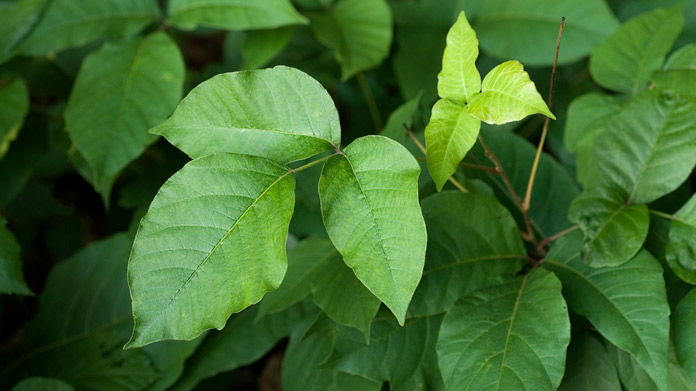
A poison ivy removal business charges clients to remove poison ivy and other poisonous plants from those customers’ homes and yards. This service is valuable for keeping the community safe and the business can be run from home, making it attractive to many entrepreneurs.
Our guide is in 3 parts:
The cost involved in opening this business is extremely minimal. You can run the business from your home, so there is no need to lease a separate space. And you can remove poison ivy while wearing gloves, goggles, and using tape and trash bags, so no special equipment is necessary. Therefore, you could start this business for $5,000 or less: $500 of that money would go towards having a professional website designed, and $1,000 would go towards buying the basic equipment you need. The remaining $3,500 should be invested in some traditional advertising via newspaper, radio, business cards, and fliers.
The ongoing expenses for this business are also minimal. You may pay $100 or less for the annual hosting of your website, and you’ll need to buy fuel as needed to travel around your community. Otherwise, your primary cost is buying more equipment each month (trash bags, goggles, gloves, and so on), and that typically costs $500 or less.
While everyone benefits from removing poison ivy and other poisonous plants, your target market is typically younger (25-39) homeowners. This is a demographic less likely to be familiar with poison ivy and more likely to have the disposable income to hire someone to remove it.
A poison ivy removal business charges money for the removal of poison ivy and other poisonous plants. The exact fee structure is up to you, although many such businesses charge by the hour and count their travel time into the amount of time they bill.
How much you can charge varies, with some experts charging $40 an hour and some charging $75 an hour or more. Be sure to let the client know that the hour counts the time it takes you to travel to their home or business and that they are responsible for paying you back for any tolls you may cross.
Obviously, the exact amount of profit you make depends on how many clients you have and how much you charge them. If you worked “full time” (forty hours or more per week) at $50 an hour, then you could make over $100,000 in a year. The real profit margin will be determined by how many clients you have and how far you are willing to travel within your region to expand your service area.
One overlooked way to increase profits is to raise your prices. Many professionals start by charging a low price to entice customers. However, after you have established your business, it is fine to raise your prices. As mentioned before, you may consider offering customers a price for ongoing maintenance: this is a particularly lucrative option when it comes to serving schools and corporations with larger campuses. Finally, you may consider expanding your overall services: if you are able and willing to perform landscaping or other forms of lawn care in addition to removing poisonous plants, you’ll increase your potential profit.
A typical day at a poison ivy removal business is pretty straightforward. Part of your day is spent communicating with current clients and following up with previous clients. You will also spend part of your day writing and receiving emails and creating advertising in order to get more customers. With any luck, the majority of any given day will be spent driving to homes and businesses, removing poison ivy, and other poisonous plants, and then disposing of them.
Any gardening experience (personal or professional) can be helpful, as can any experience with landscaping, greenhouses, or any other business that increases your knowledge of plants. A formal education in something like botany is not required, but it can be extremely helpful. Beyond this, one of your main assets is knowing your community very well so that you can gauge areas likelier to need poison ivy removal and drive there quickly when called.
The growth potential for this job is steady. According to the Bureau of Labor Statistics, jobs involving the plant industry as a whole grew by the thousands. Given the specificity of a poison ivy removal business, the growth potential may be gauged better by how much poison ivy and other poisonous plants are in your region.
Be sure to research the prices of your competition. Some general lawn care companies will charge a premium to also remove poison ivy, so you want to make sure your prices are low enough (and your services thorough enough) to lure in customers. Make sure you have a good-looking website and social media accounts (more on that later) to increase your accessibility, particularly for young homeowners.
Many people start this job on their own as a way of increasing their profits. However, if you are regularly receiving too many requests to easily handle, then you may consider hiring a partner or small team so you can better service your community.
Business Evaluation & Strategy Tool
We'll walk you through the four pillars every business needs: Points of Leverage, Marketing Strategy, Financial Model, and Personal Compatibility. At the end you'll see a personalized report and your action plan below will be tailored to your answers.
Every viable business has natural advantages. Below are common leverage points across four categories. Pick the ones that apply to your Poison Ivy Removal business. We've pre-suggested a few based on your idea — review and adjust.
Without a way to connect with customers, even great businesses fail. Pick the channels you plan to use to reach your customers.
Enter your monthly baseline costs — the minimum overhead to keep the business running. Then we'll calculate how many sales per month you need to break even.
A business that doesn't fit your life will fail no matter how good the numbers look. Tell us how this business fits you.
Complete the four pillars and your personalized summary will appear here.
Nine concrete steps to take you from idea to open business, grouped into 30-day phases. Complete the planner above and we'll highlight what's most important for your situation.
An LLC keeps your personal assets separate from business debts and lawsuits — the most common reason small business owners choose this structure. Sole proprietorships and partnerships do not provide this protection.
Apply for your free Employer Identification Number through the IRS, then register for any state or local taxes that apply to your business (sales tax, franchise tax).
A dedicated business account is required to maintain personal asset protection. Mixing personal and business finances ('piercing the corporate veil') can void your LLC's liability shield.
Recording expenses and income from day one makes tax filing easier and lets you see when the business is actually profitable. Use software (QuickBooks, Wave) or a part-time bookkeeper.
State and local requirements vary widely. Brick-and-mortar businesses typically need a Certificate of Occupancy; service businesses may need specific professional licensing; food businesses need health permits.
General Liability Insurance is the most common starting point. If you'll have employees, most states require Workers' Compensation. Specific industries need additional coverage (product liability, professional liability, etc.).
Your brand is how customers perceive and remember you. A clear name, logo, and visual identity make every later marketing decision easier and protect you legally as you grow.
Every legitimate business needs a website. Social media pages are not a substitute — you don't own the platform. Modern website builders mean you can launch a clean site in a weekend without a developer.
A dedicated business number keeps your personal life private, makes the business look legitimate, and lets you route calls professionally. Cloud phone services start under $20/month.
Starting a Poison Ivy Removal business typically costs $25,000 to $250,000. It is considered a very high capital-intensity business.
A Poison Ivy Removal business runs roughly a 41% net profit margin, and most owners reach break-even in about 4 to 12 months.
You can usually launch a Poison Ivy Removal business in about 12 to 36 weeks, and it is commonly run flexible.
A Poison Ivy Removal business is generally an intermediate-skill business to start, with stable demand. TRUiC rates it 60 out of 100 on our Idea Score.
Most Poison Ivy Removal businesses register as an LLC or other legal entity and obtain a general business license. Depending on your state and city you may also need industry-specific permits, sales tax registration, and zoning or health approvals, so check your local requirements before you launch.