Startup cost
$25k–$250k
TRUiC Business Ideas
Decision Snapshot
Idea Score
64
Startup cost
$25k–$250k
Profit margin
41%
Break-even
4 mo–12 mo
Time to launch
5 wk
Demand trend
Stable
5-yr failure rate
—
Capital intensity
Very high
Time commitment
Flexible
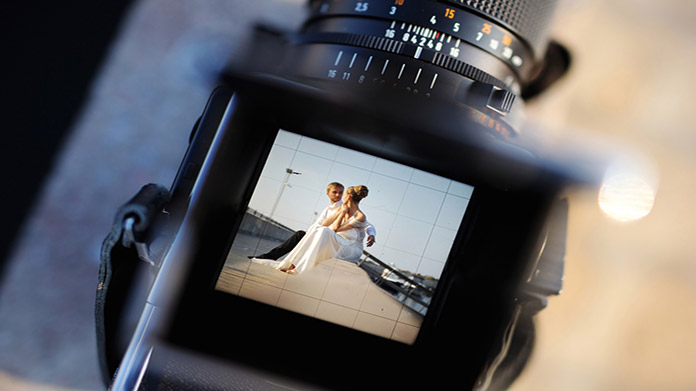
Photography is essentially an art form which captures the moments in life we cherish. If you are thinking about sharing the beauty of your work with others while generating some cash flow, a photography business might be right for you. There’s a need for professional photographers in every market, but the majority of photographers make money either by serving individual clients or by working as a freelancer for magazines, websites, and other venues. Here is an overview of each type of photographer:
Client-based: These photographers are hired by different clients and charge a certain rate per hour or per session. Their clients range from individuals, couples, families, advertisement companies, fashion brands, travel agencies, schools and corporations, etc. For instance, wedding, portrait, and headshot photography are all client-based business models.
Freelancer: These photographers envision themselves primarily as artists and see their own self-expression as the core of their work. Their source of income often comes from selling or licensing photos to various stock image companies, magazines or books, and also from making large prints to sell at craft shows, art fairs, private galleries, etc.
You may also be interested in additional business ideas for teens.
Our guide is in 3 parts:
If you will be working out of your home, the costs for opening your photography business can be quite low depending on what you currently own and how much you are willing to spend.
The standard photography equipment needed to get started includes a professional camera, editing software, and a computer to edit your pictures. You may need more equipment depending on the type of professional photography business you manage. If you have a studio, you may want to invest in proper lighting as well as props for your pictures.
Running expenses are quite low. You will need transportation funds for photography sessions that are outside your home or studio. You will also need to pay for electricity and possibly internet in order to edit your photographs, communicate with clients, and do research.
When you are first starting out, you will want to reach out to family and friends as your first clients. Word of mouth is very important for growing a photography business.
Service based photographers charge in one of three ways:
package-pricing, or charging for a specific number of edited photos
event-pricing, or charging a fixed price for a single event
hourly-pricing, or charging a fixed rate per hour
As a freelancer, depending on where you’re selling your final product, the price can range from a few cents per photo for a stock image site to several hundred dollars for a magazine or gallery.
As a service-based photographer, when you are first starting your business, you can expect to make between $20 to $75 per hour. As you gain more experience, and if you are able to break into the top end of the market, you could even make up to $500 per hour. However, this doesn’t factor in time for all the work you will have to do before and after a shoot.
In addition to charging for the delivered product, you can also charge for added services, such as a rush delivery.
When setting prices for your business, estimate the amount of time you will spend photographing the event or subject, how many pictures they will be receiving, and how long it will take you to edit those pictures for delivery. In addition, you should look at what some of your competitors are charging in the area.
For further details see the article, How much should Photographer charge in 2016.
If you’re a freelancer uploading your photos to a stock image site, you will typically get about 15-50% in royalties per download. You also retain full ownership of your work.
If you manage to pitch your photo to a magazine or an ad company, a one time use your photo is can earn you a few hundred up to a thousand dollars, with a bonus if your artwork is selected for the front cover.
For an overview of the range of expected pay different magazines offer freelance photographers, see the article, Who pays photographer and how much?
Many professional photographers who are just starting out make around $30,000 per year.
The amount of clients you can have on a daily basis largely depends on the type of photography business you maintain.
Wedding photographers can typically handle one wedding per day.
Photographers for engagements or senior photos can serve as many as three clients per day, including time spent taking editing the photographs.
If you photograph in a studio with clients coming to you, you can serve many more clients.
Work may be seasonal depending on the current needs of the market.
As you gain experience and build up your professional reuptation, you can consider other ways of making money in addition to offering your services as a photographer. For example, you could offer photography courses for beginners, or you could sell photobooks or individual prints of your work. If you are tech-savvy, you might also consider starting a photo-editing / restoration service.
If you’re running a service-based photography business, you will be:
searching for potential customers for your photos, including cold emailing, calling, marketing and networking within your community and finding freelance work online
reviewing event logistics, pricing, and service details
taking photographs of clients or your specific subject/event
editing the photographs and delivering the final product to your customers
As a freelancer, you can expect to be:
taking photographs wherever your inspiration is from, be it architecture, landscape, human or animals
connecting with and pitching your work to local galleries, art fairs and coffee shops
submitting high-quality photos to stock image companies
freelancing for magazines or a newspaper for specific events
You don’t need to be a seasoned photographer to open this type of business. You can start photography business as long as you have passion, a camera, editing software, and can find someone who is willing to buy your service.
As you grow your business, you should also consider taking classes to hone your skill. You can find many online courses to take regarding specific aspects of photography as well as classes offered by local colleges that you may want to consider.
There are also two professional photography associations you should consider to help get more education in the field:
A professional photography business can be managed on a part time basis and kept rather small or it can be built to be a much larger business. There are some professional photography businesses that have many different photographers on the payroll for additional man power to cover more events. On the other hand, a small photography business with just a handful of customers can be managed from home on a part time basis. As your company grows larger and you get new clients, you may want to consider moving your business out of the home, leasing a professional studio.
As a professional photographer, your business will inevitably be limited by how many clients you can personally take on. For this reason, if you can afford to pay them an hourly or monthly salary, finding reliable business partners, assistant photographers, and secretarial support can allow you to expand your business and bring in more revenue.
Granted, some pros choose to keep their business a solo operation, preferring to avoid the administrative headaches of managing employees. Nevertheless, when you find yourself turning away prospective clients due to a lack of personal bandwidth, it is probably the right time to expand your team.
Business Evaluation & Strategy Tool
We'll walk you through the four pillars every business needs: Points of Leverage, Marketing Strategy, Financial Model, and Personal Compatibility. At the end you'll see a personalized report and your action plan below will be tailored to your answers.
Every viable business has natural advantages. Below are common leverage points across four categories. Pick the ones that apply to your Professional Photography business. We've pre-suggested a few based on your idea — review and adjust.
Without a way to connect with customers, even great businesses fail. Pick the channels you plan to use to reach your customers.
Enter your monthly baseline costs — the minimum overhead to keep the business running. Then we'll calculate how many sales per month you need to break even.
A business that doesn't fit your life will fail no matter how good the numbers look. Tell us how this business fits you.
Complete the four pillars and your personalized summary will appear here.
Nine concrete steps to take you from idea to open business, grouped into 30-day phases. Complete the planner above and we'll highlight what's most important for your situation.
An LLC keeps your personal assets separate from business debts and lawsuits — the most common reason small business owners choose this structure. Sole proprietorships and partnerships do not provide this protection.
Apply for your free Employer Identification Number through the IRS, then register for any state or local taxes that apply to your business (sales tax, franchise tax).
A dedicated business account is required to maintain personal asset protection. Mixing personal and business finances ('piercing the corporate veil') can void your LLC's liability shield.
Recording expenses and income from day one makes tax filing easier and lets you see when the business is actually profitable. Use software (QuickBooks, Wave) or a part-time bookkeeper.
State and local requirements vary widely. Brick-and-mortar businesses typically need a Certificate of Occupancy; service businesses may need specific professional licensing; food businesses need health permits.
General Liability Insurance is the most common starting point. If you'll have employees, most states require Workers' Compensation. Specific industries need additional coverage (product liability, professional liability, etc.).
Your brand is how customers perceive and remember you. A clear name, logo, and visual identity make every later marketing decision easier and protect you legally as you grow.
Every legitimate business needs a website. Social media pages are not a substitute — you don't own the platform. Modern website builders mean you can launch a clean site in a weekend without a developer.
A dedicated business number keeps your personal life private, makes the business look legitimate, and lets you route calls professionally. Cloud phone services start under $20/month.
Starting a Professional Photography business typically costs $25,000 to $250,000. It is considered a very high capital-intensity business.
A Professional Photography business runs roughly a 41% net profit margin, and most owners reach break-even in about 4 to 12 months.
You can usually launch a Professional Photography business in about 5 weeks, and it is commonly run flexible.
A Professional Photography business is generally an intermediate-skill business to start, with stable demand. TRUiC rates it 64 out of 100 on our Idea Score.
Most Professional Photography businesses register as an LLC or other legal entity and obtain a general business license. Depending on your state and city you may also need industry-specific permits, sales tax registration, and zoning or health approvals, so check your local requirements before you launch.