Startup cost
$500–$5k
TRUiC Business Ideas
Decision Snapshot
Idea Score
61
Startup cost
$500–$5k
Profit margin
15%
Break-even
18 mo–36 mo
Time to launch
12 wk–26 wk
Demand trend
Stable
5-yr failure rate
—
Capital intensity
Low
Time commitment
Full time
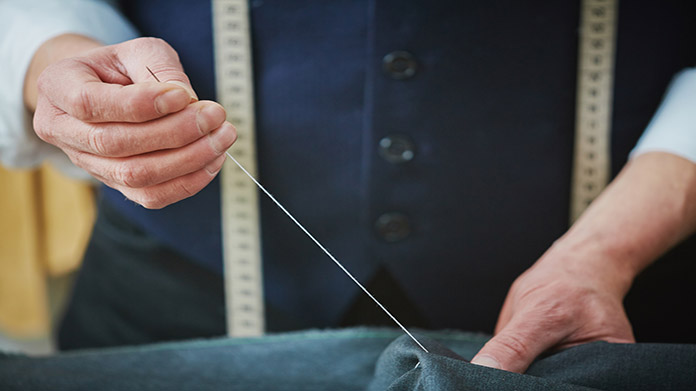
Starting a sewing business can be an exciting and rewarding venture for entrepreneurs who have a genuine passion for working with fabrics, designing custom pieces, and bringing creative ideas to life through stitching.
That said, you should note that succeeding in this industry will require you to have a solid understanding of business fundamentals, a commitment to quality, and the ability to identify and cater to specific markets.
In this comprehensive guide, we’ll walk you through all the essential steps you’ll need to take to start your own sewing business, from conducting market research and identifying your niche to choosing the right location, setting up operations, and attracting customers.
Our guide is in 3 parts:
The Fabric, Craft, and Sewing Supplies Stores industry, which was valued at USD $442.91 million in 2023, is projected to grow to USD $593.40 million by 2032, reflecting a compound annual growth rate (CAGR) of 3.3%.
This growth is primarily fueled by the increasing popularity of custom designs and the push for sustainable production methods in the fashion and garment industry, which can especially be seen in major market areas such as Los Angeles, New York City, and Chicago.
Looking ahead, this market momentum shows no signs of slowing down, making it an ideal time for new sewing businesses to enter and establish themselves.
If you’re considering whether a sewing business is right for you, the first thing you’ll need to know is whether it’s a) affordable, and b) worth the investment. I mean, how much can you actually make running your own sewing business?
Well, it depends. The initial investment for a sewing business can vary widely based on factors such as your location, the type of business model you plan to implement, and the quality of equipment you’ll choose.
We’ve included the most common startup costs to be aware of below:
Sewing Machines ($300 – $5,000): You will need to obtain at least one high-quality multipurpose sewing machine to start your business, with costs varying based on the type of machine in question and on whether you choose a new or used model.
Fabric and Materials Inventory ($500 – $5,000): You will need to purchase an initial inventory of fabrics, threads, zippers, buttons, and any other materials needed for your projects, with costs varying based on the types and quantities you choose.
Tools and Accessories ($200 – $1,500): You will also need to purchase scissors, measuring tapes, rulers, pattern-making supplies, and other tools required for your operations, with costs once again depending on the quality and quantity of items you choose.
Shop Rental or Lease ($1000 – $4,000+ per month): If you plan to operate your sewing business from a commercial location, you will need to account for the cost of renting or leasing a shop, with prices varying depending on the size, location, and amenities of the space.
Workspace Setup ($1,000 – $10,000): You will need to invest in tables, chairs, storage solutions, cutting mats, and proper lighting to create an efficient workspace, with the cost depending on the size of your space and the quality of the equipment you choose.
Marketing and Advertising ($500 – $3,000 per month): You’ll need to allocate funds for creating a website, running social media ads, and possibly producing promotional materials to attract your initial clients.
Business Registration and Licenses ($100 – $1,000): You will need to register your business and obtain all required local licenses or permits, with costs varying depending on your location.
Note: Although not exactly a startup cost, it’s highly recommended to set aside working capital to cover three to six months of operating expenses, ensuring you can handle any cash flow gaps or unexpected costs during the early stages of running your sewing business.
The earning potential for a sewing business is generally strong, especially when you consider the relatively modest startup costs associated with launching and operating this type of venture.
Most sewing businesses typically achieve profit margins of 15% to 25% or more, with businesses that focus on high-quality custom work or niche markets being toward the higher end of that range.
That said, the actual profitability of your business will depend on several factors, including the location you’ll choose, the type of sewing services you’ll offer, and whether you’ll operate from a physical storefront or not.
To open a sewing company, you will need to start by researching your local market, defining your niche, and creating a detailed business plan.
Once that is complete, you will be able to register your business, secure the required licenses and permits, set up your workspace, and begin serving customers.
Yes, sewing can be quite profitable, with most businesses operating at profit margins of 15% to 25%.
It is worth noting that high-end custom work or specialized services can achieve even higher margins, though this will also depend on factors such as your location and target market.
The amount of money you will need to start a sewing business will depend on many factors, including the type of services you plan to offer, your location, and the scale of your operations.
That said, most small, self-run sewing businesses can get started with as little as $10,000 to $20,000, though this will also heavily depend on whether you need to invest in a dedicated workspace or operate from home.
The main disadvantage of a sewing business is the labor-intensive nature of the work, which often requires significant time and effort to complete each project, especially custom or detailed orders.
This means that scaling can also be challenging, as production capacity is often limited by the amount of work one person or a small team can handle.
Business Evaluation & Strategy Tool
We'll walk you through the four pillars every business needs: Points of Leverage, Marketing Strategy, Financial Model, and Personal Compatibility. At the end you'll see a personalized report and your action plan below will be tailored to your answers.
Every viable business has natural advantages. Below are common leverage points across four categories. Pick the ones that apply to your Sewing business. We've pre-suggested a few based on your idea — review and adjust.
Without a way to connect with customers, even great businesses fail. Pick the channels you plan to use to reach your customers.
Enter your monthly baseline costs — the minimum overhead to keep the business running. Then we'll calculate how many sales per month you need to break even.
A business that doesn't fit your life will fail no matter how good the numbers look. Tell us how this business fits you.
Complete the four pillars and your personalized summary will appear here.
Nine concrete steps to take you from idea to open business, grouped into 30-day phases. Complete the planner above and we'll highlight what's most important for your situation.
An LLC keeps your personal assets separate from business debts and lawsuits — the most common reason small business owners choose this structure. Sole proprietorships and partnerships do not provide this protection.
Apply for your free Employer Identification Number through the IRS, then register for any state or local taxes that apply to your business (sales tax, franchise tax).
A dedicated business account is required to maintain personal asset protection. Mixing personal and business finances ('piercing the corporate veil') can void your LLC's liability shield.
Recording expenses and income from day one makes tax filing easier and lets you see when the business is actually profitable. Use software (QuickBooks, Wave) or a part-time bookkeeper.
State and local requirements vary widely. Brick-and-mortar businesses typically need a Certificate of Occupancy; service businesses may need specific professional licensing; food businesses need health permits.
General Liability Insurance is the most common starting point. If you'll have employees, most states require Workers' Compensation. Specific industries need additional coverage (product liability, professional liability, etc.).
Your brand is how customers perceive and remember you. A clear name, logo, and visual identity make every later marketing decision easier and protect you legally as you grow.
Every legitimate business needs a website. Social media pages are not a substitute — you don't own the platform. Modern website builders mean you can launch a clean site in a weekend without a developer.
A dedicated business number keeps your personal life private, makes the business look legitimate, and lets you route calls professionally. Cloud phone services start under $20/month.
Starting a Sewing business typically costs $500 to $5,000. It is considered a low capital-intensity business.
A Sewing business runs roughly a 15% net profit margin, and most owners reach break-even in about 18 to 36 months.
You can usually launch a Sewing business in about 12 to 26 weeks, and it is commonly run full time.
A Sewing business is generally an intermediate-skill business to start, with stable demand. TRUiC rates it 61 out of 100 on our Idea Score.
Most Sewing businesses register as an LLC or other legal entity and obtain a general business license. Depending on your state and city you may also need industry-specific permits, sales tax registration, and zoning or health approvals, so check your local requirements before you launch.