Startup cost
$100k
TRUiC Business Ideas
Decision Snapshot
Idea Score
51
Startup cost
$100k
Profit margin
6%
Break-even
4 mo–12 mo
Time to launch
2 wk–8 wk
Demand trend
Stable
5-yr failure rate
—
Capital intensity
High
Time commitment
Full time
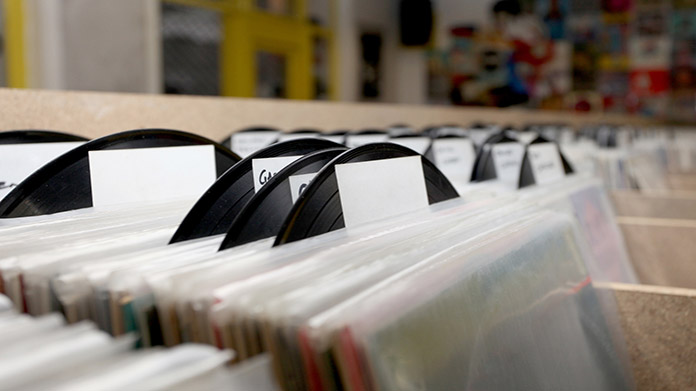
Due to the growth and success of digital and streaming music services, such as Spotify and iTunes, record stores no longer appeal to most mainstream consumers of music. Today’s successful record store businesses serve as a resource for individuals with a deep interest in a particular musical style or styles. In a record store, one can find rare albums and collectibles that are not found elsewhere easily. The customers may be collectors or just ordinary music lovers. Vintage record players are usually on display for sale. The record store owner(s) and staff are like walking encyclopedias about favorite music styles and their enthusiastic love for music is contagious.
Our guide is in 3 parts:
By far the largest expense when getting started is investment in inventory. In order to have a nice selection, the investment in inventory is around $100,000. Some store owners use their own personal collection of items acquired over decades and open a record store in order to liquidate their personal collection.
Equipment needed is a cash register(s), bins to hold items for sale, appropriate lighting, and decorations to make the store attractive. The other thing needed is exterior signage. These add up to an additional $10,000 to the startup costs.
Finally, a deposit is often required to sign a long-term lease. The deposit amount depends on the monthly rent and the size of the retail location.
The main expenses are rent, electricity, and staff costs. To succeed, these need to be as low as possible. For example, renting a high-traffic location in a high-priced shopping mall is completely the wrong idea. The rent needs to be very low and the location can be in a very odd place or even out of the way. The attraction is the inventory and store-owner knowledge, not necessarily the location of the store.
People who love listening to music and collecting it are the ones attracted to this business. Another customer type is a DJ looking for extended play or dance mix albums to use in clubs.
Records sell at retail prices with sales tax. For online sales, shipping and handling charges are additional.
Retail sales average around $24 per buying customer. Extremely rare collectibles can sell for many thousands of dollars.
There may be low sales during any particular week. Then, a regular collector may come in and buy a significant amount of items. A small record store might make $800 to $1,000 per week in average sales or $41,600 to $52,000 in sales per year. Approximately 25% of the sales are profits, which equals $8,350 to $10,500 per year.
Great strategies to improve profitability of a record store business include:
Acquire entire collections at bargain prices from estate sales.
Find valuable old records in second-hand stores and at garage sales at low prices.
Take rare items in on consignment.
Sell both from the shop and online.
Sell CDs and DVDs in addition to records.
Feature in-store performances.
The daily activities for the staff or owner of a record store include:
Marketing efforts to find customers – A combination of selling online with a physical retail presence is most effective. The physical retail store may be very modest. In fact, it should be. However, profits do exist from managing vast catalogs of acquired materials and selling them both online and offline. The marketing budget is usually limited to free postings online such as offerings on Craigslist or eBay. Posting flyers around town and at music events or collector conventions is also helpful.
Closing out the accounting for daily sales and updating inventory records – Every day, enter the sales from the day before in the accounting system and update inventory records to reflect the sales.
Order fulfillment – Process any sales that need shipment and prepare the packages for pickup by the shipping company.
Cash management – Count cash in the register(s) to verify the correct amount exists according to the transactions made. Note any discrepancies. Make change from the register proceeds for large cash bills to make sure the change is available for cash-paying customers. Deposit any excess over the baseline cash requirements into the business banking account.
Clean the store – This includes making sure to clean all areas of the store according to a posted daily schedule. Additionally, check the bins for vinyl records for proper alphabetization and artist/genre categories to make sure the correct product, offered for sale, is in the correct place.
Promotional materials – Put up and keep current the display of promotional materials.
You have to love listening to music. The best ones in this business love learning the detailed trivia about the music, including information about its creation, who performed it, and why a particular record is significant.
There are no significant franchise opportunities. The trend with record stores is that they are largely independent. This is a very niche area where there are no longer many retail chains. There is less possibility for expansion when starting with one store. Some of the best independent record stores closed down, so this industry sector is reducing not expanding.
Usually, the store owners do most of the work. If any staff is hired, the pay rate is typically close to minimum wage as revenues in this business seldom support large payrolls. It is important to hire staff that have a love for music, know a lot about it, and are enthusiastic about sharing their knowledge with customers.
Business Evaluation & Strategy Tool
We'll walk you through the four pillars every business needs: Points of Leverage, Marketing Strategy, Financial Model, and Personal Compatibility. At the end you'll see a personalized report and your action plan below will be tailored to your answers.
Every viable business has natural advantages. Below are common leverage points across four categories. Pick the ones that apply to your Record Store business. We've pre-suggested a few based on your idea — review and adjust.
Without a way to connect with customers, even great businesses fail. Pick the channels you plan to use to reach your customers.
Enter your monthly baseline costs — the minimum overhead to keep the business running. Then we'll calculate how many sales per month you need to break even.
A business that doesn't fit your life will fail no matter how good the numbers look. Tell us how this business fits you.
Complete the four pillars and your personalized summary will appear here.
Nine concrete steps to take you from idea to open business, grouped into 30-day phases. Complete the planner above and we'll highlight what's most important for your situation.
An LLC keeps your personal assets separate from business debts and lawsuits — the most common reason small business owners choose this structure. Sole proprietorships and partnerships do not provide this protection.
Apply for your free Employer Identification Number through the IRS, then register for any state or local taxes that apply to your business (sales tax, franchise tax).
A dedicated business account is required to maintain personal asset protection. Mixing personal and business finances ('piercing the corporate veil') can void your LLC's liability shield.
Recording expenses and income from day one makes tax filing easier and lets you see when the business is actually profitable. Use software (QuickBooks, Wave) or a part-time bookkeeper.
State and local requirements vary widely. Brick-and-mortar businesses typically need a Certificate of Occupancy; service businesses may need specific professional licensing; food businesses need health permits.
General Liability Insurance is the most common starting point. If you'll have employees, most states require Workers' Compensation. Specific industries need additional coverage (product liability, professional liability, etc.).
Your brand is how customers perceive and remember you. A clear name, logo, and visual identity make every later marketing decision easier and protect you legally as you grow.
Every legitimate business needs a website. Social media pages are not a substitute — you don't own the platform. Modern website builders mean you can launch a clean site in a weekend without a developer.
A dedicated business number keeps your personal life private, makes the business look legitimate, and lets you route calls professionally. Cloud phone services start under $20/month.
Starting a Record Store business typically costs $100,000. It is considered a high capital-intensity business.
A Record Store business runs roughly a 6% net profit margin, and most owners reach break-even in about 4 to 12 months.
You can usually launch a Record Store business in about 2 to 8 weeks, and it is commonly run full time.
A Record Store business is generally an intermediate-skill business to start, with stable demand. TRUiC rates it 51 out of 100 on our Idea Score.
Most Record Store businesses register as an LLC or other legal entity and obtain a general business license. Depending on your state and city you may also need industry-specific permits, sales tax registration, and zoning or health approvals, so check your local requirements before you launch.