Startup cost
$20k–$30k
TRUiC Business Ideas
Decision Snapshot
Idea Score
48
Startup cost
$20k–$30k
Profit margin
5%
Break-even
4 mo–12 mo
Time to launch
12 wk–36 wk
Demand trend
Stable
5-yr failure rate
—
Capital intensity
Medium
Time commitment
Full time
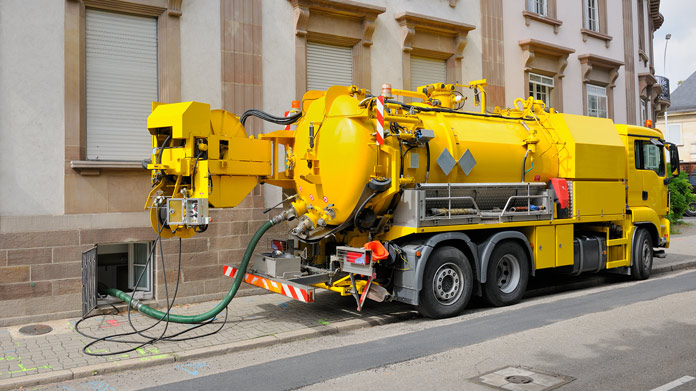
This businesses is needed where there is no local municipal sewer system. Customers install and perform basic maintenance on their own private septic and waste system. Then, the company is called in to pump out the waste and dispose of it properly. The service can also include an actual cleansing of the tank as well.
Our guide is in 3 parts:
This is an expensive business to start. Startup costs are include a pump truck and a place to dump the waste material. Most used trucks can be bought for between $20,000 and $30,000. Other than that, you may need office space and the usual business and office supplies. Your biggest cost will be buying and maintaining a fleet of trucks.
Ongoing expenses for this business include office overhead and expenses, truck maintenance, and local fees for waste removal and disposal. Depending on where you live, how much mileage is put on the truck during the year, and how much business you’re doing, these costs can be high or low. Some companies realize maintenance costs of up to $15,000 per year, per truck.
Preferred customer types are those that live in areas not serviced by municipal water or sewer supply. Customers who are on their own well and sewer system need routine maintenance. While businesses do sometimes own property with a septic tank, most customers will be consumers living in single-family residential homes.
This business makes money by charging customers to clean and maintain their septic tanks and systems. Most tanks need to be cleaned every 1-3 years, depending on the size of the tank and the number of people using it. So, companies may provide interim complimentary advice-based services on how to clean and maintain the tank and system between pumpings.
Charges vary, but most companies charge a flat or fixed fee for emptying a septic tank.
These fees run between $75-$200, but they can be as high at $350 or $400. for larger tanks between 1,500-2,500 gallons.
Profit is highly variable in this industry, and depends on local competition and market demand. Some businesses struggle to make 5% margins, while others maintain a 20% margin.
You can make your business more profitable by minimizing overhead costs. In this industry, it’s common to lease pump trucks in the early years. However, these lease costs add up and can decrease profit margins over time.
That’s because the cost to lease may be lower than buying a truck outright in the early years, but becomes much more expensive as time goes on.
Also, try to use as much personal savings as possible and avoid expensive commercial loans.
The day-to-day activities of a septic tank cleaning business include meeting with clients, checking septic tanks, and pumping them. The pumping is normally done with a large truck and a hose, which is lowered into the septic system in the front or back yard. The hose then pumps the tank and hauls away the waste material.
A septic tank cleaning company may service multiple customers during the day, maintaining an active rotating customer list. Other day-to-day tasks include doing paperwork, invoicing clients, and maintaining a log of current and past-due customers.
This job is skill-intensive. Because septic systems are dynamic and complex ecosystems, containing a host of biological organisms, the downstream effects of a mistake can be expensive.
A few of the more important skills necessary for this business include extensive operation monitoring, operation and control, critical thinking, troubleshooting skills, quality control and analysis, judgment and decision-making skills, monitoring, active listening, and complex problem solving.
Septic tank cleaners must be able to read, monitor, and adjust dials, gauges, and other indicators to make sure a machine is working as it should. They also need to be able to troubleshoot systems out in the field. Since there can be any number of problems on the job, critical thinking and problem-solving is a must.
It also helps to have a plumbing background or experience in the industry before starting your own company.
Growth of this business can be slow or fast, depending on demand for services in your area. Competition may be limited in some areas, in which case growth may be exponential. Local laws and regulations may limit or control how septic tank companies operate. This may or may not allow you to expand into new markets and grow your business. Make sure you check local laws and regulations before making business expansion plans.
Marketing your business is important. Check out the competition and what’s working (and what’s not working) before you dive in. Learn from others’ mistakes in the business. Then, fill in the gaps not serviced by your competitors. Often, in this industry, it’s a matter of providing better service and friendlier customer service, than the competition.
You can operate this business with one truck, but it will remain a small business. Expand as your funds allow. This business has theoretically unlimited potential as long as there are customers in your service area that need septic tank cleaning and maintenance. Start with one truck and expand to two when you can. Add additional office support staff when you have at least 3-5 trucks.
Business Evaluation & Strategy Tool
We'll walk you through the four pillars every business needs: Points of Leverage, Marketing Strategy, Financial Model, and Personal Compatibility. At the end you'll see a personalized report and your action plan below will be tailored to your answers.
Every viable business has natural advantages. Below are common leverage points across four categories. Pick the ones that apply to your Septic Tank Cleaning business. We've pre-suggested a few based on your idea — review and adjust.
Without a way to connect with customers, even great businesses fail. Pick the channels you plan to use to reach your customers.
Enter your monthly baseline costs — the minimum overhead to keep the business running. Then we'll calculate how many sales per month you need to break even.
A business that doesn't fit your life will fail no matter how good the numbers look. Tell us how this business fits you.
Complete the four pillars and your personalized summary will appear here.
Nine concrete steps to take you from idea to open business, grouped into 30-day phases. Complete the planner above and we'll highlight what's most important for your situation.
An LLC keeps your personal assets separate from business debts and lawsuits — the most common reason small business owners choose this structure. Sole proprietorships and partnerships do not provide this protection.
Apply for your free Employer Identification Number through the IRS, then register for any state or local taxes that apply to your business (sales tax, franchise tax).
A dedicated business account is required to maintain personal asset protection. Mixing personal and business finances ('piercing the corporate veil') can void your LLC's liability shield.
Recording expenses and income from day one makes tax filing easier and lets you see when the business is actually profitable. Use software (QuickBooks, Wave) or a part-time bookkeeper.
State and local requirements vary widely. Brick-and-mortar businesses typically need a Certificate of Occupancy; service businesses may need specific professional licensing; food businesses need health permits.
General Liability Insurance is the most common starting point. If you'll have employees, most states require Workers' Compensation. Specific industries need additional coverage (product liability, professional liability, etc.).
Your brand is how customers perceive and remember you. A clear name, logo, and visual identity make every later marketing decision easier and protect you legally as you grow.
Every legitimate business needs a website. Social media pages are not a substitute — you don't own the platform. Modern website builders mean you can launch a clean site in a weekend without a developer.
A dedicated business number keeps your personal life private, makes the business look legitimate, and lets you route calls professionally. Cloud phone services start under $20/month.
Starting a Septic Tank Cleaning business typically costs $20,000 to $30,000. It is considered a medium capital-intensity business.
A Septic Tank Cleaning business runs roughly a 5% net profit margin, and most owners reach break-even in about 4 to 12 months.
You can usually launch a Septic Tank Cleaning business in about 12 to 36 weeks, and it is commonly run full time.
A Septic Tank Cleaning business is generally an intermediate-skill business to start, with stable demand. TRUiC rates it 48 out of 100 on our Idea Score.
Most Septic Tank Cleaning businesses register as an LLC or other legal entity and obtain a general business license. Depending on your state and city you may also need industry-specific permits, sales tax registration, and zoning or health approvals, so check your local requirements before you launch.