Startup cost
$2k–$15k
TRUiC Business Ideas
Decision Snapshot
Idea Score
69
Startup cost
$2k–$15k
Profit margin
25%
Break-even
4 mo–12 mo
Time to launch
12 wk–36 wk
Demand trend
Stable
5-yr failure rate
—
Capital intensity
Medium
Time commitment
Full time
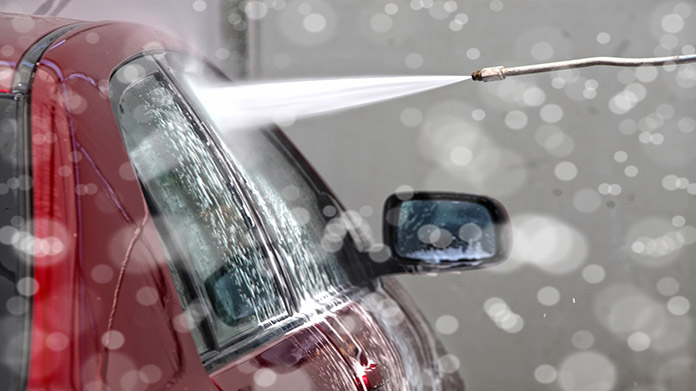
Pressure washing is more effective in removing dirt and grime than other methods of cleaning. This service is highly valued by customers who want to improve the appearance of the exterior of their home or building. Pressure washing helps extend the life of a building and its finishes.
Our guide is in 3 parts:
The main startup up cost is leasing the pressure washing equipment and the transportation to take the equipment to work at the client’s premises. Transportation is usually a van with advertising of the company painted on the van to attract more customers when the van is in operation with the power washer. Having a physical facility, such as renting an office space or work space is not necessary unless you want to offer services of power washing to vehicles that are passing by on a main thoroughfare.
The basic expenses for starting this business include:
You will need to have good credit to get the leases for the equipment and the van, a few thousand dollars to get started for the down payment, plus enough to pay the lease payments for the first six months while you find customers. You can easily start this business with less than $10,000 in cash and finance the rest using credit. Your goals will be to generate $2,000 or more per month in paid jobs in order to create a sustainable business effort.
The ongoing expenses for this business include the labor cost for the workers, lease payments for the equipment and the van(s), insurance, and the amount allocated to the monthly marketing efforts.
Depending on the target market, the customers might be homeowners, vehicle owners, government agencies (which need pressure washing services for roads and other government buildings/structures), and/or commercial property owners. Most pressure washing businesses do better by offering their services to all types of customers and have workers that are experts in doing certain kinds of pressure washing. Besides seeking customers from the general public, it is advisable to get long-term contracts from commercial operations. Examples of these contracts would include maintaining the exteriors of multiple commercial properties owned by the same person or organization or cleaning a fleet of vehicles on a regular basis.
Some of the most successful businesses in this sector have many repeat clients. For simple jobs like pressure washing a car, pressure washing businesses charge a flat rate of around $50 to $100, which includes “detailing.” Detailing is the finish work after the pressure cleaning is done. It includes waxing the vehicle and making the vehicle look like it is brand new.
Another mainstay in this business is the cleaning of the exterior surfaces of real estate. Power washing homes and commercial properties is very lucrative. You can charge by the square footage of the exterior surfaces that are cleaned.
Home advisor gives some examples of the range of prices for pressure washing a home. A typical homeowner will spend between $196 to $420 for a pressure washing of the home and its exterior surfaces.
Here are a few of the common prices:
Commercial properties pay $0.25 to $1.50 per square foot of exterior surface area. Higher rates are charged for buildings that are multiple stories and include the rental cost of the scaffolding or window washing equipment needed to reach the higher levels.
Cleaning a vehicle is around $50 to $100. Washing semi-trucks and boats would be about twice that amount.
If you keep the equipment usage level high, you can expect to make at least 100% of the amount you pay for the equipment lease per month. For example, if the monthly lease payments for a van and equipment plus insurance are around $1,200 then you should earn at least $2,400 per month as your minimum goal. If your main customers are homeowners, you will be doing about 3 to 4 jobs per week to meet this minimum.
As an expansion of the pressure washing business, you can also offer pressure cleaning of drains, pipes, and sewage lines. The equipment is similar and the water pressure is very effective in clearing blocked pipes, blasting tree roots out of the way, and keeping sewer lines flowing.
First and foremost, owners of this type of business pressure wash clients’ property. A business owner for a pressure washing company needs to maintain good relations with existing clients and constantly look for new ones. The goal of the business owner is to keep the appointments for the cleaning teams with a full calendar. The idea is to use the equipment and the teams as much as possible.
It helps to have some mechanical knowledge and to be comfortable working with pressure washing equipment. The equipment needs to be maintained properly and can be dangerous to use if not handled correctly. A guide to pressure washer use and maintenance can be found here.
The exciting thing about this business is that a person can start in one local area and then expand to offer similar services in other areas. There are franchise opportunities and a business can expand from a local market to a regional market and then go national.
This business starts with a single van. It can expand based on the demand for services and the expansion happens with one van with one new worker at a time. Usually, a single person can handle a job. Sometimes there is a need for two people. This means that to build up a team requires getting another van, the equipment, and hiring at least one new person, perhaps with an assistant.
It is easy to decide when to add another van. The decision comes from having the first van over-booked and turning away new customers. You do not want to invest in a second van too early, but you also want to be able to handle the demand for your services with enough staff and equipment to meet their needs.
Pressure washing equipment can be very dangerous. It is imperative when building a team, to hire employees who are certified and reliable. More information about certification can be found on the website of the Power Washers of North America.
Business Evaluation & Strategy Tool
We'll walk you through the four pillars every business needs: Points of Leverage, Marketing Strategy, Financial Model, and Personal Compatibility. At the end you'll see a personalized report and your action plan below will be tailored to your answers.
Every viable business has natural advantages. Below are common leverage points across four categories. Pick the ones that apply to your Pressure Washing business. We've pre-suggested a few based on your idea — review and adjust.
Without a way to connect with customers, even great businesses fail. Pick the channels you plan to use to reach your customers.
Enter your monthly baseline costs — the minimum overhead to keep the business running. Then we'll calculate how many sales per month you need to break even.
A business that doesn't fit your life will fail no matter how good the numbers look. Tell us how this business fits you.
Complete the four pillars and your personalized summary will appear here.
Nine concrete steps to take you from idea to open business, grouped into 30-day phases. Complete the planner above and we'll highlight what's most important for your situation.
An LLC keeps your personal assets separate from business debts and lawsuits — the most common reason small business owners choose this structure. Sole proprietorships and partnerships do not provide this protection.
Apply for your free Employer Identification Number through the IRS, then register for any state or local taxes that apply to your business (sales tax, franchise tax).
A dedicated business account is required to maintain personal asset protection. Mixing personal and business finances ('piercing the corporate veil') can void your LLC's liability shield.
Recording expenses and income from day one makes tax filing easier and lets you see when the business is actually profitable. Use software (QuickBooks, Wave) or a part-time bookkeeper.
State and local requirements vary widely. Brick-and-mortar businesses typically need a Certificate of Occupancy; service businesses may need specific professional licensing; food businesses need health permits.
General Liability Insurance is the most common starting point. If you'll have employees, most states require Workers' Compensation. Specific industries need additional coverage (product liability, professional liability, etc.).
Your brand is how customers perceive and remember you. A clear name, logo, and visual identity make every later marketing decision easier and protect you legally as you grow.
Every legitimate business needs a website. Social media pages are not a substitute — you don't own the platform. Modern website builders mean you can launch a clean site in a weekend without a developer.
A dedicated business number keeps your personal life private, makes the business look legitimate, and lets you route calls professionally. Cloud phone services start under $20/month.
Starting a Pressure Washing business typically costs $2,000 to $15,000. It is considered a medium capital-intensity business.
A Pressure Washing business runs roughly a 25% net profit margin, and most owners reach break-even in about 4 to 12 months.
You can usually launch a Pressure Washing business in about 12 to 36 weeks, and it is commonly run full time.
A Pressure Washing business is generally an intermediate-skill business to start, with stable demand. TRUiC rates it 69 out of 100 on our Idea Score.
Most Pressure Washing businesses register as an LLC or other legal entity and obtain a general business license. Depending on your state and city you may also need industry-specific permits, sales tax registration, and zoning or health approvals, so check your local requirements before you launch.