Startup cost
$25k–$250k
TRUiC Business Ideas
Decision Snapshot
Idea Score
43
Startup cost
$25k–$250k
Profit margin
8%
Break-even
4 mo–12 mo
Time to launch
12 wk–36 wk
Demand trend
Stable
5-yr failure rate
—
Capital intensity
Very high
Time commitment
Full time
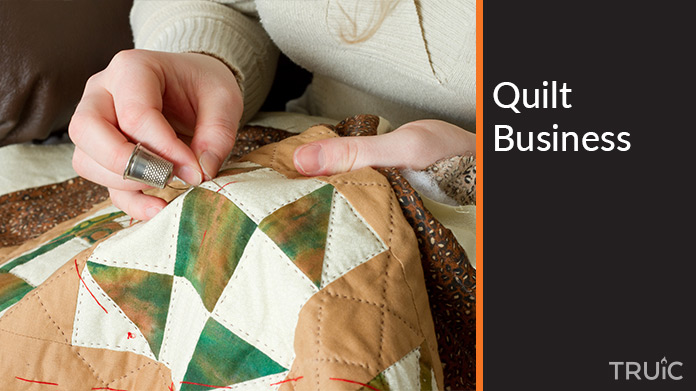
A quilting business translates customer’s ideas, fabrics, and other materials and transforms them into beautiful and functional pieces of art. Through the process of creating the quilt, the quilter and customer decide an overall pattern and color scheme and the quilter then completes the quilt by hand or on a consumer or “domestic” machine.
Our guide is in 3 parts:
Most quilters have been making quilts for quite some time and have a space in their home, so renting a space is usually unnecessary. You may choose to rent display space at a local flea market, antique mall or other similar retail shop, in order to market your wares. You should also research to see what forms of business licensing or insurance you may need. These requirements will be different from state to state and sometimes regionally, as well.
As you become more successful and take on more or larger projects, you may find a need for a longarm quilting service, which will add some additional costs, too.
Quilting business expenses are fairly minimal and mostly involve materials costs and care and maintenance of sewing machines. Additional costs may include attending training seminars and trade expos, which are both great investments for the future of your business.
Although most people can appreciate the beauty of a good quilt, few understand the time and effort they take. Therefore, it’s critical to focus your efforts on individuals or groups in and around the quilting and arts communities. Those who understand the total worth of a custom quilt will help you drive up the price and demand for your work. Equally, become an ambassador for the quilting community and help novices to understand the effort and ability it takes to create these works of art.
Customer special orders and existing quilt repairs will occupy a large amount of the working time and, subsequently, will dominate the revenue stream. As orders are completed and shipped, payments are received and finalized from customers.
Pricing will depend on the size of quilt and the intricacy of design. It is best to use overall size to determine a base price, and then add cost to the specifics the customer requests. You will also need to determine an hourly rate for labor costs; a fair price for your work and not unreasonable for the clients. Anywhere from $12 to $30 an hour is realistic, but prices can vary, depending on where you live and how intricate the designs are. For a general estimate of cost, you could take your standard sizing rates and add 30%-50% on top of that base price
Most quilts sell for a minimum of $350. If you are able to produce two quilts a week, this will generate a revenue of almost $37,000 (ongoing expenses not included). If you are able to produce two quilts at $500 a piece, your revenue jumps to over $50,000. Many long-time quilters report creating up to ten quilts in any given week.
To maximize profitability, consider taking as many custom orders as possible. You can charge a higher rate for these pieces, potentially doubling your income and requiring lower production numbers. Many quilting professionals have also found success teaching quilting classes, as well as selling their own patterns.
Quilters are often spending some of their time pursuing other ventures, until their business proves profitable. Therefore, much of their time has to be strategically planned to keep the business moving forward, attracting clients and completing quilt orders. Specific duties and tasks may include:
Answering inquiries, via telephone and/or email, from potential customers.
Collaborating with clients regarding the specifics of their order.
Managing inventory, delivering original quilts that have been sold.
Shopping and ordering the essentials for each project.
Marketing the business and completed projects.
Paying bills administrative duties such as sending out invoices.
Researching new techniques and industry trends.
As the business begins to mature, it may be necessary to hire an assistant to handle administrative tasks, allowing you to focus solely on the duties that inspire you most.
A successful quilting business usually blooms out of a passion for the art of quilting. This love for creating and sewing can be parlayed into a thriving business, but needs a few extra steps from the business world to really take off. Here are a few things that will help you succeed:
Charge a reasonable price, which customers will agree to pay, but also make sure you’re charging a fee that’s worth your time. Underbidding your own work will undermine and potentially destroy your business over time.
Give reasonable estimates for time, materials, and overall design before beginning a project and stick to your estimates as closely as possible. Again, like pricing, don’t promise what you can’t deliver.
Consider yourself a business, just as any other retail or commercial business would. Respect your ability and art and those feelings will translate to customers. Too self-effacing gives some customers the impression you’re not professional or capable.
Communicate with your clients extensively, both before, during and after the quilt project is completed.
A successful quilting business requires strategic marketing and specific customer relations, often generated through quilting seminars, quilt shows, and online quilting communities. Since it is a popular, yet niche market, it is important to network your wares and skills and become interconnected with all things quilting. Setting a budget and financial/business plan, and sticking to it, is also a key for growth and success.
As discussed previously, treat your hobby or passion as a business, in order to create a successful business. Be personable and professional and find your niche in patterning, design, or materials. Some other tips include:
Manage your overhead costs from the beginning and don’t overwhelm yourself with too many new purchases, gadgets, or unnecessary extra.
Communication is key and your customers will appreciate honesty, a solid plan and continued professionalism. Set realistic estimates and follow through.
Maintain your passion and continually strive to improve or add new abilities to your repertoire.
Quilting is often a singular or small group activity. When thinking as a business, though, profitability has to be factored in, as well. As your business begins to grow, you will have to determine the tipping point for orders coming in versus finished products going out. If the former outweighs the latter, you will always be playing catch-up and stand the risk of losing customers. Add employees who you believe in and see as sharing your passion for quilting. Eventually, a solid team will generate substantially more profit than salary out.
Business Evaluation & Strategy Tool
We'll walk you through the four pillars every business needs: Points of Leverage, Marketing Strategy, Financial Model, and Personal Compatibility. At the end you'll see a personalized report and your action plan below will be tailored to your answers.
Every viable business has natural advantages. Below are common leverage points across four categories. Pick the ones that apply to your Quilts business. We've pre-suggested a few based on your idea — review and adjust.
Without a way to connect with customers, even great businesses fail. Pick the channels you plan to use to reach your customers.
Enter your monthly baseline costs — the minimum overhead to keep the business running. Then we'll calculate how many sales per month you need to break even.
A business that doesn't fit your life will fail no matter how good the numbers look. Tell us how this business fits you.
Complete the four pillars and your personalized summary will appear here.
Nine concrete steps to take you from idea to open business, grouped into 30-day phases. Complete the planner above and we'll highlight what's most important for your situation.
An LLC keeps your personal assets separate from business debts and lawsuits — the most common reason small business owners choose this structure. Sole proprietorships and partnerships do not provide this protection.
Apply for your free Employer Identification Number through the IRS, then register for any state or local taxes that apply to your business (sales tax, franchise tax).
A dedicated business account is required to maintain personal asset protection. Mixing personal and business finances ('piercing the corporate veil') can void your LLC's liability shield.
Recording expenses and income from day one makes tax filing easier and lets you see when the business is actually profitable. Use software (QuickBooks, Wave) or a part-time bookkeeper.
State and local requirements vary widely. Brick-and-mortar businesses typically need a Certificate of Occupancy; service businesses may need specific professional licensing; food businesses need health permits.
General Liability Insurance is the most common starting point. If you'll have employees, most states require Workers' Compensation. Specific industries need additional coverage (product liability, professional liability, etc.).
Your brand is how customers perceive and remember you. A clear name, logo, and visual identity make every later marketing decision easier and protect you legally as you grow.
Every legitimate business needs a website. Social media pages are not a substitute — you don't own the platform. Modern website builders mean you can launch a clean site in a weekend without a developer.
A dedicated business number keeps your personal life private, makes the business look legitimate, and lets you route calls professionally. Cloud phone services start under $20/month.
Starting a Quilts business typically costs $25,000 to $250,000. It is considered a very high capital-intensity business.
A Quilts business runs roughly a 8% net profit margin, and most owners reach break-even in about 4 to 12 months.
You can usually launch a Quilts business in about 12 to 36 weeks, and it is commonly run full time.
A Quilts business is generally an intermediate-skill business to start, with stable demand. TRUiC rates it 43 out of 100 on our Idea Score.
Most Quilts businesses register as an LLC or other legal entity and obtain a general business license. Depending on your state and city you may also need industry-specific permits, sales tax registration, and zoning or health approvals, so check your local requirements before you launch.