Startup cost
$2k–$85k
TRUiC Business Ideas
Decision Snapshot
Idea Score
59
Startup cost
$2k–$85k
Profit margin
14%
Break-even
9 mo–24 mo
Time to launch
2 wk–12 wk
Demand trend
Stable
5-yr failure rate
—
Capital intensity
High
Time commitment
Full time
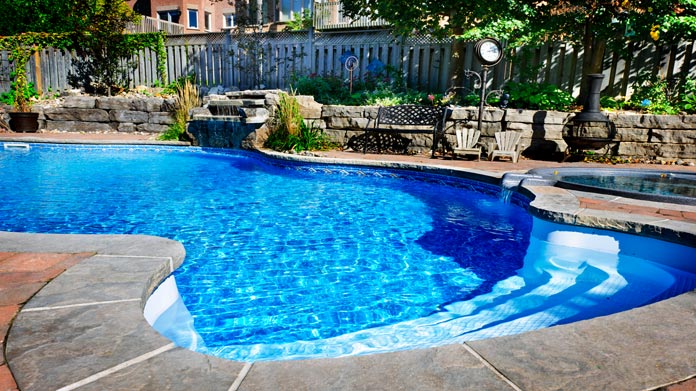
A pool installation business builds pools for residential homes, commercial properties and living communities. Some also conduct pool repairs, check-ups and removals. Today’s pool installation businesses use a wealth of tools, skills and methods to install, repair and even remove pools. Primarily serving households, pool installation businesses also build pools for larger communities. They’re capable of creating custom pools while adhering to community and city guidelines to ensure the safety of those using the pool.
Our guide is in 3 parts:
Fortunately, the initial investment to start a pool installation business isn’t too high. It ranges between $39,900 and $65,000, which includes initial franchise fees, supplies, equipment and building materials. If you want to extend services to pool cleaning, expect to pay an additional $2,000 or so for the equipment.
Firstly, you’ll need to pay your workers anywhere from $10 to $50, depending on their experience and job. Pool cleaners, of course, should be paid far less than installation technicians. Again, overall expenses are about $20,000 to $30,000, depending on the materials used.
Concrete pools cost the most to install, at about $50,000 to $100,000. Vinyl pools, meanwhile, cost about $35,000 to $50,000 to install. Fiberglass pools cost between $45,000 to $85,000 to install. As a rule of thumb: Most materials cost about $50 per square foot to install, modified for the material used. You’ll need to pay for a solid insurance policy, and you’ll additionally need to depreciate your equipment. If you want to establish a warehouse, you’ll need to pay about $13.20 per square foot. A small shop, meanwhile, can cost as little as $11 per square foot—if you want a small location to promote your services.
While a pool installation business can serve multiple communities and businesses, it’s better off prioritizing residential clients. Many homeowners undergo renovations, installing pools as a result. Over time, backyard pools can be damaged due to misuse or improper care. Commercial properties, meanwhile, have consistent maintenance conducted—either by in-house workers or an external contractor. Preferred clients are easy-to-deal-with homeowners, ones who will favor noninvasive services.
While a pool installation business can make money by managing pools, repairing pools, checking up on pools or even removing pools, they primarily gain revenue via pool installation. The installation process is lengthy, and providers must take great care in reducing wholesale costs, labor expenses and timeframes to maximize each installation’s payoff.
Pool installation varies depending on the materials used. Most, however, cost about $60,000. This offers a good bit of revenue, as the initial cost of goods is approximately $20,000 to $30,000. If you’re considering providing pool services, anywhere from $40 to $200 per week—depending on the pool’s size and needs—is a viable price range.
Every year, a decent-sized pool installation business can net around $200,000 in revenue. That said, successful pool installation businesses are incredibly good at managing expenses. Some top pool installation companies, in fact, make about $700 million in revenue. If you’re in the top 50 pool installation providers, you can make a lot of money.
Expand quickly. Whether you’re providing services to residential homes or living communities, you’ll need to expand your service area as far as possible. Offer other pool-related services dealing with cleaning and maintenance.
A pool installation business doesn’t only install pools. Often, it creates the materials needed for such installation. A pool installation business judges a pool’s chemistry, setting its plaster, installing its equipment and ensuring its durability throughout many months. Because a pool isn’t simply a basin, a pool installation business must install and know how to repair and remove pumps, filters, draining systems, pool lights and pool equipment.
From an administrative standpoint, a pool installation business must market its products and services, finance itself, obtain licenses, obtain permits and adhere to industry regulations. They must also contact wholesalers to source any equipment being installed.
You will need to understand pool construction at an in-depth level. Prior experience as a pool contractor helps, as does experience as a pool installation company technician. As a business leader, understanding emergent technology, capital costs, marketing, management and finances helps. Computer software, more than ever, is being used as a pool installation aid. For this reason, any background in IT is a plus—although it isn’t mandatory.
A pool installation business has quite a lot of growth potential. In fact, the job’s annual growth between 2012 and 2017 has been about 3.9 percent. Pool installation is a $9 billion industry, and it’s only growing. As a small-time provider, you may find it difficult to break into larger markets. That said, the swimming pool construction industry carries a low capital intensity level. It’s a specialty service, relying heavily on employee knowledge and skill.
Above all, you’ll need to focus on a niche market. As stated above, it’s often more lucrative to serve residential areas—due to their service potential. If you decide to prioritize commercial properties and living communities, however, choose a location which has a lot of development. College towns, downtown areas and recently gentrified areas are fantastic locations for a pool installation business. While apartment complexes may eventually run out of space, surrounding areas being filled with residential homes, soon after, can provide a solid cross market.
Pool installation requires a lot of legwork. Ideally, you should acquire a team of at least five workers before conducting services. Between financing, management, installation and material sourcing, a pool installation business can become burdensome if not handled appropriately.
Business Evaluation & Strategy Tool
We'll walk you through the four pillars every business needs: Points of Leverage, Marketing Strategy, Financial Model, and Personal Compatibility. At the end you'll see a personalized report and your action plan below will be tailored to your answers.
Every viable business has natural advantages. Below are common leverage points across four categories. Pick the ones that apply to your Pool Installation business. We've pre-suggested a few based on your idea — review and adjust.
Without a way to connect with customers, even great businesses fail. Pick the channels you plan to use to reach your customers.
Enter your monthly baseline costs — the minimum overhead to keep the business running. Then we'll calculate how many sales per month you need to break even.
A business that doesn't fit your life will fail no matter how good the numbers look. Tell us how this business fits you.
Complete the four pillars and your personalized summary will appear here.
Nine concrete steps to take you from idea to open business, grouped into 30-day phases. Complete the planner above and we'll highlight what's most important for your situation.
An LLC keeps your personal assets separate from business debts and lawsuits — the most common reason small business owners choose this structure. Sole proprietorships and partnerships do not provide this protection.
Apply for your free Employer Identification Number through the IRS, then register for any state or local taxes that apply to your business (sales tax, franchise tax).
A dedicated business account is required to maintain personal asset protection. Mixing personal and business finances ('piercing the corporate veil') can void your LLC's liability shield.
Recording expenses and income from day one makes tax filing easier and lets you see when the business is actually profitable. Use software (QuickBooks, Wave) or a part-time bookkeeper.
State and local requirements vary widely. Brick-and-mortar businesses typically need a Certificate of Occupancy; service businesses may need specific professional licensing; food businesses need health permits.
General Liability Insurance is the most common starting point. If you'll have employees, most states require Workers' Compensation. Specific industries need additional coverage (product liability, professional liability, etc.).
Your brand is how customers perceive and remember you. A clear name, logo, and visual identity make every later marketing decision easier and protect you legally as you grow.
Every legitimate business needs a website. Social media pages are not a substitute — you don't own the platform. Modern website builders mean you can launch a clean site in a weekend without a developer.
A dedicated business number keeps your personal life private, makes the business look legitimate, and lets you route calls professionally. Cloud phone services start under $20/month.
Starting a Pool Installation business typically costs $2,000 to $85,000. It is considered a high capital-intensity business.
A Pool Installation business runs roughly a 14% net profit margin, and most owners reach break-even in about 9 to 24 months.
You can usually launch a Pool Installation business in about 2 to 12 weeks, and it is commonly run full time.
A Pool Installation business is generally an intermediate-skill business to start, with stable demand. TRUiC rates it 59 out of 100 on our Idea Score.
Most Pool Installation businesses register as an LLC or other legal entity and obtain a general business license. Depending on your state and city you may also need industry-specific permits, sales tax registration, and zoning or health approvals, so check your local requirements before you launch.