Startup cost
$15k–$100k
TRUiC Business Ideas
Decision Snapshot
Idea Score
52
Startup cost
$15k–$100k
Profit margin
8%
Break-even
18 mo–36 mo
Time to launch
2 wk–12 wk
Demand trend
Stable
5-yr failure rate
—
Capital intensity
High
Time commitment
Full time
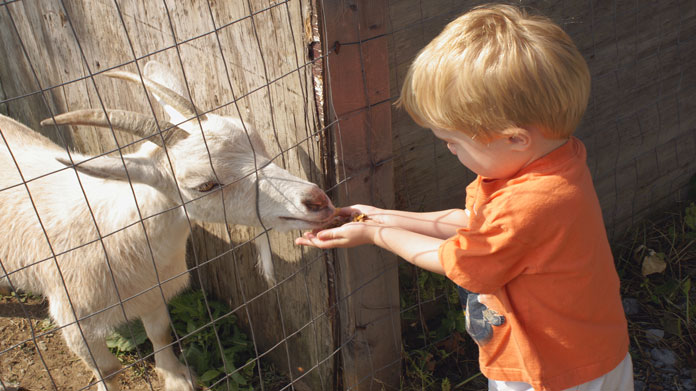
A petting zoo provides a space where customers can pet an assortment of small animals. Petting zoo animals may include goats, llamas, sheep, and other friendly animals. Such businesses are usually favored by children but enjoyed by clients of all ages. A petting zoo may be in a standing location or may specialize in providing animals for parties and other special events.
Our guide is in 3 parts:
The cost of opening your business can vary greatly, starting with where it is located and how big it is. If you are trying to secure ten acres, for instance (a good size for a petting zoo), you might pay $20,000 (if it is all considered farmland), $65,000 (If it is considered undeveloped land), or over a million dollars (if it is considered developed land).
Similarly, if you are having to build from scratch, it can cost between $15,000 to $100,000 to create the buildings to house and display your animals. You will need to get liability insurance as well, which will likely be a minimum of $4,000. You will also need a Class “C” license from the government to exhibit animals; this costs between $30 and $300 depending on how many animals you have. The final cost to consider is the cost of the animals themselves, which varies greatly (goats alone can range between $75 to $300 per animal), and the starting salaries of your staff (which will vary based on size, but is worth budgeting at least $5,000 for).
It should be noted that if you have an opportunity to buy or lease an existing farm or other space to accommodate your animals, the starting costs may be much lower.
The ongoing expense for a petting zoo varies based on its size, the size of the staff, the amount of the animals, and so on. A good analogue would be a small farm, which might have expenses of $5,000 a month. This goes towards mortgage (about $1,500), electricity and utilities (about $2,000), insurance payment ($500 or so), and animal food and assorted supplies ($1,000). Again, the exact amount will vary based on the size of the zoo.
Generally, your preferred clients are families. Petting zoos are always a hit with young children who end up bringing their parents and other relatives into the business.
Most petting zoos make money by charging a fee at the door. If you do “rent out” animals to parties and other events, that should be charged as a separate, higher fee.
Ultimately, your pricing should be competitive with other businesses in your area. With that in mind, a typical cost would be $10 to $20 per adult to visit your zoo, with a lower cost for children below a certain age. If you bring animals to birthday parties or other events, you may consider charging $100 to $200 per hour.
The exact profitability of a petting zoo is difficult to gauge. On one hand, zoos in general can be profitable, with the collective non-profit zoos and aquariums in America bringing in $2.6 billion per year. On the other hand, some zoos are much more profitable than others, and there is little research about average petting zoo income. You can potentially increase your revenue by selling animals, growing and selling crops on your land, and otherwise taking advantage of the land you have access to.
As mentioned above, you can offer other services on the land you have available. Your petting zoo may also offer pony rides, for instance, and you might partner with the local 4H Club to help people store and take care of their own animals. Beyond this, make sure that you market year-round, and emphasize that a petting zoo is utterly unlike anything kids or parents can access at home. By emphasizing you are a unique experience, you can help secure steadier traffic.
Part of your job involves feeding/taking care of the animals and cleaning the areas they are housed in so they are presentable. When customers arrive, you must entertain them and supervise their interactions with the animals (particularly young children). If you “rent out” the animals, part of your job will be to transport them to parties and set up their temporary enclosures which must later be cleaned and transported back. Finally, “down time” is typically spent working on new ways to advertise the business.
Previous experience caring for animals (such as working at a zoo, on a farm, or as a veterinary assistant) is very helpful, as is any other job experience involving animals (such as working for a pet store).
The growth potential for such a business is moderate. In some areas, petting zoos are primarily a seasonal business, while they flourish year round in other places. As with many businesses, securing profitability and the potential to grow larger hinges on finding a specific niche for your region. The Bureau of Labor and Statistics sees the animal care and service field in general growing by eleven percent by 2024.
Make sure that you have a niche, offering something your local community does not have easy access to. Considering offering those aforementioned “extra” services, such as providing animals for parties and/or allowing people to pay for special events at the zoo itself. Finally, don’t miss an opportunity to both make money and advertise your business at the local and state fairs.
Unlike other businesses, you will need a team immediately for this job. This is because taking care of your animals is not something limited to traditional business hours, and you will want to be able to rotate duties so you and others do not get exhausted.
Business Evaluation & Strategy Tool
We'll walk you through the four pillars every business needs: Points of Leverage, Marketing Strategy, Financial Model, and Personal Compatibility. At the end you'll see a personalized report and your action plan below will be tailored to your answers.
Every viable business has natural advantages. Below are common leverage points across four categories. Pick the ones that apply to your Petting Zoo business. We've pre-suggested a few based on your idea — review and adjust.
Without a way to connect with customers, even great businesses fail. Pick the channels you plan to use to reach your customers.
Enter your monthly baseline costs — the minimum overhead to keep the business running. Then we'll calculate how many sales per month you need to break even.
A business that doesn't fit your life will fail no matter how good the numbers look. Tell us how this business fits you.
Complete the four pillars and your personalized summary will appear here.
Nine concrete steps to take you from idea to open business, grouped into 30-day phases. Complete the planner above and we'll highlight what's most important for your situation.
An LLC keeps your personal assets separate from business debts and lawsuits — the most common reason small business owners choose this structure. Sole proprietorships and partnerships do not provide this protection.
Apply for your free Employer Identification Number through the IRS, then register for any state or local taxes that apply to your business (sales tax, franchise tax).
A dedicated business account is required to maintain personal asset protection. Mixing personal and business finances ('piercing the corporate veil') can void your LLC's liability shield.
Recording expenses and income from day one makes tax filing easier and lets you see when the business is actually profitable. Use software (QuickBooks, Wave) or a part-time bookkeeper.
State and local requirements vary widely. Brick-and-mortar businesses typically need a Certificate of Occupancy; service businesses may need specific professional licensing; food businesses need health permits.
General Liability Insurance is the most common starting point. If you'll have employees, most states require Workers' Compensation. Specific industries need additional coverage (product liability, professional liability, etc.).
Your brand is how customers perceive and remember you. A clear name, logo, and visual identity make every later marketing decision easier and protect you legally as you grow.
Every legitimate business needs a website. Social media pages are not a substitute — you don't own the platform. Modern website builders mean you can launch a clean site in a weekend without a developer.
A dedicated business number keeps your personal life private, makes the business look legitimate, and lets you route calls professionally. Cloud phone services start under $20/month.
Starting a Petting Zoo business typically costs $15,000 to $100,000. It is considered a high capital-intensity business.
A Petting Zoo business runs roughly a 8% net profit margin, and most owners reach break-even in about 18 to 36 months.
You can usually launch a Petting Zoo business in about 2 to 12 weeks, and it is commonly run full time.
A Petting Zoo business is generally an intermediate-skill business to start, with stable demand. TRUiC rates it 52 out of 100 on our Idea Score.
Most Petting Zoo businesses register as an LLC or other legal entity and obtain a general business license. Depending on your state and city you may also need industry-specific permits, sales tax registration, and zoning or health approvals, so check your local requirements before you launch.