Startup cost
$1.5k–$30k
TRUiC Business Ideas
Decision Snapshot
Idea Score
64
Startup cost
$1.5k–$30k
Profit margin
21%
Break-even
4 mo–12 mo
Time to launch
12 wk–36 wk
Demand trend
Stable
5-yr failure rate
—
Capital intensity
Medium
Time commitment
Full time
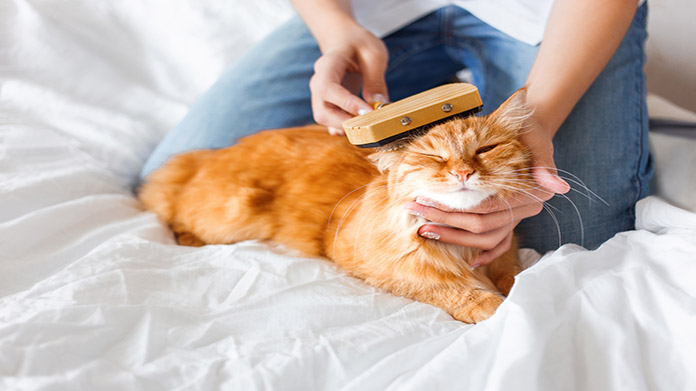
The most basic service for a pet grooming business is, of course, basic grooming and cleaning services. However, there is a growing market for services such as facials and other pampering services for the animals as well. Some grooming businesses focus on a certain kind of animal, such as only working with dogs, while others offer more diverse services for a more diverse range of animals.
Our guide is in 3 parts:
The costs of opening a pet grooming business can be particularly low if you are able to operate out of your own home or operate in a mobile fashion (such as visiting pet owners’ homes or working with local kennels). Doing so eliminates most of the overhead associated with the business and reduces the start-up costs primarily to obtaining high-quality tools and advertising your services. The costs of the tools you will need (which include clippers, shears, slicker brush, blades, smock, and greyhound comb) can cost up to $1000. Additional grooming supplies (including shampoo, conditioner, nail clippers, safety supplies, hydraulic drier, and a grooming table) can cost a little over $1000. These represent the bare essentials for your business, and if you choose to specialize in certain services (such as the aforementioned pet facials), it will necessitate additional tools and supplies. Aside from this, you must invest in advertising your business; consider a minimum of $1000 for “traditional” advertising (including radio, print, and possibly television) to start with, along with social media and advertisement via your own website which are, aside from your time investment, free.
The beauty of a small grooming business is that its ongoing costs are very small. As mentioned above, operating out of your own home, a kennel or pet store, or simply traveling to customers’ homes eliminates the need for costly rent and utilities. Your primary ongoing expenses are cleaning supplies and advertising. While the exact charge varies depending on how busy you are, it should take $100 or less each month to obtain a few gallons of shampoo/conditioner (this should cost twenty dollars or less per gallon and, for most pets, be good for about a hundred baths) and to replenish safety supplies and minor equipment. Beyond that, you are paying for ongoing advertisement, and you should probably spend less than five percent of projected annual profits on this; once you are established, much of your traffic will come from referrals, social media engagement, and networking within your community.
Arguably, the best clients for a pet grooming business are those who have had their pets for several years. This is because those whose pets are younger (and the owners themselves may also be younger) tend to be overprotective and nervous about leaving their animal in the care of others. Veteran pet owners are more experienced in the process of bringing their pet to the groomer, so they will often have fewer concerns about leaving their pet in your care.
At the most basic level, a pet grooming business makes money by charging different charges for its various services. In this way, it is not too dissimilar from a regular salon. So, you would charge customers a fixed amount for a haircut on their pet, and another amount for things like baths, facials, and so on. This means that becoming more proficient at completing these services will translate to more money each month for your business.
A good “average” to keep in mind for a pet haircut is around fifty dollars, though it is wise to consider charging more for particularly large dogs, as those jobs tend to take longer. This price typically includes bathing the animal, clipping its nails, and cleaning its ears, though you may consider charging a lower amount for someone wanting these services separately without the haircut itself. For an average of about ten dollars, you may consider services such as brushing the animal’s teeth, de-matting its fur, removing odors, and so on. You should also charge between ten and thirty dollars more to cut without clippers, and if your business involves traveling to the owner’s home, it is proper to charge a convenience fee between ten and fifteen dollars more.
Pet grooming is a potentially very profitable business, with some estimates saying that a successful business can bring in anywhere between $75,000 and $100,000 per year. While there are startup ideas with higher potential profits, the very low cost to start this business and the extremely low ongoing expenses mean that the vast majority of that income goes directly to your pocket.
Consider selling other items and services related to pets to make your grooming business more profitable. Some groomers have a sideline job of selling specialty pet tubs to owners who want to wash their pets themselves, for instance, while others make good extra money selling everything from unique animal toys to special animal treats. There is a market for everything from grooming equipment to animal clothing, and the more you can situate your business as a “one-stop-shop” for pet owners, the more potential customers you will have!
The exact nature of your daily activities will vary somewhat depending on where you conduct business. Some groomers work in their own homes, some work in the homes of pet owners, and still others work in places like kennels or coordinate with local pet stores. Regardless of location, daily activities including returning calls and emails, cleaning and grooming animals (including cutting and brushing fur, cleaning animals’ ears, clipping their nails, and styling their fur), sanitizing your equipment, and providing detailed follow-up reports to pet owners.
One immediately useful skill for this business is prior grooming experience. While there are formal training plans available, this experience can also be obtained by working for someone else’s grooming business or simply “practicing” by grooming the pets of various friends and family members. It is also helpful to already have a positive relationship with local vets and pet stores so that you can get referrals from their customers.
The growth potential for a pet grooming business is relatively steady. Some research estimates that the jobs in this market will grow by over 20 percent through 2018. This is a direct indicator of the market for such a business, so your own business could very well corner this niche market of a community.
Obtaining a grooming certification can help establish the legitimacy of your business and bring in more customers. Observing and “shadowing” another groomer is a great way to learn the ins and outs of the business. Consider setting your business apart by offering sales and free samples of “extras” such as dog cologne, toothbrushes, and ear cleaners, which helps promote you as a kind of one-stop-shop for pet grooming and cleaning.
Like many businesses, the decision to build a team is contingent on a rise in your business. If you have too many people who need pet haircuts, baths, and so on than you can reasonably tackle, it’s time to bring more people in. It is possible for you and others to still use either your home, each others’ homes, or pet owners’ homes in order to conduct business, which lets you maintain the attractively low overhead while doubling or tripling your business. This also represents an opportunity to cover multiple areas or cities under the same recognizable brand name. With a team that small, though, it is important to work out ahead of time what their pay will be in order to ensure your profits continue to grow.
Business Evaluation & Strategy Tool
We'll walk you through the four pillars every business needs: Points of Leverage, Marketing Strategy, Financial Model, and Personal Compatibility. At the end you'll see a personalized report and your action plan below will be tailored to your answers.
Every viable business has natural advantages. Below are common leverage points across four categories. Pick the ones that apply to your Pet Grooming business. We've pre-suggested a few based on your idea — review and adjust.
Without a way to connect with customers, even great businesses fail. Pick the channels you plan to use to reach your customers.
Enter your monthly baseline costs — the minimum overhead to keep the business running. Then we'll calculate how many sales per month you need to break even.
A business that doesn't fit your life will fail no matter how good the numbers look. Tell us how this business fits you.
Complete the four pillars and your personalized summary will appear here.
Nine concrete steps to take you from idea to open business, grouped into 30-day phases. Complete the planner above and we'll highlight what's most important for your situation.
An LLC keeps your personal assets separate from business debts and lawsuits — the most common reason small business owners choose this structure. Sole proprietorships and partnerships do not provide this protection.
Apply for your free Employer Identification Number through the IRS, then register for any state or local taxes that apply to your business (sales tax, franchise tax).
A dedicated business account is required to maintain personal asset protection. Mixing personal and business finances ('piercing the corporate veil') can void your LLC's liability shield.
Recording expenses and income from day one makes tax filing easier and lets you see when the business is actually profitable. Use software (QuickBooks, Wave) or a part-time bookkeeper.
State and local requirements vary widely. Brick-and-mortar businesses typically need a Certificate of Occupancy; service businesses may need specific professional licensing; food businesses need health permits.
General Liability Insurance is the most common starting point. If you'll have employees, most states require Workers' Compensation. Specific industries need additional coverage (product liability, professional liability, etc.).
Your brand is how customers perceive and remember you. A clear name, logo, and visual identity make every later marketing decision easier and protect you legally as you grow.
Every legitimate business needs a website. Social media pages are not a substitute — you don't own the platform. Modern website builders mean you can launch a clean site in a weekend without a developer.
A dedicated business number keeps your personal life private, makes the business look legitimate, and lets you route calls professionally. Cloud phone services start under $20/month.
Starting a Pet Grooming business typically costs $1,500 to $30,000. It is considered a medium capital-intensity business.
A Pet Grooming business runs roughly a 21% net profit margin, and most owners reach break-even in about 4 to 12 months.
You can usually launch a Pet Grooming business in about 12 to 36 weeks, and it is commonly run full time.
A Pet Grooming business is generally an intermediate-skill business to start, with stable demand. TRUiC rates it 64 out of 100 on our Idea Score.
Most Pet Grooming businesses register as an LLC or other legal entity and obtain a general business license. Depending on your state and city you may also need industry-specific permits, sales tax registration, and zoning or health approvals, so check your local requirements before you launch.