Startup cost
$20k–$100k
TRUiC Business Ideas
Decision Snapshot
Idea Score
64
Startup cost
$20k–$100k
Profit margin
23%
Break-even
18 mo–36 mo
Time to launch
12 wk–36 wk
Demand trend
Stable
5-yr failure rate
—
Capital intensity
High
Time commitment
Full time
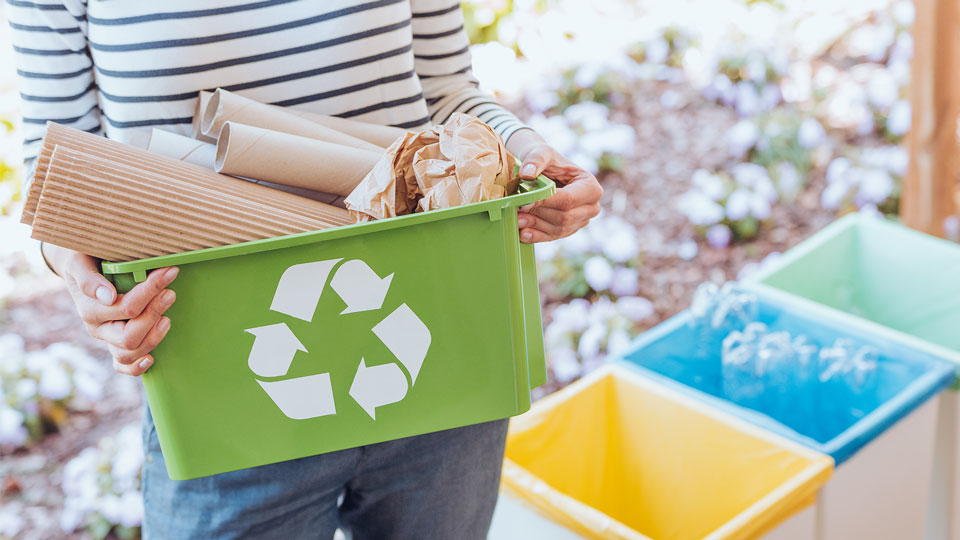
Starting a paper recycling business can be an exciting and rewarding business venture for entrepreneurs who are passionate about sustainability and want to make a positive environmental impact while generating income.
Having said that, you should keep in mind that launching a successful paper recycling business will require careful planning and a strong understanding of both waste management processes and local recycling regulations.
In this comprehensive guide, we’ll walk you through all the essential steps you’ll need to take to start your own paper recycling business, from creating a business plan and securing funding to setting up a collection system and ensuring your business is properly licensed.
Our guide is in 3 parts:
In line with the increased adoption of sustainable practices globally, the paper recycling industry has experienced significant growth in recent years, with its overall market value reaching approximately USD $7.1 billion in 2023.
Building on this momentum, this industry’s upward trajectory is forecast to continue well into the future, with projections indicating a compound annual growth rate (CAGR) of 5.70% from 2024 until it reaches a market value of around USD $13.1 billion by the end of 2034.
A number of factors are thought to be contributing to this robust expansion — the primary one being the increasing use of recycled paper as the preferred packaging material across various industries, including food and beverage and pharmaceuticals.
This has been further bolstered by environmental concerns surrounding non-biodegradable plastics, as well as government initiatives — such as Extended Producer Responsibility (EPR) laws — promoting the use of recycled materials and implementing stringent regulations against unsustainable options.
The main challenge faced by this industry at the moment is its volatility — which complicates long-term planning and investment for businesses as a result of constant shifts in the demand for paper products, the fluctuating costs of virgin paper, and evolving regulatory landscapes.
A key barrier to entry for new entrants worth mentioning is the challenge of collecting recyclable paper, particularly due to infrastructure-related constraints in many rural areas. While many businesses are turning to solutions like automated collection systems and electric vehicles, these technologies obviously involve a substantial upfront cost that many smaller businesses are, as of yet, unable to bear.
If you’re considering whether a paper recycling business is right for you, the first thing you’ll need to know is whether it’s a) affordable, and b) worth the investment. I mean, how much can you actually make running your own paper recycling business?
Well, it depends, and the initial investment for a paper recycling business varies widely based on factors such as its scale, operating locations, and available resources. With that being said, most paper recycling businesses will typically face the same upfront expenses when starting out, including:
Vehicle Costs: One of the biggest costs to prepare for when setting up your paper recycling business is that of obtaining a reliable vehicle capable of transporting collected paper. While entrepreneurs with limited capital might first start off with their personal vehicle, it’s worth noting that this is only practical for moving small loads of paper. For larger operations, investing in a trailer or truck will be essential, with used trailers typically starting at $3,000 and commercial-grade trucks beginning at around $20,000.
Storage Space: In order to maintain the value of the paper that you’ve collected, you’ll need to store it in a dry, covered area to prevent damage. As such, many business owners will start out using an existing garage or shed, which effectively eliminates this cost. However, if you decide to rent a space to store your collected paper, costs will typically range between $50 and $250 per month depending on the size and location of the rented space.
Essential Tools and Supplies: To ensure the smooth operation of your paper recycling business there are certain key tools you’ll need, including a reliable scale to be able to accurately price and manage your paper inventory and utility knives for opening boxes. These should generally cost you between $100 and $400, though you’ll also need to factor in the cost of essential basic supplies like bins, gloves, and tarps for safely collecting and sorting paper — which will add an extra $50 to $300 to this total.
Business Licensing and Permits: For your paper recycling business to be able to operate legally, there are various different licenses and permits that it will need to obtain before it can begin its operations (see Step 5). Depending on the specific ones you need — which could include waste handling permits, zoning permits, and any local business operating licenses — you can expect to spend anywhere from $100 to $1,000 on this expense.
As such, with as little as $5,000 to $25,000 in total startup capital you could get an entry-level paper recycling business off the ground — which is what makes it such an appealing venture for many entrepreneurs.
When it comes to the primary ongoing costs faced by a paper recycling business, they’re also relatively low; the most significant ones to be aware of include fuel and vehicle maintenance (so that you can continue to collect and transport materials), as well as rent (if you decide to rent a storage space).
Instead of charging the people or businesses they typically collect this paper waste from, the primary way in which paper recycling businesses make money is by collecting it from producers with lots of paper waste and delivering it to nearby recycling facilities, which pay based on the weight and type of paper.
For example, while mixed paper and Old Corrugated Containers (OCC) will earn you $45 and $77 per ton respectively, these recycling facilities often pay around $117 per ton for Sorted Office Paper (SOP).
While also charging for collection might make a little more money in the short run, this isn’t generally advisable because, in the long run, you’ll likely end up driving these people and organizations to either get rid of this waste themselves or swap to a competitor that won’t charge them for this service.
By not charging, you’re actually providing a mutually beneficial service, whereby you help them dispose of their waste at no cost while at the same time ensuring you have a steady supply of recyclable material for your business to sell.
Due to how cheap recycled paper is, volume is a key determinant of profitability. This is why big earners in this industry typically seek to secure contracts with large retailers and manufacturers that tend to produce large amounts of waste paper on a predictable schedule, such as Amazon or Walmart.
However, when you’re just starting out you’ll likely need to focus on residential sources and build your way up to these more lucrative deals. With that being said, there’s no need to worry about finding a steady supply, as paper is the most widely produced waste material in the US — comprising over 23% of all municipal solid waste (MSW).
If you’re looking to further boost your profitability, some recyclers expand their services to include document shredding, which not only generates additional income but also provides access to high-grade paper that commands premium rates.
The target market for a paper recycling business includes businesses and organizations that generate substantial paper waste, such as schools, offices, retail stores, and manufacturers.
While these aren’t “customers” in the traditional sense, these entities provide the perfect source of paper for your business to collect, organize, and later sell to recycling centers.
Instead of charging the people and organizations they collect waste from, paper recycling businesses typically earn revenue by delivering the materials they’ve collected to recycling facilities — which, for the most part, pay between $50 and $200 per ton of paper.
While new businesses in this industry will start out more slowly, there’s no reason why established paper recycling companies can’t earn upwards of $100,000 per year once they’ve secured steady contracts with large retailers to collect and process their waste on a regular basis.
To boost profitability, your long term focus should be on securing high-value contracts with large waste producers.
However, if you’re looking for a quicker revenue increase, consider offering document shredding services — this not only generates additional income, it also grants you access to high-grade paper that can be sold at premium rates.
Business Evaluation & Strategy Tool
We'll walk you through the four pillars every business needs: Points of Leverage, Marketing Strategy, Financial Model, and Personal Compatibility. At the end you'll see a personalized report and your action plan below will be tailored to your answers.
Every viable business has natural advantages. Below are common leverage points across four categories. Pick the ones that apply to your Paper Recycling business. We've pre-suggested a few based on your idea — review and adjust.
Without a way to connect with customers, even great businesses fail. Pick the channels you plan to use to reach your customers.
Enter your monthly baseline costs — the minimum overhead to keep the business running. Then we'll calculate how many sales per month you need to break even.
A business that doesn't fit your life will fail no matter how good the numbers look. Tell us how this business fits you.
Complete the four pillars and your personalized summary will appear here.
Nine concrete steps to take you from idea to open business, grouped into 30-day phases. Complete the planner above and we'll highlight what's most important for your situation.
An LLC keeps your personal assets separate from business debts and lawsuits — the most common reason small business owners choose this structure. Sole proprietorships and partnerships do not provide this protection.
Apply for your free Employer Identification Number through the IRS, then register for any state or local taxes that apply to your business (sales tax, franchise tax).
A dedicated business account is required to maintain personal asset protection. Mixing personal and business finances ('piercing the corporate veil') can void your LLC's liability shield.
Recording expenses and income from day one makes tax filing easier and lets you see when the business is actually profitable. Use software (QuickBooks, Wave) or a part-time bookkeeper.
State and local requirements vary widely. Brick-and-mortar businesses typically need a Certificate of Occupancy; service businesses may need specific professional licensing; food businesses need health permits.
General Liability Insurance is the most common starting point. If you'll have employees, most states require Workers' Compensation. Specific industries need additional coverage (product liability, professional liability, etc.).
Your brand is how customers perceive and remember you. A clear name, logo, and visual identity make every later marketing decision easier and protect you legally as you grow.
Every legitimate business needs a website. Social media pages are not a substitute — you don't own the platform. Modern website builders mean you can launch a clean site in a weekend without a developer.
A dedicated business number keeps your personal life private, makes the business look legitimate, and lets you route calls professionally. Cloud phone services start under $20/month.
Starting a Paper Recycling business typically costs $20,000 to $100,000. It is considered a high capital-intensity business.
A Paper Recycling business runs roughly a 23% net profit margin, and most owners reach break-even in about 18 to 36 months.
You can usually launch a Paper Recycling business in about 12 to 36 weeks, and it is commonly run full time.
A Paper Recycling business is generally an intermediate-skill business to start, with stable demand. TRUiC rates it 64 out of 100 on our Idea Score.
Most Paper Recycling businesses register as an LLC or other legal entity and obtain a general business license. Depending on your state and city you may also need industry-specific permits, sales tax registration, and zoning or health approvals, so check your local requirements before you launch.