Startup cost
$2k–$10k
TRUiC Business Ideas
Decision Snapshot
Idea Score
69
Startup cost
$2k–$10k
Profit margin
41%
Break-even
4 mo–12 mo
Time to launch
12 wk–36 wk
Demand trend
Stable
5-yr failure rate
—
Capital intensity
Medium
Time commitment
Flexible
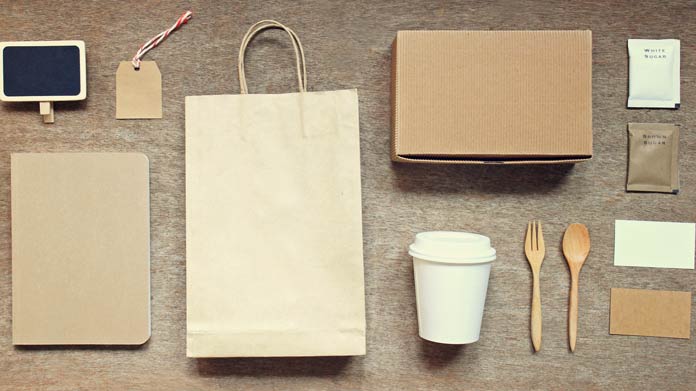
A packaging design business enhances packages with visual graphics while also designing existing product packages. A package design business, ultimately, protects products for sale, transportation, distribution, storage, and use. A package’s design includes both its structural and aesthetic design. Ideally, a package design will be enhanced by graphics. In most cases, a package’s design is product-centric. From all angles, a package exists to serve the product.
Our guide is in 3 parts:
Packaging design businesses typically cost between $2,000 and $10,000 to start. Because they can technically be operated from home, their operation requirements are pretty small. Startup expenses include rent, which can be between $2,000 and $4,000 for a small workshop, networking, professional connections, design training, and start-up materials.
Ongoing expenses include designer payments. Over time, you could pay a designer between $20 and $50 per hour to create great packaging designs. Prototype materials, too, are likely expenses. If you end up mass producing packages, expect to pay between 50 cents and $3 per package—depending on the size. You will, of course, sell the packages for more to make a profit.
A package design business’ customers are different depending on the industry. For this reason, it’s important to focus on your business’s market segment. Getting into the market, for most package design businesses, is difficult. Luxury markets may require minimalistic designs, whereas accessible markets—mostly run by Neiman Marcus and Wal-Mart—are far more flexible. High-end department stores, meanwhile, can have a variety of markets. The ideal consumer-base is a stable one, and it exists in a stable market.
Primarily, a packaging design business profits from positioning its package designs effectively. If it can represent a product truly—and in an attractive way—it can expect long-term partnerships with a variety of brands. While a packaging design business can make money by protecting products alone, its long-term success will rely on a firm understanding of appeal.
You can charge businesses between $80 and $100 for creative package designs. This price can vary greatly, however, depending on the materials used to create the products. At the end of the day, an average package can sell for about $1.25, per product, to a business. Find a business which sells in bulk, and produce a large line of packages to send them.
Package design businesses are incredibly profitable, assuming they’re successful. A solid packaging design business can make $500,000 per year, if it’s a trusted provider in a massive business network. That said, individual packaging design businesses make about $70,000 per year while serving a local network.
Brainstorm constantly. Convey your target market’s direction before it gets there. Successful packaging design businesses aren’t only trendy- they’re also predictive. If your packaging design business strikes gold, creatively, other brands will flock to your services.
A package design business owner doesn’t only package products. They drive workers through a variety of structural design lessons, maximizing their potential while ensuring they uphold a package’s aesthetic value. A package design business owner must constantly check designs for clarity and simplicity. They must also reflect a product’s features and safety needs. Authenticity is a must, and a keen eye for modern marketing trends certainly helps. Administrative tasks are completed, too, ranging across management, finance, and marketing.
Innovation and design experience are must-have qualities. As a start-up, you’ll need to get in touch with local providers. Recognize the prototyping stage for what it is. Additionally, make sure any packages represent the product’s needs effectively. By understanding a product’s price point, you can create memorable packages which serve multiple purposes.
If a packaging design business has a slew of prototypes, markets effectively, strikes solid partnerships, and creates memorable packages, it can grow wildly. The world’s most successful packaging design businesses are international, using massive marketing campaigns, sales kits, and partnership networks to grow exponentially.
The road to package design business success is a long one. Run through your design process endlessly, and revise constantly. If your clients aren’t interested in your designs, find out why. To compete in the packaging design business, you’ll need to have a good handle on customer mindsets. You’ll also need to develop compelling packages which represent products effectively.
Once you succeed in the local realm, you should build your team with marketing and design experts. Additionally, invest in researchers. Create a creative board, and maximize your business’s outreach.
Business Evaluation & Strategy Tool
We'll walk you through the four pillars every business needs: Points of Leverage, Marketing Strategy, Financial Model, and Personal Compatibility. At the end you'll see a personalized report and your action plan below will be tailored to your answers.
Every viable business has natural advantages. Below are common leverage points across four categories. Pick the ones that apply to your Packaging Design business. We've pre-suggested a few based on your idea — review and adjust.
Without a way to connect with customers, even great businesses fail. Pick the channels you plan to use to reach your customers.
Enter your monthly baseline costs — the minimum overhead to keep the business running. Then we'll calculate how many sales per month you need to break even.
A business that doesn't fit your life will fail no matter how good the numbers look. Tell us how this business fits you.
Complete the four pillars and your personalized summary will appear here.
Nine concrete steps to take you from idea to open business, grouped into 30-day phases. Complete the planner above and we'll highlight what's most important for your situation.
An LLC keeps your personal assets separate from business debts and lawsuits — the most common reason small business owners choose this structure. Sole proprietorships and partnerships do not provide this protection.
Apply for your free Employer Identification Number through the IRS, then register for any state or local taxes that apply to your business (sales tax, franchise tax).
A dedicated business account is required to maintain personal asset protection. Mixing personal and business finances ('piercing the corporate veil') can void your LLC's liability shield.
Recording expenses and income from day one makes tax filing easier and lets you see when the business is actually profitable. Use software (QuickBooks, Wave) or a part-time bookkeeper.
State and local requirements vary widely. Brick-and-mortar businesses typically need a Certificate of Occupancy; service businesses may need specific professional licensing; food businesses need health permits.
General Liability Insurance is the most common starting point. If you'll have employees, most states require Workers' Compensation. Specific industries need additional coverage (product liability, professional liability, etc.).
Your brand is how customers perceive and remember you. A clear name, logo, and visual identity make every later marketing decision easier and protect you legally as you grow.
Every legitimate business needs a website. Social media pages are not a substitute — you don't own the platform. Modern website builders mean you can launch a clean site in a weekend without a developer.
A dedicated business number keeps your personal life private, makes the business look legitimate, and lets you route calls professionally. Cloud phone services start under $20/month.
Starting a Packaging Design business typically costs $2,000 to $10,000. It is considered a medium capital-intensity business.
A Packaging Design business runs roughly a 41% net profit margin, and most owners reach break-even in about 4 to 12 months.
You can usually launch a Packaging Design business in about 12 to 36 weeks, and it is commonly run flexible.
A Packaging Design business is generally an intermediate-skill business to start, with stable demand. TRUiC rates it 69 out of 100 on our Idea Score.
Most Packaging Design businesses register as an LLC or other legal entity and obtain a general business license. Depending on your state and city you may also need industry-specific permits, sales tax registration, and zoning or health approvals, so check your local requirements before you launch.