Startup cost
$10k–$100k
TRUiC Business Ideas
Decision Snapshot
Idea Score
44
Startup cost
$10k–$100k
Profit margin
3%
Break-even
9 mo–24 mo
Time to launch
12 wk–36 wk
Demand trend
Stable
5-yr failure rate
—
Capital intensity
High
Time commitment
Full time
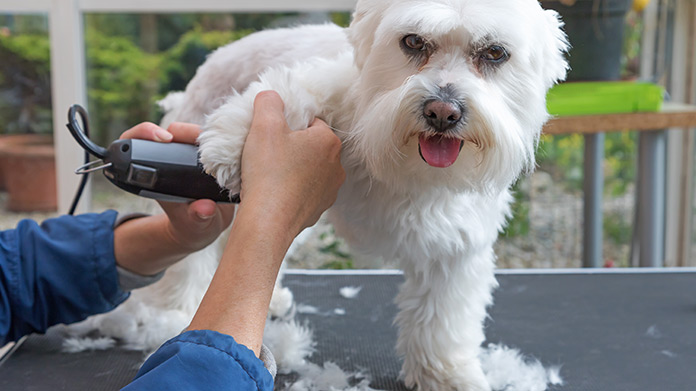
As life becomes increasingly busier, consumers are looking for ways to simplify their lives and get more done with less time. Pet lovers across the globe have proven that they will go to great lengths to ensure their animals are properly cared for. For the busy pet owner, a mobile dog groomer is the perfect solution, offering both convenience and individual attention for each animal.
You may also be interested in additional home business ideas.
Our guide is in 3 parts:
While ongoing expenses are significantly lower, start-up costs can be high. Your first investment should be your mobile grooming vehicle. Be sure to weigh your options and facility requirements when considering what type of vehicle you’ll invest in.
Vehicle requirements include:
Some entrepreneurs prefer to invest in a fully outfitted van, while others choose to invest in a trailer and convert it themselves. Initial costs range anywhere from $10,000 to $100,000, depending upon your needs and what you already have available.
If you plan to perform grooming services yourself, you will also need the following items:
As a rule, any groomer you hire will come with their own set of grooming supplies. You should, however, plan to offer a variety of shampoos, conditioners, and other “spa” treatments.
Unlike a fixed location, your ongoing expenses are minimal. Standard costs include:
Busy animal lovers who have enough disposable income to pamper their pets are your primary target audience. Your ultimate goal is to build a following of repeat customers.
Mobile dog grooming businesses generate revenue from each animal they care for. Basic services are offered, with additional fees for any “extras.” There are several advantages to offering a mobile service – overhead is significantly reduced and clients are willing to pay higher fees for the convenience factor.
Mobile grooming fees will vary, depending upon where you live. Fees range anywhere from $30 to $70 (extra services not included). Most grooming fees vary, depending upon the breed and size of dog.
If you plan to hire a groomer, they will earn 50% of each grooming. The average mobile groomer reports grooming six dogs a day, at an average of $65 per dog. This comes out to $390/day if you are your own groomer, $195/day with an outside groomer.
There are a number of ways to ensure maximum profitability for your mobile dog grooming business:
Greeting clients and their pets will be an inevitable part of each day and is a critical aspect of creating a strong client base. The rest of your time will involve care and maintenance of your vehicle, physical spaces, and your marketing and online presence. Normal duties will include, but are not limited to:
While no formal education or licensing is required in most states, it is critical that you gain hands-on experience before opening a mobile dog grooming business. Either for your own personal knowledge, or to help in the hiring process, you must understand how to read an animal’s signals. Each personality is different and dictates how the grooming session proceeds. Since the mobile dog groomer is working alone, they must be able to pick up, move, and handle dogs of every size, requiring both strength and patience.
The National Dog Groomers Association of America, Inc offers a variety of workshops and classes. They are also a great resource for marketing your business and networking with other grooming professionals. Industry leaders also recommend gaining experience through volunteer work at a local shelter. This will help in becoming familiar with different breeds, what goes into running such a business, and will help you build relationships with potential customers and business partners.
Since space is limited in your mobile unit, one groomer is the most you will want for each workspace. This does not, however, have to limit your business’ growth. As profits increase, consider building a fleet, with at least one unit for each area of town. You could also increase your business to include permanent locations, based on the area’s demands.
Since this is usually a small, independent business in the beginning, work to keep your overhead costs low. Additionally, have a business plan and prioritize your needs to become successful and well-known within the industry relatively soon.
With limited space, your business usually only needs one groomer per vehicle. Many entrepreneurs opt to handle administrative duties as well, eliminating the need for a team. If you do not plan to groom the animals yourself, carefully consider each grooming candidate. Check out their references and work history, requesting a portfolio when available.
Business Evaluation & Strategy Tool
We'll walk you through the four pillars every business needs: Points of Leverage, Marketing Strategy, Financial Model, and Personal Compatibility. At the end you'll see a personalized report and your action plan below will be tailored to your answers.
Every viable business has natural advantages. Below are common leverage points across four categories. Pick the ones that apply to your Mobile Dog Grooming business. We've pre-suggested a few based on your idea — review and adjust.
Without a way to connect with customers, even great businesses fail. Pick the channels you plan to use to reach your customers.
Enter your monthly baseline costs — the minimum overhead to keep the business running. Then we'll calculate how many sales per month you need to break even.
A business that doesn't fit your life will fail no matter how good the numbers look. Tell us how this business fits you.
Complete the four pillars and your personalized summary will appear here.
Nine concrete steps to take you from idea to open business, grouped into 30-day phases. Complete the planner above and we'll highlight what's most important for your situation.
An LLC keeps your personal assets separate from business debts and lawsuits — the most common reason small business owners choose this structure. Sole proprietorships and partnerships do not provide this protection.
Apply for your free Employer Identification Number through the IRS, then register for any state or local taxes that apply to your business (sales tax, franchise tax).
A dedicated business account is required to maintain personal asset protection. Mixing personal and business finances ('piercing the corporate veil') can void your LLC's liability shield.
Recording expenses and income from day one makes tax filing easier and lets you see when the business is actually profitable. Use software (QuickBooks, Wave) or a part-time bookkeeper.
State and local requirements vary widely. Brick-and-mortar businesses typically need a Certificate of Occupancy; service businesses may need specific professional licensing; food businesses need health permits.
General Liability Insurance is the most common starting point. If you'll have employees, most states require Workers' Compensation. Specific industries need additional coverage (product liability, professional liability, etc.).
Your brand is how customers perceive and remember you. A clear name, logo, and visual identity make every later marketing decision easier and protect you legally as you grow.
Every legitimate business needs a website. Social media pages are not a substitute — you don't own the platform. Modern website builders mean you can launch a clean site in a weekend without a developer.
A dedicated business number keeps your personal life private, makes the business look legitimate, and lets you route calls professionally. Cloud phone services start under $20/month.
Starting a Mobile Dog Grooming business typically costs $10,000 to $100,000. It is considered a high capital-intensity business.
A Mobile Dog Grooming business runs roughly a 3% net profit margin, and most owners reach break-even in about 9 to 24 months.
You can usually launch a Mobile Dog Grooming business in about 12 to 36 weeks, and it is commonly run full time.
A Mobile Dog Grooming business is generally an intermediate-skill business to start, with stable demand. TRUiC rates it 44 out of 100 on our Idea Score.
Most Mobile Dog Grooming businesses register as an LLC or other legal entity and obtain a general business license. Depending on your state and city you may also need industry-specific permits, sales tax registration, and zoning or health approvals, so check your local requirements before you launch.