Startup cost
$50k–$150k
TRUiC Business Ideas
Decision Snapshot
Idea Score
64
Startup cost
$50k–$150k
Profit margin
25%
Break-even
18 mo–36 mo
Time to launch
12 wk–36 wk
Demand trend
Stable
5-yr failure rate
—
Capital intensity
High
Time commitment
Full time
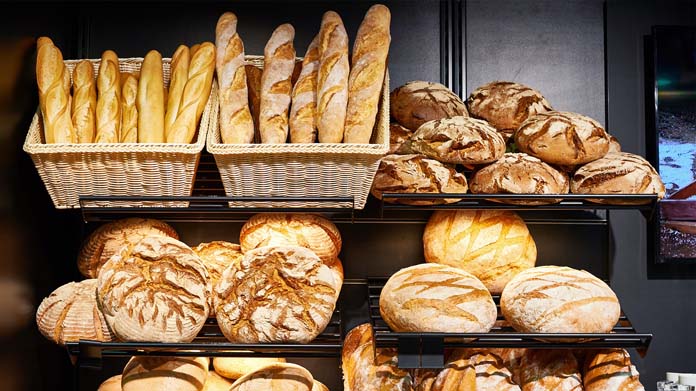
Starting a bread bakery can be an exciting and rewarding venture for entrepreneurs who are passionate about artisanal baking and want to build a business around crafting high-quality breads.
Having said that, you should keep in mind that launching a successful bread bakery requires more than just baking expertise — you’ll need to understand food safety regulations, manage ingredient costs effectively, and get to grips with how to actually run a business.
In this comprehensive guide, we’ll walk you through all the essential steps you’ll need to take to start your own bread bakery, from developing your recipes and securing proper licensing to setting up operations and building a loyal customer base.
Our guide is in 3 parts:
The U.S. retail bakery industry has shown robust growth over the past decade, reaching an estimated market value of USD $78.96 billion in 2023 alone. On top of this, forecasts suggest this growth will only continue at a rate of 1.60% until the market reaches an estimated USD $86.93 billion in 2029.
It’s thought that this growth is primarily driven by increasing consumer interest in authentic, small-batch bread products, as far more consumers have reported they’re now willing to pay premium prices for artisanal breads that offer unique flavors and high-quality ingredients.
This can be clearly seen with the rise of the “craft bread” movement, which has created significant opportunities for independent bakeries able to deliver products that are superior to mass-produced alternatives.
Another key factor supporting this industry’s growth is the rising demand for specialty breads — such as sourdough, whole grain, and gluten-free options — which have become particularly popular among health-conscious consumers due to their perceived health benefits and superior taste.
However, in spite of the industry’s current positive outlook, new bakeries face several significant challenges — the most important of these being the rising cost of ingredients (e.g., organic flour and specialty grains) and the strain this puts on profit margins.
New bakeries also often struggle with production planning that’s required for this type of business, as the perishable nature of bread makes it difficult to balance minimizing waste with meeting demand.
On top of this, the cost of contracting skilled bakers can be very steep because they’re in short supply and already command high wages due to their expertise — which only puts further pressure on profits.
If you’re considering whether a bread bakery is right for you, the first thing you’ll need to know is whether it’s a) affordable, and b) worth the investment. I mean, how much can you actually make running your own bread bakery?
Well, it depends, and the initial investment for a bread bakery varies widely based on factors such as your location, the scale of your operations, and the types of bread you plan to offer:
Commercial Baking Equipment ($50,000 – $150,000): By far the largest expense to be aware of when starting up your bread bakery is the cost of obtaining all the necessary equipment — including commercial ovens, mixers, proofing cabinets, and refrigeration units. While the exact amount will vary depending on whether you’ll buy new or used equipment and the scale of your operation, this cost will easily make up the largest portion of your initial budget.
Initial Inventory ($5,000 – $15,000): Another key expense to plan for is the cost associated with stocking the initial inventory you’ll need to be able to get up and running — which should include various types of flour, yeast, and other ingredients, plus packaging too. The total amount you’ll end up spending on this cost will largely depend on how much you plan to produce and whether you’ll be using any specialty or organic ingredients.
Kitchen Space ($3,000 – $8,000 monthly): You’ll also need to secure a commercial kitchen space that meets health department requirements and provides enough room for you to be able to bake. This space will likely make up a significant portion of both your initial and ongoing budget as it includes a number of costs, such as rent, utilities, and other basic maintenance fees.
Licenses and Permits ($2,000 – $5,000): For your bread bakery business to operate legally, you’ll need to obtain several different licenses and permits and pay the relevant fees associated with them. Typically, this will include a food service license, health department permits, and various certifications required for food handling and production (see Step 6).
Note: In order to manage initial costs when getting started out, we recommend offering a limited selection of baked goods that are carefully chosen to meet customer demand and highlight your bakery’s strengths before scaling up.
The earning potential for a bread bakery can be substantial, with well-managed operations easily able to generate between $350,000 and $500,000 per year in revenue.
Due to the healthy margins on most artisanal baking products, it’s highly common for bakeries to achieve profit margins between 25% and 35% on their products. As an example, specialty loaves — which cost between $2 and $3 to produce — can often be sold for anywhere between $8 and $12.
As such, this business model provides strong potential to generate significant profits when run correctly. With that being said, it’s important to understand that your profitability will ultimately depend on how effectively you can manage production volumes.
Since bread is highly perishable, any spoiled product directly impacts your bottom line. This leads most successful bakeries to maintain a careful balance between ensuring product availability and minimizing wastage — typically aiming to sell at least 85% of daily production to maintain profitable operations.
While finding the balance between product availability and waste is key to your profitability, there are a number of other strategies you can try if you want to further grow your earnings. One of the most popular is to form wholesale accounts with restaurants and specialty stores, as this provides a great source of steady, predictable income.
Alternatively, offering baking classes to customers is another great way to diversify your revenue — not only because of the money you’ll earn from it, but because it’s an effective strategy for broadening your customer base too.
Yes, bread bakeries can be quite profitable, with most successful operations achieving profit margins between 25% and 35% on their products.
With that being said, profitability heavily depends on how well you can manage production volumes and minimize waste, as bread that you can’t sell because it’s spoiled will severely impact your bottom line.
Starting a bread bakery typically requires an initial investment between $70,000 and $200,000, depending on your location and scale of operations.
Due to how expensive commercial baking equipment is, it will likely represent the largest portion of this overall cost.
You’ll likely need a number of different licenses to operate a bread bakery legally, including a food service license, certain specific health department permits, and food handler certifications.
While specific requirements vary by location, you’ll likely be required to undergo regular inspections and permit renewals to ensure your barkery continues to remain compliant with food safety standards.
To make your bakery stand out, focus on developing unique, high-quality products and building strong relationships with your community.
A great way to differentiate yourself is by specializing in specific types of bread — like artisanal sourdough or traditional European-style loaves — or to focus on organic ingredients and specialty dietary options (e.g., gluten-free breads).
Business Evaluation & Strategy Tool
We'll walk you through the four pillars every business needs: Points of Leverage, Marketing Strategy, Financial Model, and Personal Compatibility. At the end you'll see a personalized report and your action plan below will be tailored to your answers.
Every viable business has natural advantages. Below are common leverage points across four categories. Pick the ones that apply to your Bread Bakery business. We've pre-suggested a few based on your idea — review and adjust.
Without a way to connect with customers, even great businesses fail. Pick the channels you plan to use to reach your customers.
Enter your monthly baseline costs — the minimum overhead to keep the business running. Then we'll calculate how many sales per month you need to break even.
A business that doesn't fit your life will fail no matter how good the numbers look. Tell us how this business fits you.
Complete the four pillars and your personalized summary will appear here.
Nine concrete steps to take you from idea to open business, grouped into 30-day phases. Complete the planner above and we'll highlight what's most important for your situation.
An LLC keeps your personal assets separate from business debts and lawsuits — the most common reason small business owners choose this structure. Sole proprietorships and partnerships do not provide this protection.
Apply for your free Employer Identification Number through the IRS, then register for any state or local taxes that apply to your business (sales tax, franchise tax).
A dedicated business account is required to maintain personal asset protection. Mixing personal and business finances ('piercing the corporate veil') can void your LLC's liability shield.
Recording expenses and income from day one makes tax filing easier and lets you see when the business is actually profitable. Use software (QuickBooks, Wave) or a part-time bookkeeper.
State and local requirements vary widely. Brick-and-mortar businesses typically need a Certificate of Occupancy; service businesses may need specific professional licensing; food businesses need health permits.
General Liability Insurance is the most common starting point. If you'll have employees, most states require Workers' Compensation. Specific industries need additional coverage (product liability, professional liability, etc.).
Your brand is how customers perceive and remember you. A clear name, logo, and visual identity make every later marketing decision easier and protect you legally as you grow.
Every legitimate business needs a website. Social media pages are not a substitute — you don't own the platform. Modern website builders mean you can launch a clean site in a weekend without a developer.
A dedicated business number keeps your personal life private, makes the business look legitimate, and lets you route calls professionally. Cloud phone services start under $20/month.
Starting a Bread Bakery business typically costs $50,000 to $150,000. It is considered a high capital-intensity business.
A Bread Bakery business runs roughly a 25% net profit margin, and most owners reach break-even in about 18 to 36 months.
You can usually launch a Bread Bakery business in about 12 to 36 weeks, and it is commonly run full time.
A Bread Bakery business is generally an intermediate-skill business to start, with stable demand. TRUiC rates it 64 out of 100 on our Idea Score.
Most Bread Bakery businesses register as an LLC or other legal entity and obtain a general business license. Depending on your state and city you may also need industry-specific permits, sales tax registration, and zoning or health approvals, so check your local requirements before you launch.