Startup cost
$500k
TRUiC Business Ideas
Decision Snapshot
Idea Score
52
Startup cost
$500k
Profit margin
21%
Break-even
18 mo–36 mo
Time to launch
12 wk–36 wk
Demand trend
Rising
5-yr failure rate
—
Capital intensity
Very high
Time commitment
Full time
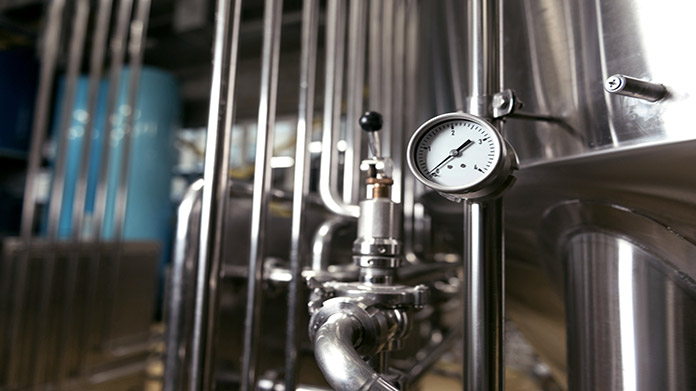
A microbrewery is a business that grows along with its community. This is because many brewers start off by by using small distributors to sell to local retailers who then sell to customers. Good markets for this business include areas in which restaurants and beer retailers are growing as well as markets near colleges and universities. This is because the average microbrew consumer is more educated than a standard beer drinker and these environments also have Millennial populations that favor experiences (such as exotic local beer) over regular products (standard brands of beer).
Our guide is in 3 parts:
It can cost upwards of $500,000 to open a microbrewery. The major cost contributors include renting space for 12 months (typically over $50,000) the operational costs for the first three months (approximately $60,000), and the microbrewery equipment itself, which costs approximately $18,000. Start-up inventory can cost over $16,000, while equipment costs for counter areas, serving areas, and store equipment can $26,000 or more. Meanwhile, legal costs—including obtaining proper licenses and permits, hiring a consultant, and purchasing required insurance—is likely to cost approximately $7,500.
For those who want to get into this kind of business at a much lower cost, a nanobrewery is a better idea than a full-scale microbrewery. Because a nanobrewery typically produces fewer than 20 barrels per year, your equipment is smaller in scale and you need less of it and fewer annual materials. Needing less space means also means you can get away rent a much smaller office space than a microbrewery would require. In fact, many people convert their home garages into a nanobrewery.
Many of the ongoing costs of this business are variable depending on region, business size, and fluctuating markets. The primary expenses will be paying for the materials required to brew (such as malt, yeast, hops), ongoing utilities costs (such as electricity, gas, sewage) and the ongoing costs to clean and repair equipment, including regularly purchasing cleaning equipment. Beyond this, ongoing expenses include paying monthly rent for the business and paying salary for any employees.
Brewers don’t usually deal with customers directly. Rather, their clients are the beer distributors. One way to find distributors is to seek out the local major distributors that specialize in selling brands like Coors, Miller, and Anheuser-Busch. They may not be interested in selling your local flavor, but their deep history and network can likely point you towards local distributors specializing in imports (a good option for small brewing businesses) or those who specialize in handcrafted beers (an ideal option for a small brewing business).
A microbrewery typically operates on a three-tier system to make money. Under a three-tier system, the brewer uses a distributor to sell alcohol to local bars, grocery stores, liquor stores, etc. These customer facing establishments then sell to the consumers. Microbrews are sold consistently throughout the year and many brewers create unique seasonal offerings. Therefore, it is important to note that even though beer is sold regardless of the season, sales peak during the summer and winter seasons, but they experience dips going into fall and spring.
Brewers who are just starting out may consider self-distribution: while this is not allowed in every state, it enables the brewer to cut out the distribution middleman and sell beer directly to their local areas. In doing so, breadth of distribution will be limited, however reduced overhead means operational costs and beer costs can be lowered.
The final end-customer price of your microbrew to customers is usually a minimum of $10 for a six-pack. Depending your beer’s popularity and brand qualities, you may be able to support pricing upwards of $15 per sixpack.
While these are standard prices in the industry, it’s critical that all ongoing costs are recovered in the pricing with a reasonable profit margin. Ongoing costs include brewing, bottling and packaging beer while also factoring in an average distributor margin of 21 percent and an average retailer margin of 31 percent, as well as relevant state, federal, and sales taxes.
In general, a microbrewery can turn a profit—microbreweries had a 9.1 percent profit margin in the Unites States in 2014. It’s important to keep in mind that it may take over a year for a new microbrewery business to regularly turn profit, though, and that fluctuations in the cost of things like grain can cut into that profit margin. Finally, there is a constant need to reinvest some of the profit into growing the business to reach more customers and stand out from the competition.
Find a distributor willing to sell these craft beers to a larger demographic.
Start one of the sideline businesses mentioned in this article; open a taproom and/or a restaurant.
The steadiest path to increased profit is increased production: the ability to generate more barrels per year is directly tied to the amount of profit you can earn, which may eventually mean upgrading equipment in order to generate more business.
Operating a microbrewery business involves lots of cleaning. It takes a variety of vessels to ferment and package your product, all of which results in a variety of dirty tanks, tools, floors, etc. When the often-wet equipment ends up breaking during a time-sensitive fermenting process, the brewer will need to know how to fix many of these things. Finally, the actual act of fermenting requires a patience for repetitive tasks and a meticulous attention to detail and record-keeping.
The best experience one can have prior to opening a microbrewery is to have worked as an assistant brewer, providing the necessary skills and background.
Aspiring brewers without lots of background can gain or increase brewing skills by taking certification or diploma programs from institutions such as the American Brewers Guild, the Beer Judge Certification Program, the Cicerone Program, and the Siebel Institute of Technology.
Previous experience brewing at home or running a smaller nanobrewery can also be a major advantage.
Brewing can be done at very small scales, including having a nanobrewery. A nanobrewery is a smaller operation that produces fewer beers—typically no more than three barrels of beer per batch. A nanobrewery can be the first step towards opening a larger microbrewery, which usually produces fewer than 15,000 beer barrels a year. Expanding the business beyond that point usually depends on finding larger distributors willing to distribute to larger regions, which may eventually result in a national brand.
A microbrewery business can also grow by pursuing sideline business opportunities such as selling beer on site by opening a taproom or even running a full-scale restaurant at the brewery (though this requires an additional brewpub license).
With a microbrewery business, you’ll generally need to hire more employees as the business grows. For instance, it is possible for a nanobrewery to handle everything without help, provided he/she can perform general handyman repairs as needed. A microbrewery will typically need an assistant brewer to assist with labor, and possibly a sales manager as the business grows. As the microbrewery produces more barrels per year and/or pursues sideline opportunities such as opening a taproom, more employees will be necessary to play roles such as server, manager, and assistant brewer.
Assistant brewer salaries average $34,000 and restaurant manager salaries typically range from $38,000 to $42,000.
Read our microbrewery hiring guide to learn about the different roles a microbrewery typically fills, how much to budget for employee salaries, and how to build your team exactly how you want it.
Business Evaluation & Strategy Tool
We'll walk you through the four pillars every business needs: Points of Leverage, Marketing Strategy, Financial Model, and Personal Compatibility. At the end you'll see a personalized report and your action plan below will be tailored to your answers.
Every viable business has natural advantages. Below are common leverage points across four categories. Pick the ones that apply to your Microbrewery business. We've pre-suggested a few based on your idea — review and adjust.
Without a way to connect with customers, even great businesses fail. Pick the channels you plan to use to reach your customers.
Enter your monthly baseline costs — the minimum overhead to keep the business running. Then we'll calculate how many sales per month you need to break even.
A business that doesn't fit your life will fail no matter how good the numbers look. Tell us how this business fits you.
Complete the four pillars and your personalized summary will appear here.
Nine concrete steps to take you from idea to open business, grouped into 30-day phases. Complete the planner above and we'll highlight what's most important for your situation.
An LLC keeps your personal assets separate from business debts and lawsuits — the most common reason small business owners choose this structure. Sole proprietorships and partnerships do not provide this protection.
Apply for your free Employer Identification Number through the IRS, then register for any state or local taxes that apply to your business (sales tax, franchise tax).
A dedicated business account is required to maintain personal asset protection. Mixing personal and business finances ('piercing the corporate veil') can void your LLC's liability shield.
Recording expenses and income from day one makes tax filing easier and lets you see when the business is actually profitable. Use software (QuickBooks, Wave) or a part-time bookkeeper.
State and local requirements vary widely. Brick-and-mortar businesses typically need a Certificate of Occupancy; service businesses may need specific professional licensing; food businesses need health permits.
General Liability Insurance is the most common starting point. If you'll have employees, most states require Workers' Compensation. Specific industries need additional coverage (product liability, professional liability, etc.).
Your brand is how customers perceive and remember you. A clear name, logo, and visual identity make every later marketing decision easier and protect you legally as you grow.
Every legitimate business needs a website. Social media pages are not a substitute — you don't own the platform. Modern website builders mean you can launch a clean site in a weekend without a developer.
A dedicated business number keeps your personal life private, makes the business look legitimate, and lets you route calls professionally. Cloud phone services start under $20/month.
Starting a Microbrewery business typically costs $500,000. The largest cost is usually licensing and permits. It is considered a very high capital-intensity business.
A Microbrewery business runs roughly a 21% net profit margin, and most owners reach break-even in about 18 to 36 months.
You can usually launch a Microbrewery business in about 12 to 36 weeks, and it is commonly run full time.
A Microbrewery business is generally an intermediate-skill business to start, with rising demand. TRUiC rates it 52 out of 100 on our Idea Score.
Most Microbrewery businesses register as an LLC or other legal entity and obtain a general business license. Depending on your state and city you may also need industry-specific permits, sales tax registration, and zoning or health approvals, so check your local requirements before you launch.