Startup cost
$10k
TRUiC Business Ideas
Decision Snapshot
Idea Score
52
Startup cost
$10k
Profit margin
8%
Break-even
4 mo–12 mo
Time to launch
12 wk–36 wk
Demand trend
Stable
5-yr failure rate
—
Capital intensity
Medium
Time commitment
Part time
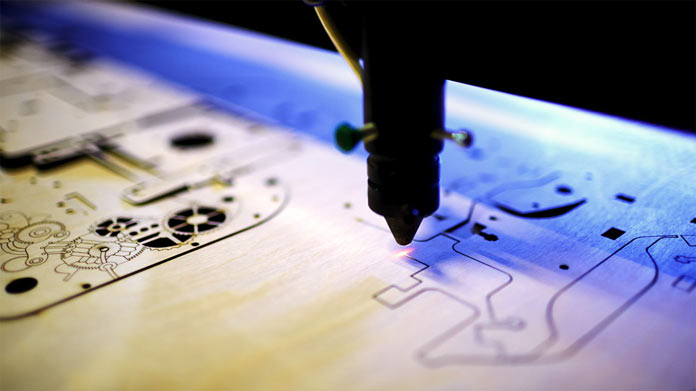
Laser cutting is a versatile business idea that can be taken in a number of different directions. While it’s historically been used in large-scale industrial applications, it’s recently gained popularity for smaller applications as the selection of tools and services widens. Entrepreneurs may use their lasers to either create their own objects or to engrave existing objects for either professional or personal use.
Our guide is in 3 parts:
Laser cutters can get started with a laser system, computer, and accompanying software. You don’t necessarily need a formal space to work — especially if you already have a garage or studio that you’re currently using. The prices will vary based on the quality and the scope of each item, but can potentially be as low as $10,000 to get started. (If working with employees, owners will also need to budget for commercial insurance.)
Once people have all the equipment they need, the ongoing expenses tend to be on the low side. The machinery will need regular maintenance and updates, but should last for many years to come. Owners should also account for standard marketing fees plus staff salaries and ongoing insurance payments (if hiring employees.)
The target market can be anyone who enjoys quality products or artistic expression in either a professional or personal capacity. Because a laser cutter can be used to make anything from trophies to wedding invitations, laser cutters can decide their demographics based on the materials, prices, and time commitment it takes to make each object.
Laser cutting businesses will typically set their prices to give themselves a healthy profit margin. For example, if a custom necklace cost $50 in raw materials to make and an hour to produce, the owner may charge $125 for the finished product.
Laser cutters may find they can charge their customers quite a lot for relatively simple pieces. Before getting started, make sure to check the going rates for similar items in your area. If you’re creating something different from anything else on the market, base your price on the hourly rate you wish to make and then adjust based on the response you receive.
In the first few months, profits may be limited as owners struggle to find the right audience. However, there’s little doubt that people are willing to pay for these services. Owners can charge up to $200 for a set of just 12 laser-engraved invitations. Organizations especially (e.g., government services, businesses, etc.) may offer tens of thousands of dollars for only a few weeks worth of work.
Owners should explore as many business opportunities as possible to enhance their skills and make themselves more marketable. So if an owner starts off making fun and fashionable pieces, they can also consider branching out into engraving company logos on their machinery or providing signage for other small businesses in the area.
Most of the day will usually be spent designing, cutting, and engraving. Owners may also need to manage staff, decide on an advertising strategy, or perform general administrative tasks.
This business is excellent for someone who has prior experience with laser cutting, either from professional or personal experience. Many hobbyists will experiment with making different household objects (e.g., dollhouses, Christmas decorations, etc.) before realizing there’s a real demand for their services. You’ll also need a certain amount of customer service skills to handle potential conflicts over your services.
Laser cutters have a high growth potential because they’re versatile enough to work within a variety of industries. They can also work with different materials to fit a wide range of customer requests. A laser cutter makes it easier to personalize or brand items without pricing the majority of people out of the market. This perk plus the quality and the longevity of laser-cut objects have been the driving forces behind the rise in the popularity of laser cutting.
Laser cutting businesses are still somewhat new, so owners will be facing a new frontier when it comes to finding their audience and discovering why certain products sell. Artistic owners should start on websites like Etsy to learn more about what’s in demand.
This isn’t to say that owners can’t create their own demand based on the quality and innovation of their items, only that it helps to have a baseline before moving forward. Those who enter this business may not need a formal background in sales, but they should also be prepared to highlight what makes their business different from traditional methods.
Owners who want to add more functionality to their customers’ lives may want to contact local schools and businesses to learn more about their needs. Developing relationships with different decision-makers allows owners to see how they can cater their skills to fit their potential client’s needs. This can lead to the signing of different contracts to provide a constant supply of items. For example, a school may choose you to create the trophies for their sports teams, or a business may want you to engrave their name on a new product they’re debuting to the public.
Finally, if you’re buying a new laser or using your current laser to try something new, make sure that your original laser dealer can answer your questions. They should be able to tell you more about how to adapt your laser to each new task.
Unless you’re starting with a substantial amount of orders, it may make more sense to operate alone until the demand reaches a tipping point. If you don’t feel as though you’ll be efficient at administrative tasks, you can consider hiring a part-time secretary to provide general organization and customer service to clients.
Business Evaluation & Strategy Tool
We'll walk you through the four pillars every business needs: Points of Leverage, Marketing Strategy, Financial Model, and Personal Compatibility. At the end you'll see a personalized report and your action plan below will be tailored to your answers.
Every viable business has natural advantages. Below are common leverage points across four categories. Pick the ones that apply to your Laser Cutting business. We've pre-suggested a few based on your idea — review and adjust.
Without a way to connect with customers, even great businesses fail. Pick the channels you plan to use to reach your customers.
Enter your monthly baseline costs — the minimum overhead to keep the business running. Then we'll calculate how many sales per month you need to break even.
A business that doesn't fit your life will fail no matter how good the numbers look. Tell us how this business fits you.
Complete the four pillars and your personalized summary will appear here.
Nine concrete steps to take you from idea to open business, grouped into 30-day phases. Complete the planner above and we'll highlight what's most important for your situation.
An LLC keeps your personal assets separate from business debts and lawsuits — the most common reason small business owners choose this structure. Sole proprietorships and partnerships do not provide this protection.
Apply for your free Employer Identification Number through the IRS, then register for any state or local taxes that apply to your business (sales tax, franchise tax).
A dedicated business account is required to maintain personal asset protection. Mixing personal and business finances ('piercing the corporate veil') can void your LLC's liability shield.
Recording expenses and income from day one makes tax filing easier and lets you see when the business is actually profitable. Use software (QuickBooks, Wave) or a part-time bookkeeper.
State and local requirements vary widely. Brick-and-mortar businesses typically need a Certificate of Occupancy; service businesses may need specific professional licensing; food businesses need health permits.
General Liability Insurance is the most common starting point. If you'll have employees, most states require Workers' Compensation. Specific industries need additional coverage (product liability, professional liability, etc.).
Your brand is how customers perceive and remember you. A clear name, logo, and visual identity make every later marketing decision easier and protect you legally as you grow.
Every legitimate business needs a website. Social media pages are not a substitute — you don't own the platform. Modern website builders mean you can launch a clean site in a weekend without a developer.
A dedicated business number keeps your personal life private, makes the business look legitimate, and lets you route calls professionally. Cloud phone services start under $20/month.
Starting a Laser Cutting business typically costs $10,000. It is considered a medium capital-intensity business.
A Laser Cutting business runs roughly a 8% net profit margin, and most owners reach break-even in about 4 to 12 months.
You can usually launch a Laser Cutting business in about 12 to 36 weeks, and it is commonly run part time.
A Laser Cutting business is generally an intermediate-skill business to start, with stable demand. TRUiC rates it 52 out of 100 on our Idea Score.
Most Laser Cutting businesses register as an LLC or other legal entity and obtain a general business license. Depending on your state and city you may also need industry-specific permits, sales tax registration, and zoning or health approvals, so check your local requirements before you launch.