Startup cost
$10k–$30k
TRUiC Business Ideas
Decision Snapshot
Idea Score
58
Startup cost
$10k–$30k
Profit margin
8%
Break-even
4 mo–12 mo
Time to launch
12 wk–36 wk
Demand trend
Rising
5-yr failure rate
—
Capital intensity
Medium
Time commitment
Full time
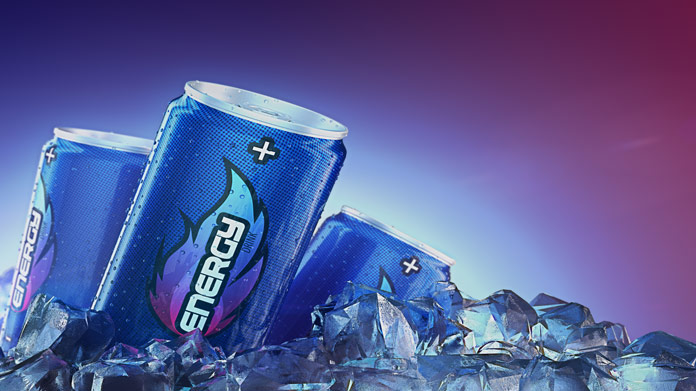
You may sell your energy drinks through vending machines, restaurants, grocery stores, and even bars. Branding it in such a way as to emphasize your home town or state can help foster community spirit (similar to how the name of Gatorade helps honor the University of Florida where it was developed), and your choice of ingredients may allow you to emphasize the healthy effects this drink has on its consumers.
Our guide is in 3 parts:
The costs involved in opening an energy drink business can vary. A Bloomberg report from 2012 estimated that it may cost $100,000 or more to break into this business. A quarter of that money may go to a beverage development company in order to get your drink to a prototype stage. It may cost another $25,000 to get the raw ingredients and other materials necessary to begin production, including the labels and packaging. You must then pay for the labor, inventory, and distribution of your initial products: depending on how many units you are producing, this could cost up to $40,000. Finally, it is worth investing at least $10,000 or more into your initial advertising push: you are entering into a crowded market, and it’s important to let customers know how and why your product stands out.
If you are working with a beverage distribution company, your ongoing expenses are something of a double-edged sword: you will not have to separately manage aspects such as production, storage, and shipping on your own, and you won’t have to personally pay for pricey business leases. However, all of these things factor into your production costs: if it costs $40,000 to produce, store, and ship a certain number of drinks in your first month, it will cost the same to ship that same amount next month. This cost will go up or down depending on the quantity of drinks produced.
The typical demographic for energy drinks is young men between the ages of 16 and 24. This is the legacy of the original marketing for companies such as Monster, although you can tweak your ingredients, branding, and marketing to target a less-served demographic and develop a better niche.
An energy drink company makes money through the distribution and sale of its own brand of energy drinks.
As a product, energy drinks have a wide range of price points. For a 16-ounce drink, prices typically range from $1.99 for something like Full Throttle to $4.00 for something like Red Bull. Your own price will likely fall in-between these, though you want to be competitive within your region.
The exact profit you can make is hard to determine, but things look pretty good: the energy drink industry has seen a five percent boost since 2013 and is overtaking soda as the drink of choice for many consumers. Sales of Red Bull amount to over $3.4 million each year and Monster Energy Drink sells over $3 million. While it will take your own drink longer to establish itself, there is great potential for profit.
Be sure to price your drinks competitively, but don’t be afraid to increases the price as need be: even a small bump can lead to a big shift in profits. Use your social media to advertise the other potential uses of your energy drink: a good model is Red Bull, who helped make Red Bull and vodka a preferred drink for many club goers. Finally, make sure your advertisements always highlight your community roots. This helps establish you within your region but also positively distinguishes you from bigger companies, making your drink look more artisinal and, therefore, more appealing.
Your exact daily activities will vary depending on how you start your business. If you work with a beverage development company, you will spend much of your days raising funds and collaborating with various professionals on everything from the exact ingredients of your drink to its logo, brand name, and marketing. You will also help facilitate practical details such as the inventory and shipment of your products. If you want to maintain more direct control over your product, you may decide to work with a co-packer that emphasizes research and development rather than a larger consulting company.
A formal education in fields such as health or chemistry can aid you in creating the energy drink itself. Prior sales experience can help you set up the various distribution deals needed for your energy drink to thrive. While less likely, any direct experience you may have working with an energy drink manufacturer will be invaluable.
The growth potential for this business is modest. The Monster Energy Drink company recently experienced a lower sales bump than expected (8.9% rather than double digits) even after being bought out by marketing juggernaut Coca-Cola. However, it should be noted that the sales bump they received is still a good indicator of market health and, as mentioned earlier, the market certainly has room for more energy drinks catering to different demographics than Monster.
Stand out from the competition by developing a specific niche. For instance, marketing towards those thirty and up can instantly distinguish you from the Monster demographic. Some form of community branding and community-based advertising can also help your drink take root in a specific region, with positive word of mouth allowing you to later expand. Finally, be very selective about the development of a logo: this will be the first thing customers see when they view your drink in a vending machine, and it must be vivid and distinctive.
Unlike some jobs, this will require a team very early on. Whether you are working with a beverage consulting company or a co-packing company, it will take a large team to bring your energy drink from concept to market.
Business Evaluation & Strategy Tool
We'll walk you through the four pillars every business needs: Points of Leverage, Marketing Strategy, Financial Model, and Personal Compatibility. At the end you'll see a personalized report and your action plan below will be tailored to your answers.
Every viable business has natural advantages. Below are common leverage points across four categories. Pick the ones that apply to your Energy Drinks business. We've pre-suggested a few based on your idea — review and adjust.
Without a way to connect with customers, even great businesses fail. Pick the channels you plan to use to reach your customers.
Enter your monthly baseline costs — the minimum overhead to keep the business running. Then we'll calculate how many sales per month you need to break even.
A business that doesn't fit your life will fail no matter how good the numbers look. Tell us how this business fits you.
Complete the four pillars and your personalized summary will appear here.
Nine concrete steps to take you from idea to open business, grouped into 30-day phases. Complete the planner above and we'll highlight what's most important for your situation.
An LLC keeps your personal assets separate from business debts and lawsuits — the most common reason small business owners choose this structure. Sole proprietorships and partnerships do not provide this protection.
Apply for your free Employer Identification Number through the IRS, then register for any state or local taxes that apply to your business (sales tax, franchise tax).
A dedicated business account is required to maintain personal asset protection. Mixing personal and business finances ('piercing the corporate veil') can void your LLC's liability shield.
Recording expenses and income from day one makes tax filing easier and lets you see when the business is actually profitable. Use software (QuickBooks, Wave) or a part-time bookkeeper.
State and local requirements vary widely. Brick-and-mortar businesses typically need a Certificate of Occupancy; service businesses may need specific professional licensing; food businesses need health permits.
General Liability Insurance is the most common starting point. If you'll have employees, most states require Workers' Compensation. Specific industries need additional coverage (product liability, professional liability, etc.).
Your brand is how customers perceive and remember you. A clear name, logo, and visual identity make every later marketing decision easier and protect you legally as you grow.
Every legitimate business needs a website. Social media pages are not a substitute — you don't own the platform. Modern website builders mean you can launch a clean site in a weekend without a developer.
A dedicated business number keeps your personal life private, makes the business look legitimate, and lets you route calls professionally. Cloud phone services start under $20/month.
Starting an Energy Drinks business typically costs $10,000 to $30,000. It is considered a medium capital-intensity business.
An Energy Drinks business runs roughly a 8% net profit margin, and most owners reach break-even in about 4 to 12 months.
You can usually launch an Energy Drinks business in about 12 to 36 weeks, and it is commonly run full time.
An Energy Drinks business is generally an intermediate-skill business to start, with rising demand. TRUiC rates it 58 out of 100 on our Idea Score.
Most Energy Drinks businesses register as an LLC or other legal entity and obtain a general business license. Depending on your state and city you may also need industry-specific permits, sales tax registration, and zoning or health approvals, so check your local requirements before you launch.