Startup cost
$2k–$10k
TRUiC Business Ideas
Decision Snapshot
Idea Score
63
Startup cost
$2k–$10k
Profit margin
8%
Break-even
4 mo–12 mo
Time to launch
2 wk–8 wk
Demand trend
Rising
5-yr failure rate
—
Capital intensity
Medium
Time commitment
Full time
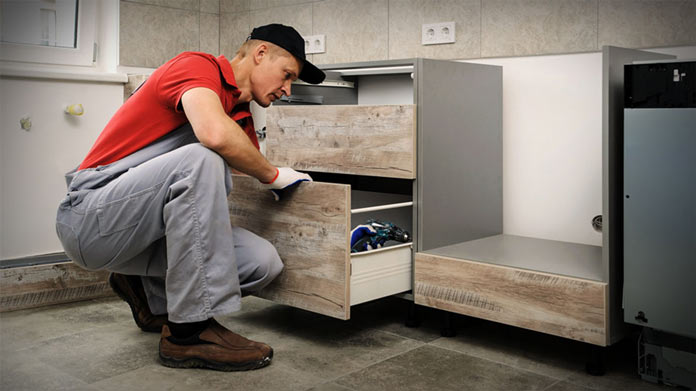
Almost every building with a kitchen or bathroom has cabinets, which are made by cabinet making businesses.
With new buildings constantly being constructed and existing ones regularly being remodeled, there is a strong and steady demand for these businesses. According to IBISWorld, the cabinet and manufacturing industry has been growing at 5.2 percent annually over the past five years and brings in more than $16 billion each year in revenue.
Our guide is in 3 parts:
The startup costs for a cabinet making business range from about $2,000 to $10,000. Where in this range a particular new business’ expenses fall depends partly on what type of woodworking shop and tools a business owner already has. The expenses go toward:
Tools
A workshop
A truck
Advertising
Business owners who have limited funds available can keep costs minimal by purchasing the essential tools used rather than new. A two-car garage can also suffice as a workshop at first, and a truck can be rented to deliver cabinets when they’re ready.
The ongoing expenses for a cabinet making business are manageable. They include the cost of materials, paying for a workshop, vehicle expenses, employee wages, and equipment depreciation.
The target market for a cabinet making business is largely contractors, home builders, interior designers, and architects. Although property owners are the people who ultimately pay for cabinets, these professionals are the gateways to property owners. Property owners will ask for recommendations, and many will use the cabinet maker that their contractor, builder, interior designer or architect recommends.
A cabinet making business makes money by selling finished cabinets. Cabinets might be sold individually, or a set fee may be charged for a project.
Cabinet prices are often discussed in terms of linear foot:
Stock cabinets cost between $60 and $200 per foot
Semi-custom cabinets cost between $100 and $650 per foot
Custom cabinets cost between $500 and $1,200 per foot
Most cabinet makers end up earning between $40 and $70 per hour, and the cost of cabinets tends to be about 30 percent of a the total price to remodel a kitchen.
A cabinet making business can earn a significant profit. Making five cabinets per day, a custom cabinet business could bring in between $2,500 and $6,000 daily. Making 2,000 stock cabinets per day, a large company might earn between $12,000 and $24,000 per day.
Many cabinet makers also make vanities and offer cabinet refinishing. Some business owners also get into countertops and/or furniture.
Cabinet making business owners spend a lot of time making cabinets, which involves measuring, cutting, fastening, and gluing. When not actually building cabinets, business owners may be designing cabinets with customers, or delivering and installing finished cabinets.
Business owners must be skilled woodworkers, and they specifically need experience building cabinetry. Prospective owners who don’t have this experience may learn the necessary skills by:
Working for an existing cabinet business
Completing an apprenticeship with an experienced cabinet maker
Taking cabinet-making classes at a local community college or vocational school
Enrolling in online cabinet-making courses
Reading books on cabinet making
Penn Foster offers a diploma in cabinet and furniture making, and the Woodworkers Guild of America has many videos on cabinet making. Jim Tolpin’s Guide to Becoming a Professional Cabinetmaker is one of the most highly recommended books on the subject, and he has also written Building Traditional Kitchen Cabinets.
How large a cabinet making business can become depends partly on what type of cabinets the business makes.
Businesses that specialize in custom cabinetry usually remain small and serve a defined geographic area. They might build 5 cabinets in a day.
Businesses that offer stock cabinets can ship finished units throughout the country. They may manufacture 2,000 cabinets in a factory each day.
Contractors can provide regular work for cabinet making businesses, but few contractors are willing to subcontract with a new company.
One way business owners can get contractors’ attention is by offering to put in cabinets for free on a project. Offering a free set of cabinets lets the contractor pocket more profit or charge less to the property owner. This may just be enough of an incentive to convince a contractor to work with a new business.
While many business owners may not want to give away so much for free, getting a contractor to trust a business can provide a great long-term return on the initial investment of materials and labor.
A cabinet making business can be run as a one-person operation, but many businesses bring on one or two employees. In addition to any employees who help in the workshop, a business also needs someone experienced in cabinet installation. The most beautifully built cabinets won’t look right if they’re installed improperly, which is why having a skilled installer is so important.
Business Evaluation & Strategy Tool
We'll walk you through the four pillars every business needs: Points of Leverage, Marketing Strategy, Financial Model, and Personal Compatibility. At the end you'll see a personalized report and your action plan below will be tailored to your answers.
Every viable business has natural advantages. Below are common leverage points across four categories. Pick the ones that apply to your Cabinet Making business. We've pre-suggested a few based on your idea — review and adjust.
Without a way to connect with customers, even great businesses fail. Pick the channels you plan to use to reach your customers.
Enter your monthly baseline costs — the minimum overhead to keep the business running. Then we'll calculate how many sales per month you need to break even.
A business that doesn't fit your life will fail no matter how good the numbers look. Tell us how this business fits you.
Complete the four pillars and your personalized summary will appear here.
Nine concrete steps to take you from idea to open business, grouped into 30-day phases. Complete the planner above and we'll highlight what's most important for your situation.
An LLC keeps your personal assets separate from business debts and lawsuits — the most common reason small business owners choose this structure. Sole proprietorships and partnerships do not provide this protection.
Apply for your free Employer Identification Number through the IRS, then register for any state or local taxes that apply to your business (sales tax, franchise tax).
A dedicated business account is required to maintain personal asset protection. Mixing personal and business finances ('piercing the corporate veil') can void your LLC's liability shield.
Recording expenses and income from day one makes tax filing easier and lets you see when the business is actually profitable. Use software (QuickBooks, Wave) or a part-time bookkeeper.
State and local requirements vary widely. Brick-and-mortar businesses typically need a Certificate of Occupancy; service businesses may need specific professional licensing; food businesses need health permits.
General Liability Insurance is the most common starting point. If you'll have employees, most states require Workers' Compensation. Specific industries need additional coverage (product liability, professional liability, etc.).
Your brand is how customers perceive and remember you. A clear name, logo, and visual identity make every later marketing decision easier and protect you legally as you grow.
Every legitimate business needs a website. Social media pages are not a substitute — you don't own the platform. Modern website builders mean you can launch a clean site in a weekend without a developer.
A dedicated business number keeps your personal life private, makes the business look legitimate, and lets you route calls professionally. Cloud phone services start under $20/month.
Starting a Cabinet Making business typically costs $2,000 to $10,000. It is considered a medium capital-intensity business.
A Cabinet Making business runs roughly a 8% net profit margin, and most owners reach break-even in about 4 to 12 months.
You can usually launch a Cabinet Making business in about 2 to 8 weeks, and it is commonly run full time.
A Cabinet Making business is generally an intermediate-skill business to start, with rising demand. TRUiC rates it 63 out of 100 on our Idea Score.
Most Cabinet Making businesses register as an LLC or other legal entity and obtain a general business license. Depending on your state and city you may also need industry-specific permits, sales tax registration, and zoning or health approvals, so check your local requirements before you launch.