Startup cost
$100k–$1.0M
TRUiC Business Ideas
Decision Snapshot
Idea Score
30
Startup cost
$100k–$1.0M
Profit margin
4%
Break-even
1 mo–3 mo
Time to launch
12 wk–26 wk
Demand trend
Stable
5-yr failure rate
—
Capital intensity
Very high
Time commitment
Full time
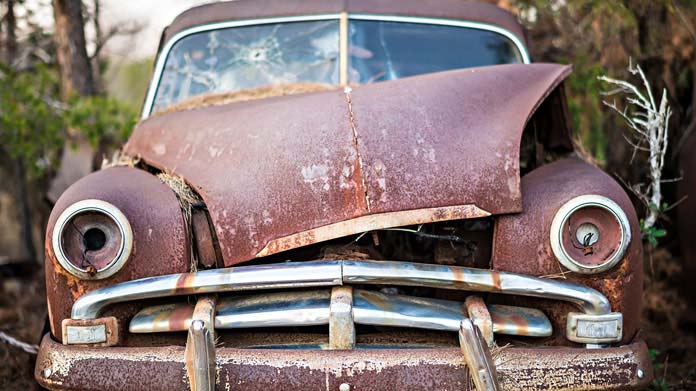
A junkyard, also commonly known as a salvage business, collects items consumers no longer deem usable, such as old vehicles, broken appliances, discarded furniture, and materials from demolished buildings.
This “scrap” is then transformed into reusable materials, such as metal, plastic, and other raw components, and sold to manufacturers, construction companies, and other buyers for repurposing or resale.
In this comprehensive guide, we’ll walk you through all the essential steps you’ll need to take to start your own junkyard business, from conducting market research and securing funding to setting up operations, and attracting customers.
Our guide is in 3 parts:
The U.S. junkyard industry is valued at around $8 billion as of 2024 and is projected to steadily grow in the coming years.
This growth is driven by increasing environmental regulations, advancements in recycling technology, and a heightened consumer focus on sustainability.
If you’re wondering why these factors are so impactful on the junkyard industry, the answer is that this is a result of the fact that both consumers and regulators are increasingly focusing on recycling efforts, and junkyards serve as the primary way these recycling activities are carried out.
An example of this is that over 12 million vehicles are decommissioned each year in the U.S., with up to 86% of their materials being recycled. And how does this happen? You guessed it — through the 9,000 junkyards operating across the country.
If you’re considering whether a junkyard business is right for you, the first thing you’ll need to know is whether it’s a) affordable, and b) worth the investment. I mean, how much can you actually make running your own junkyard business?
Well, it depends, and the initial investment for a junkyard business varies widely based on a multitude of factors, with total startup costs generally falling somewhere between $500,000 to $2,000,000.
These are broken down as follows:
Land Expenses: You will need to purchase or lease a sizable piece of land — typically at least 5 acres, with most junkyards requiring around 10 to 20 acres. This land will need to be located in either industrial parks, outskirts of urban centers, or rural regions, with costs typically ranging from $5,000 to $50,000 per acre, depending on factors such as proximity to major roads, access to utilities, and local land values.
Basic Infrastructure: After acquiring land, you will need to invest in infrastructure such as fencing, lighting, security systems, and a small office. These costs can range from $20,000 to $150,000, depending on the size and complexity of the facility.
Machinery and Equipment: The most significant expense when setting up a junkyard, by far, will be the investment you will need to make in the necessary machinery and tools. Regardless of the size of your operation, you will likely need at least one of the following pieces of equipment:
Car Crusher: You will need at least one car crusher, which is used to break down vehicles and process scrap materials, typically costing between $50,000 and $200,000, depending on the size and processing capacity.
Forklift or Loader: You will need a forklift or loader to move heavy materials and vehicles around your junkyard. These machines are important for efficient handling of inventory and can cost anywhere between $20,000 and $100,000, depending on their size, brand, and load capacity.
Tow Truck: You will need a tow truck to transport vehicles to and from your junkyard, with costs ranging from $40,000 to $200,000, depending on factors like its condition, towing capacity, and additional features such as flatbeds or hydraulic lifts.
Hydraulic Lifts: You will need at least two to four hydraulic lifts to efficiently raise vehicles for dismantling, with each lift typically costing anywhere between $5,000 and $35,000.
Environmental Compliance Prior to commencing your junkyard operations, you will likely need to obtain a combination of environmental licenses and permits, which may include:
Environmental Impact Assessment: To evaluate potential effects on the environment from your operations, costing anywhere between $5,000 to $25,000.
Stormwater Pollution Prevention Plan: Required for managing hazardous substances like oils and chemicals, typically costs around $1,000 to $5,000.
Hazardous Materials Handling Permit: You will need a tow truck to transport vehicles to and from your junkyard, with costs ranging from $40,000 to $200,000, depending on factors like its condition, towing capacity, and additional features such as flatbeds or hydraulic lifts.
Air Quality Permit (if crushing vehicles on-site): Necessary for managing emissions, with costs ranging from $2,000 to $10,000.
Staffing Costs: Depending on the size of your operation, you’ll need to hire mechanics, yard laborers, and office staff with knowledge in vehicle dismantling, hazardous material handling, and equipment operation. Wages can range from $30,000 to $100,000 annually per employee, depending on their experience and expertise.
Utility Costs: Your junkyard will have ongoing utility expenses, including electricity, water, and waste disposal, which can total around $5,000 to $35,000 annually.
Note: Keep in mind that some states require you to post a surety bond, usually ranging from $20,000 to $200,000, and secure environmental liability insurance, typically costing between $5,000 and $20,000 annually, before you can begin your junkyard operations.
Junkyards have strong economic fundamentals and are generally considered highly profitable businesses, largely due to the scrap metal market, which serves as a primary source of revenue.
Junkyards acquire decommissioned vehicles at extremely low costs — sometimes for virtually nothing — and then dismantle these vehicles to extract valuable metals like steel and aluminum, which they sell as scrap metal, priced per ton.
While the profit margins on scrap metal are typically high, the challenge lies in the time it takes to realize those profits. It can take several months — or even years in some cases — from the moment the scrap is collected until it is sold off.
To manage the delay in realizing profits from scrap metal sales, most junkyards depend heavily on the resale of used parts as a key revenue stream. This provides immediate cash flow, as dismantled vehicles often contain valuable, functional components that can be sold to consumers and repair shops.
By selling these parts at a lower price than new ones, junkyards create a consistent income stream that helps cover operational costs and maintain profitability while waiting for the right time to sell their stockpiled scrap metal.
Beyond these two primary streams, junkyards often offer ancillary services such as towing, vehicle recycling, and waste management, which creates further opportunities for profit.
Together, these revenue sources contribute to strong, reliable earnings, with the average junkyard owner typically earning anywhere between $250,000 to $500,000 annually, depending on the scale and efficiency of the operation.
Note: The majority of a junkyard’s profits come from timing the sale of scrap metal effectively. If you’re purchasing scrap at $40 per ton and the market is at $55 per ton, selling immediately will yield a modest profit, but it won’t significantly impact your overall earnings. The key to substantial profitability lies in holding onto your stockpile until the market price rises significantly.
Junkyards generate revenue by purchasing decommissioned vehicles and scrap materials at low costs, dismantling them, and selling valuable parts to consumers or repair shops.
Another major source of income comes from selling scrap metal, along with offering services like towing and vehicle disposal, which further boost their earnings.
Yes, in most cases, anything you see in a junkyard is available for purchase.
Prices are usually negotiable, depending on the item’s type and condition, with some junkyards allowing you to remove the parts yourself, while others may handle the dismantling for you.
Junkyards are subject to strict regulations and must comply with a variety of environmental laws to ensure they operate responsibly.
This includes obtaining permits for handling hazardous materials like oil and batteries, adhering to safety protocols, and meeting legal standards designed to minimize environmental impact.
Junkyards typically store unsold scrap on-site until there is enough to sell in bulk to scrap metal processors or recycling facilities.
They may also hold onto it if market conditions are unfavorable, waiting for scrap metal prices to improve before selling.
Business Evaluation & Strategy Tool
We'll walk you through the four pillars every business needs: Points of Leverage, Marketing Strategy, Financial Model, and Personal Compatibility. At the end you'll see a personalized report and your action plan below will be tailored to your answers.
Every viable business has natural advantages. Below are common leverage points across four categories. Pick the ones that apply to your Junkyard business. We've pre-suggested a few based on your idea — review and adjust.
Without a way to connect with customers, even great businesses fail. Pick the channels you plan to use to reach your customers.
Enter your monthly baseline costs — the minimum overhead to keep the business running. Then we'll calculate how many sales per month you need to break even.
A business that doesn't fit your life will fail no matter how good the numbers look. Tell us how this business fits you.
Complete the four pillars and your personalized summary will appear here.
Nine concrete steps to take you from idea to open business, grouped into 30-day phases. Complete the planner above and we'll highlight what's most important for your situation.
An LLC keeps your personal assets separate from business debts and lawsuits — the most common reason small business owners choose this structure. Sole proprietorships and partnerships do not provide this protection.
Apply for your free Employer Identification Number through the IRS, then register for any state or local taxes that apply to your business (sales tax, franchise tax).
A dedicated business account is required to maintain personal asset protection. Mixing personal and business finances ('piercing the corporate veil') can void your LLC's liability shield.
Recording expenses and income from day one makes tax filing easier and lets you see when the business is actually profitable. Use software (QuickBooks, Wave) or a part-time bookkeeper.
State and local requirements vary widely. Brick-and-mortar businesses typically need a Certificate of Occupancy; service businesses may need specific professional licensing; food businesses need health permits.
General Liability Insurance is the most common starting point. If you'll have employees, most states require Workers' Compensation. Specific industries need additional coverage (product liability, professional liability, etc.).
Your brand is how customers perceive and remember you. A clear name, logo, and visual identity make every later marketing decision easier and protect you legally as you grow.
Every legitimate business needs a website. Social media pages are not a substitute — you don't own the platform. Modern website builders mean you can launch a clean site in a weekend without a developer.
A dedicated business number keeps your personal life private, makes the business look legitimate, and lets you route calls professionally. Cloud phone services start under $20/month.
Starting a Junkyard business typically costs $100,000 to $1,000,000. It is considered a very high capital-intensity business.
A Junkyard business runs roughly a 4% net profit margin, and most owners reach break-even in about 1 to 3 months.
You can usually launch a Junkyard business in about 12 to 26 weeks, and it is commonly run full time.
A Junkyard business is generally an intermediate-skill business to start, with stable demand. TRUiC rates it 30 out of 100 on our Idea Score.
Most Junkyard businesses register as an LLC or other legal entity and obtain a general business license. Depending on your state and city you may also need industry-specific permits, sales tax registration, and zoning or health approvals, so check your local requirements before you launch.