Startup cost
$20k–$100k
TRUiC Business Ideas
Decision Snapshot
Idea Score
48
Startup cost
$20k–$100k
Profit margin
4%
Break-even
9 mo–24 mo
Time to launch
2 wk–12 wk
Demand trend
Stable
5-yr failure rate
—
Capital intensity
High
Time commitment
Full time
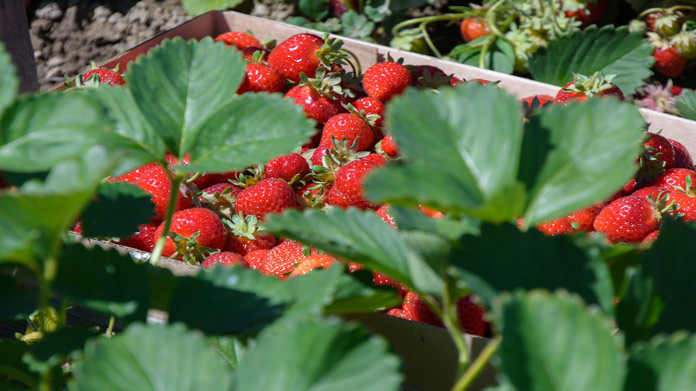
A berry farm can operate in one or both of the following ways: it can sell its berries to a distributor, such as a farmers market, or it can let customers into the field to pick the berries themselves, charging by the weight of the berries that the customers picked.
Our guide is in 3 parts:
Before opening your farm, there are a number of large items you will need to invest in.
Land – A PYO farm requires a larger plot of land that is close enough for consumers to come and visit, with ample parking.
Liability insurance – Because customers are visiting the farm, liability insurance is often higher for PYO farms.
Tractors – Two 70– 80 hp tractors are recommended. Budget for approximately $65,000, if purchased new.
Heavy duty mower – $1,000
Fertilizer spreader – $1,200
Herbicide sprayer – a 200 gallon sprayer will cost approximately $2,000
V-bladed sweep plow – $2,000
Drain runner (spinner) – $2,000
Land clearing – Average cost is $3,000 per acre
Ditching & drainage – Average cost is $120 per acre
Forming beds – $25 per acre
Plants – You will need approximately 1210 per acre at a cost of $0.50 per plant
Irrigation pond – The required number of irrigation ponds is determined by the size of your farm.
Irrigation well
Sprinklers, pipes and valves – Average cost is $120,000
Pumps – Cost is $9,500 per pump
Website
Marketing supplies
Until you’ve completed your sixth year, you will have purchases that must be made on an annual basis. For example, your second year, you will need to invest in an airblast sprayer, which will set you back approximately $7,600 and farm trailers for transporting picking trays. Experienced farmers recommend budgeting for four trailers at $1,000 a piece. In years three through six, your budget should include between $50,000 and $200,000 in additional equipment.
Additional ongoing expenses include:
Labor
Weed, disease, and insect control – costs will include labor and materials
Irrigation
Land lease or mortgage
Restaurants or wholesale food distributors will make up the bulk of your commercial berry business. You will be dealing with seasonal high volume sales. For the you-pick farm, your clientele will be more adventurous consumers who enjoy the time spent harvesting their own fruits. This customer will be looking for high quality berries and an inviting atmosphere from the owner and staff.
Berry farms generate revenue from the sale of their produce. If selling to a wholesale retail buyer, the pricing is by flat. You-pick sales are by the fruit and by the pound.
The average price for a flat of berries at market is $14. Pick your own customers are charged per pint or by the pound. The average price for a pint is $4.78. Per pound prices average between $3.48 per pound and $4.92 per pound.
There are a number of factors that affect your berry farm’s profitability. For instance, how you structure your business, the health of your soil, the type of berry you grow, the weather, and your irrigation system all affect your annual profits. The average berry farmer reports a loss for the first few years. After that, however, average profits are reported at between $1.3 million and $2.8 million.
There are a number of strategies you can implement to increase your farm’s profitability:
Bake, can, freeze, and/or dehydrate your berries.
Open your farm to the public for entertainment, particularly during the holiday season. This could include – petting zoos, hayrides, and holiday festivals.
Offer educational tours and seminars
If you have enough land, grow corn and host a corn maze during Halloween.
Since you are running a farm, much of the day-to-day activities will consist of tending to the fruit trees and plants. There will also be some amount of time marketing and selling your produce. And, if customers are picking fruit in your farm, customer interaction will be an important part of your routine. In particular, you will be:
Feeding, mulching, and planting crops
Pest control and pruning
Monitoring and repairing irrigation systems
Routine maintenance and upkeep on farm equipment
Ordering fertilizer and re-stocking supplies
Interacting with customers on social media or a website
Interacting with you-pick customers
Marketing and promotions
Harvesting and packaging produce
Managing your staff
Being well-versed in agriculture techniques and trends, particularly for fruit-bearing plants, is usually necessary. Some berries will demand an attentive farmer to thrive. Being-detail oriented in your farming and business dealings will be equally helpful in your success. You must also be a determined and hard-working individual. Farming requires equal parts intelligence and elbow grease. It is also necessary to understand the business of farming and how to read and predict consumer trends.
Generally, berry farms are popular, as many consumers enjoy fresh fruits. The you-pick market has become particularly popular as of late. Farming can be an all-consuming endeavor, but berry farms can be modest in size, yet still give profitable returns. For many larger farms, they not only offer fresh produce, but also job opportunities to many local and regional workers.
The following are some tips from established berry farmers:
Keep in mind that many crops take between one and three years before they start producing enough to really turn a profit. Strawberries, raspberries, and ground cherries produce heavier harvests. Blueberries and blackberries are easier to grow.
It’s important to keep in mind that PYO farms are considered “seasonal,” as they do not do as well when the economy is up. This is happening less now though, as people are becoming more conscious of the preservatives that go into fruits and veggies that are pre-packaged.
Because weather is also a factor, experienced farmers urge you to consider having a farm that offers a mixture of both services. That way, if weather is bad one weekend, you don’t lose out on one-fourth of your business.
For a PYO farm, be sure to have a phone number dedicated to your business, with a voice mail that provides information regarding your prices and hours of operation.
Weekends and summer holidays will be your PYO’s busiest times, so make sure you are open.
To build a successful farm, you will need to assemble a team from the start. PYO farms require longer hours, but a smaller staff, as the sorting and packaging is done by the customer. Farmers cite labor costs at an average of $8 per hour, per employee. This will vary, depending upon your region.
Business Evaluation & Strategy Tool
We'll walk you through the four pillars every business needs: Points of Leverage, Marketing Strategy, Financial Model, and Personal Compatibility. At the end you'll see a personalized report and your action plan below will be tailored to your answers.
Every viable business has natural advantages. Below are common leverage points across four categories. Pick the ones that apply to your Berry Farm business. We've pre-suggested a few based on your idea — review and adjust.
Without a way to connect with customers, even great businesses fail. Pick the channels you plan to use to reach your customers.
Enter your monthly baseline costs — the minimum overhead to keep the business running. Then we'll calculate how many sales per month you need to break even.
A business that doesn't fit your life will fail no matter how good the numbers look. Tell us how this business fits you.
Complete the four pillars and your personalized summary will appear here.
Nine concrete steps to take you from idea to open business, grouped into 30-day phases. Complete the planner above and we'll highlight what's most important for your situation.
An LLC keeps your personal assets separate from business debts and lawsuits — the most common reason small business owners choose this structure. Sole proprietorships and partnerships do not provide this protection.
Apply for your free Employer Identification Number through the IRS, then register for any state or local taxes that apply to your business (sales tax, franchise tax).
A dedicated business account is required to maintain personal asset protection. Mixing personal and business finances ('piercing the corporate veil') can void your LLC's liability shield.
Recording expenses and income from day one makes tax filing easier and lets you see when the business is actually profitable. Use software (QuickBooks, Wave) or a part-time bookkeeper.
State and local requirements vary widely. Brick-and-mortar businesses typically need a Certificate of Occupancy; service businesses may need specific professional licensing; food businesses need health permits.
General Liability Insurance is the most common starting point. If you'll have employees, most states require Workers' Compensation. Specific industries need additional coverage (product liability, professional liability, etc.).
Your brand is how customers perceive and remember you. A clear name, logo, and visual identity make every later marketing decision easier and protect you legally as you grow.
Every legitimate business needs a website. Social media pages are not a substitute — you don't own the platform. Modern website builders mean you can launch a clean site in a weekend without a developer.
A dedicated business number keeps your personal life private, makes the business look legitimate, and lets you route calls professionally. Cloud phone services start under $20/month.
Starting a Berry Farm business typically costs $20,000 to $100,000. It is considered a high capital-intensity business.
A Berry Farm business runs roughly a 4% net profit margin, and most owners reach break-even in about 9 to 24 months.
You can usually launch a Berry Farm business in about 2 to 12 weeks, and it is commonly run full time.
A Berry Farm business is generally an intermediate-skill business to start, with stable demand. TRUiC rates it 48 out of 100 on our Idea Score.
Most Berry Farm businesses register as an LLC or other legal entity and obtain a general business license. Depending on your state and city you may also need industry-specific permits, sales tax registration, and zoning or health approvals, so check your local requirements before you launch.