Startup cost
$50k–$500k
TRUiC Business Ideas
Decision Snapshot
Idea Score
28
Startup cost
$50k–$500k
Profit margin
4%
Break-even
4 mo–12 mo
Time to launch
12 wk–36 wk
Demand trend
Stable
5-yr failure rate
—
Capital intensity
Very high
Time commitment
Full time
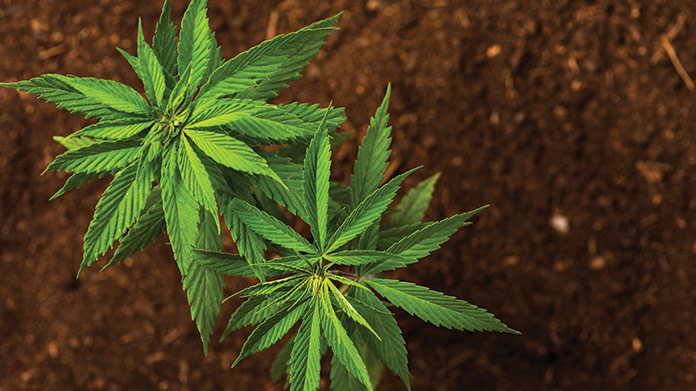
Hemp farming continues to gain popularity as a high-yield, (relatively) low-maintenance crop that manufacturers can process for a wide variety of commercial applications.
Our guide is in 3 parts:
Hemp farming requires land. Buying farmland — along with farming and irrigation equipment — will require a sizable, upfront investment if you aren’t already farming. If you’re already a farmer, your initial costs will mostly focus on seed stock or clones for starting crops. You’ll also need to secure any required state and local licenses as well as insurance. Most costs associated with growing row crops, such as fertilizer and pest control, are already factored in for annual operating costs.
Most ongoing expenses include buying seed stock or clones as well as farming supplies, maintaining farm equipment and buildings, paying worker salaries, and purchasing individual and farm insurance.
Hemp farming has both commercial and retail markets to consider. As a textile product, hemp’s commercial market includes businesses looking to compete with various products they can now make with hemp. Plastics, paper, building products, and fabrics are all products challenged by hemp.
In the retail space, customers buying hemp products tend to be younger and more liberal-minded although hemp fabrics and cannabidiol (CBD) sales reach into a wide range of demographic markets. College-educated people aged 25 to 50 represent a core group of hemp customers.
Hemp farms make money from the sale of their bulk, dried hemp.
Hemp is sold as a commodity so the market dictates the price. Farmers can sell their hemp plants as the fiber, the seeds, or both — with each option priced accordingly. Although prices continue to increase, as a market average, beware of ballooning figures based on speculators. Some in the industry fear hemp’s meteoric rise in popularity may cause a bubble similar to what the technology industry experienced in the early 2000s. Current wholesale prices vary between raw and processed hemp products, ranging from $3 to $3,000 per XXX.
Farming is a tricky business. While farmers don’t often turn a huge profit, it’s possible to keep overhead costs low by handling as much of the work as possible with a small crew. Hemp farming has the potential for good profits, but you must temper your expectations with the knowledge that Mother Nature can sometimes be a fickle and difficult partner. Average hemp farming profits typically fall in the range of $200 to $250 per acre.
Currently, hemp farming is experiencing a popularity surge. Offer the general public a chance to see what you do in an effort to destigmatize this plant. Many people will enjoy guided tours and farm visits. You might even consider using your farm as a backdrop for photo shoots. Some individuals would love to be immortalized on film, surrounded by your leafy greens.
Much like any farm, most days involve monitoring existing farm systems and equipment as well as your crops. Farming often involves waiting for certain times — both for planting and harvesting. With hemp, the growth cycle averages 110 days. Farmers can stagger or “cycle” their fields between planting, growing, and harvesting to generate a larger annual yield and a constant flow of work. After harvesting and baling their hemp, farmers ship it to manufacturing plants around the country. As such, some daily operations may include the logistics of shipping and receiving.
Farming experience is a great start. Growing crops involves much more than soil, water, and sun. Experience in the tractor saddle really can give you an edge. Understanding the business world and, specifically, the hemp market, also will prove critical to success.
While this industry is poised to explode in popularity and demand, the structure and legality of hemp products remain subject to sweeping changes. Understanding the political nature of this crop and how to navigate dissenting opinions of your industry also will be essential.
With the legalization of hemp farming around the country, many textile and clothing manufacturers now recognize the benefits of hemp fibers. Hemp has been used for thousands of years in numerous products, such as fabrics and rope. Today, modern manufacturing also uses hemp fibers as a biodegradable plastic replacement. Of course, there is the ever-growing cod market, which has been embraced by numerous citizens from all walks of life as a pain reliever and beneficial dietary additive. Overall, industry experts project hemp farming will remain increasingly popular and profitable for the foreseeable future.
Hemp farming requires a solid demand for your product. Luckily, that demand continues to grow more and more each day. Your business also will need big voices and backers to help share and promote your vision. These include industry leaders in textiles, fabrics, and building materials. The stigma of hemp’s relation to marijuana will continue to turn away some potential clients, but, more than ever, consumer approval seems too positive to ignore.
Align your business with other forward-thinking businesses and act as a voice for environmentally conscious farming. Hemp farming challenges some large industries, such as forestry and fossil fuels, so retaining a market share requires finding allies at all levels. Growing your support team and customer base will be key for growing your overall company.
Because of the nature of rotational farming, your team will ebb and flow. For harvesting and baling, your team will swell. But, you won’t need much help during the growing phase. A medium-sized farm may only need two or three people to keep it operating, for example, plus a few more field hands during harvest. A large-scale farm might need three to five equipment operators and a few more field hands to round out its team.
Business Evaluation & Strategy Tool
We'll walk you through the four pillars every business needs: Points of Leverage, Marketing Strategy, Financial Model, and Personal Compatibility. At the end you'll see a personalized report and your action plan below will be tailored to your answers.
Every viable business has natural advantages. Below are common leverage points across four categories. Pick the ones that apply to your Hemp Farm business. We've pre-suggested a few based on your idea — review and adjust.
Without a way to connect with customers, even great businesses fail. Pick the channels you plan to use to reach your customers.
Enter your monthly baseline costs — the minimum overhead to keep the business running. Then we'll calculate how many sales per month you need to break even.
A business that doesn't fit your life will fail no matter how good the numbers look. Tell us how this business fits you.
Complete the four pillars and your personalized summary will appear here.
Nine concrete steps to take you from idea to open business, grouped into 30-day phases. Complete the planner above and we'll highlight what's most important for your situation.
An LLC keeps your personal assets separate from business debts and lawsuits — the most common reason small business owners choose this structure. Sole proprietorships and partnerships do not provide this protection.
Apply for your free Employer Identification Number through the IRS, then register for any state or local taxes that apply to your business (sales tax, franchise tax).
A dedicated business account is required to maintain personal asset protection. Mixing personal and business finances ('piercing the corporate veil') can void your LLC's liability shield.
Recording expenses and income from day one makes tax filing easier and lets you see when the business is actually profitable. Use software (QuickBooks, Wave) or a part-time bookkeeper.
State and local requirements vary widely. Brick-and-mortar businesses typically need a Certificate of Occupancy; service businesses may need specific professional licensing; food businesses need health permits.
General Liability Insurance is the most common starting point. If you'll have employees, most states require Workers' Compensation. Specific industries need additional coverage (product liability, professional liability, etc.).
Your brand is how customers perceive and remember you. A clear name, logo, and visual identity make every later marketing decision easier and protect you legally as you grow.
Every legitimate business needs a website. Social media pages are not a substitute — you don't own the platform. Modern website builders mean you can launch a clean site in a weekend without a developer.
A dedicated business number keeps your personal life private, makes the business look legitimate, and lets you route calls professionally. Cloud phone services start under $20/month.
Starting a Hemp Farm business typically costs $50,000 to $500,000. It is considered a very high capital-intensity business.
A Hemp Farm business runs roughly a 4% net profit margin, and most owners reach break-even in about 4 to 12 months.
You can usually launch a Hemp Farm business in about 12 to 36 weeks, and it is commonly run full time.
A Hemp Farm business is generally an intermediate-skill business to start, with stable demand. TRUiC rates it 28 out of 100 on our Idea Score.
Most Hemp Farm businesses register as an LLC or other legal entity and obtain a general business license. Depending on your state and city you may also need industry-specific permits, sales tax registration, and zoning or health approvals, so check your local requirements before you launch.