Startup cost
$50k–$500k
TRUiC Business Ideas
Decision Snapshot
Idea Score
46
Startup cost
$50k–$500k
Profit margin
22%
Break-even
4 mo–12 mo
Time to launch
12 wk–36 wk
Demand trend
Stable
5-yr failure rate
—
Capital intensity
Very high
Time commitment
Full time
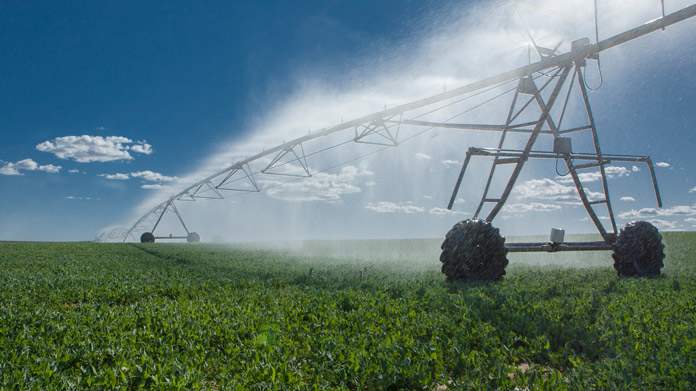
Plenty of everyday people and businesses require irrigation systems. From homeowners to farmers, public properties, athletic fields, and beyond, there is no shortage of customers who need top-notch watering systems. Those who reside in particularly arid areas that receive minimal rain require year-round irrigation.
Our guide is in 3 parts:
An irrigation business requires tubing/piping, sprinklers, an array of digging tools, employees, insurance, an office, utilities, a computer, a printer, and a high-speed Internet connection.
Irrigation businesses require laborers to install and maintain irrigation systems. These workers typically make between $10 and $18 per hour. If your business grows, white-collar workers will also be necessary. A receptionist will demand at least $12 to $15 per hour. An office manager will command a salary between $30,000 and $45,000 per year. Accounting and marketing professionals will demand annual compensation in the range of $35,000 to $50,000.
The office rent and utilities will likely cost between $600 and $1,000 per month. High-speed Internet will run about $50 per month. Workers’ compensation premiums vary depending on the number of people employed by the business. Irrigation systems including sprinklers, tubes, and piping are an ongoing expense. The cost of these items hinges on the number of clients you recruit. Budget in at least $500 to $1,000 for such equipment when launching your company. This expense will gradually increase as your business expands.
The preferred client is an individual or organization with multiple properties that require an ample supply of water. Examples include farmers, public entities, businesses, and homeowners with expansive green spaces and landscaping. Key in on new housing developments and commercial spaces with an abundance of green space.
Money is made by installing and maintaining irrigation systems to transmit water to grass, shrubs, landscaping, crops, athletic fields, and other green spaces.
The installation of an irrigation system for a quarter-acre lot runs between $3,000 and $4,000. Maintenance of irrigation systems is an ongoing effort. You can charge anywhere from $100 to $500 or more for repairs, depending on their severity.
You might not make a significant amount of money in the first year or two of operation. Stick with the business, expand your customer base, pinpoint the highest-quality equipment that doesn’t bust your budget, and you will make good money in the ensuing years. It is possible to make upwards of six figures or more after several years of operation. Expand your enterprise across the region and it will be possible to earn between a quarter-million and half a million dollars per year. If your business really takes off and becomes a franchise, it is possible to rake in millions of dollars per year.
Additional profit can be made by offering irrigation system repair services. Offer retrofitting and you will thrive in a niche with minimal competition. As irrigation system technology improves, opportunities will abound for retrofitting of antiquated systems. This is the gift that keeps on giving. A decent percentage of customers will shell out money for annual retrofits to enhance their irrigation system’s functionality and efficiency.
The typical irrigation business owner performs diverse daily activities such as recruiting new customers, installing irrigation systems, maintaining irrigation systems, researching and ordering equipment, delegating work to employees, and advertising the business.
A thorough knowledge of yard maintenance is essential. The entrepreneur should understand the nuances of grass, trees, shrubs, and crop growth. An understanding of inbound and outbound marketing methods will also help expand the business in a fast and cost-efficient manner.
This business has the potential to grow quite rapidly as long as the entrepreneur can establish relationships with locals in need of irrigation services. Networking efforts can lead to business relationships that catalyze business growth. It is possible to eventually expand the business across the region, the state, and into a franchise with locations across the country.
Start out by recruiting customers located near your office. You do not want expend a considerable amount of time and money on fuel to travel to customers who are located far away from your home base. Focus on nearby customers and you will minimize drive time while fitting as many jobs as possible into each day. Exceed locals’ expectations, build your business from their referrals and gradually expand to the outskirts of your locale.
It is imperative that you go out of your way to befriend local property owners, business owners and government officials. These relationships might not directly lead to new business contacts yet they have the potential to lead to other relationships with individuals who require irrigation services. Do your research to pinpoint the most efficient and reliable irrigation equipment on the market. If the system you install stands the test of time and minimizes the customer’s water bill, he will be happy with your service and recommend you to those in his social, family, and professional circles.
Be sure to establish a meaningful relationship with local distributors. These business professionals will hook you up with the latest and greatest equipment, educate you about irrigation system merits and invite you to industry conferences as well as trade shows. Consider offering new customers a multi-year warranty on parts and labor. Demand a partial down payment upfront and you will greatly increase the odds of establishing an initial customer base.
It will likely be possible to perform the initial irrigation projects with the help of a couple laborers. As your business expands, you will need a larger group of laborers for irrigation system installs and maintenance. A receptionist, office manager, marketing expert and accounting professional will likely be necessary as the business grows.
Business Evaluation & Strategy Tool
We'll walk you through the four pillars every business needs: Points of Leverage, Marketing Strategy, Financial Model, and Personal Compatibility. At the end you'll see a personalized report and your action plan below will be tailored to your answers.
Every viable business has natural advantages. Below are common leverage points across four categories. Pick the ones that apply to your Irrigation business. We've pre-suggested a few based on your idea — review and adjust.
Without a way to connect with customers, even great businesses fail. Pick the channels you plan to use to reach your customers.
Enter your monthly baseline costs — the minimum overhead to keep the business running. Then we'll calculate how many sales per month you need to break even.
A business that doesn't fit your life will fail no matter how good the numbers look. Tell us how this business fits you.
Complete the four pillars and your personalized summary will appear here.
Nine concrete steps to take you from idea to open business, grouped into 30-day phases. Complete the planner above and we'll highlight what's most important for your situation.
An LLC keeps your personal assets separate from business debts and lawsuits — the most common reason small business owners choose this structure. Sole proprietorships and partnerships do not provide this protection.
Apply for your free Employer Identification Number through the IRS, then register for any state or local taxes that apply to your business (sales tax, franchise tax).
A dedicated business account is required to maintain personal asset protection. Mixing personal and business finances ('piercing the corporate veil') can void your LLC's liability shield.
Recording expenses and income from day one makes tax filing easier and lets you see when the business is actually profitable. Use software (QuickBooks, Wave) or a part-time bookkeeper.
State and local requirements vary widely. Brick-and-mortar businesses typically need a Certificate of Occupancy; service businesses may need specific professional licensing; food businesses need health permits.
General Liability Insurance is the most common starting point. If you'll have employees, most states require Workers' Compensation. Specific industries need additional coverage (product liability, professional liability, etc.).
Your brand is how customers perceive and remember you. A clear name, logo, and visual identity make every later marketing decision easier and protect you legally as you grow.
Every legitimate business needs a website. Social media pages are not a substitute — you don't own the platform. Modern website builders mean you can launch a clean site in a weekend without a developer.
A dedicated business number keeps your personal life private, makes the business look legitimate, and lets you route calls professionally. Cloud phone services start under $20/month.
Starting an Irrigation business typically costs $50,000 to $500,000. It is considered a very high capital-intensity business.
An Irrigation business runs roughly a 22% net profit margin, and most owners reach break-even in about 4 to 12 months.
You can usually launch an Irrigation business in about 12 to 36 weeks, and it is commonly run full time.
An Irrigation business is generally an intermediate-skill business to start, with stable demand. TRUiC rates it 46 out of 100 on our Idea Score.
Most Irrigation businesses register as an LLC or other legal entity and obtain a general business license. Depending on your state and city you may also need industry-specific permits, sales tax registration, and zoning or health approvals, so check your local requirements before you launch.