Startup cost
$50k–$250k
TRUiC Business Ideas
Decision Snapshot
Idea Score
56
Startup cost
$50k–$250k
Profit margin
22%
Break-even
4 mo–12 mo
Time to launch
12 wk–36 wk
Demand trend
Stable
5-yr failure rate
—
Capital intensity
Very high
Time commitment
Full time
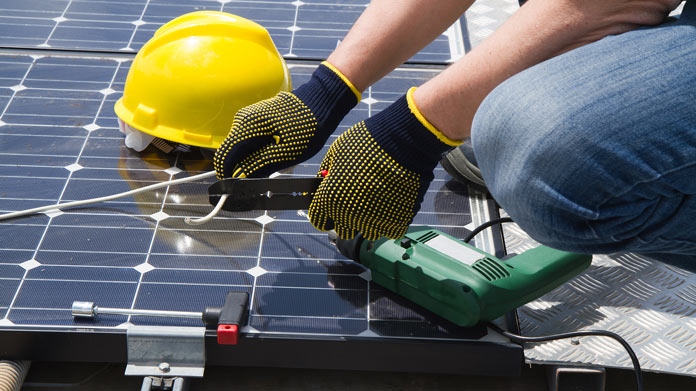
A solar panel business will conduct on-site surveys of potential installations, create a solar plan for the location, work with the owner on financing and install the units. Maintenance positions within the company provide support for the new owners repairing and maintaining panels to ensure greatest productivity and return on the investment. This business requires a structured staff with skills in construction, electrical, and basic understanding of science and solar energy.
Our guide is in 3 parts:
There will be a significant investment required in order to obtain your first shipments of panels to be installed in a home or business. If you are looking at franchise opportunities, they require a minimum payment of between $100,000 to $350,000 just to gain access to their assigned region. Without a franchise, expecting to invest up to $500,000 will enable you to initially market, hire a crew, and perform the first round of installations over the course of one year.
Read our solar panel business purchasing guide to learn about the materials and equipment you’ll need to start a solar panel business, how much to budget, and where to make purchases.
You will be responsible for payroll, ordering panels from a distributor for each job, marketing, and paying the energy company on behalf of leased customer accounts. You will likely have an office space, delivery vehicles, and ongoing training to maintain licenses. You will need significant business insurance coverage as well.
With ever evolving solar technologies, solar energy is now available to most homeowners with a clear roof line. Homeowner Associations sometimes collaborate for entire neighborhood solar installations. Businesses small and large are adding solar to their energy programs and may be ready to invest in sizable rooftop or field farms.
Whether you work with a franchise or wholesaler, your installation business makes money through the successful installation of solar units. Some leasing programs generate regular income by charging their customers a monthly bill, which includes the cost of the panel installation and any extra power the customers are using from the grid. Otherwise, the customer pays a retail rate upfront for their panels and appropriate labor costs for connecting their panels to their home and the power grid.
A residential installation can be priced anywhere from $15,000 to $50,000, depending on the size and type of panels installed. Leases with a zero dollar down payment can run anywhere between $25 – $200 monthly depending on the type of client and the size of the installation.
When you operate a leased solar panel business, your profit will depend entirely on the number of panels that you have installed. A typical return is about 6% per year, but this requires a long-term investment strategy as the company owner. For companies that only install panels for customers who pay all at once, you can see profits of $5,000 to $10,000 per job. However, this requires a steady stream of new contracts. If you’re working with a large industrial contract, you can see a profit in the hundreds of thousands for a year-long job.
Your largest costs will be purchasing the panels from the distributor and your payroll. You can control supply costs by purchasing large lots of panels and using them for multiple jobs, lowering your per unit cost.
Another way to increase profits is to reach out to other solar panel contractors to offer assistance as a sub-contractor. This way you can form strong professional relationships in your area, and also take on larger projects than your team might otherwise come across.
As owner, your day’s activities will vary depending on what jobs you have lined up. Typical duties might include:
Installing solar panels, back-up battery systems, and connections to main power grid
Contacting potential customers for initial survey
Working with customers to find grants, rebates, and special financing available to those entering the solar program
Calculating the amount of potential solar energy a particular location could generate with a variety of products
Scheduling installation crews and delivery of panels to site
Conducting a final survey and checklist of a completed installation
Maintaining proper accounting and payroll procedures
Hiring staff for a multitude of responsibilities
Developing potential commercial and municipal customers for large installations and projects
Providing maintenance and repair for existing solar panels, possibly including previous customers
The successful solar panel business owner will have solid understanding of marketing and use it to the greatest effect, generating new contracts for their new company and brand. They will have shrewd personnel skills, taking the time to hire reputable technicians with all the proper licensing and training. Good managerial skills will keep the crews busy, completing jobs on time as promised, while keeping payroll expenses under control. They must also work to stay current with changing technologies, as solar is still a developing industry.
As more people, cities, and states turn to renewable energy sources, the solar panel industry is seeing a healthy growth of 15% annually, according to IBISWorld.com. With ongoing technological improvements and reducing costs of materials, solar power is becoming more affordable and appealing to both residential and commercial clients.
You must hit the ground running as soon as you find your first customer. Before that, take the time to develop your knowledge of the entire solar industry, emerging technologies, and installation options. Research the various government rebates and work with a financing institution to provide payment options for your clients. You will need to be able to offer something unique to your clients that other companies cannot provide. Make sure your company is properly insured, as accidents will happen that can pose hazards to your crews and your customer’s property.
As soon as your business loan is in place, you must start building your sales, survey, installation, and maintenance team. Unless you are an experienced installer, it is wise to include an industry expert as one of your first team members who can help guide you in building the best staff. You may require an executive assistant as your schedule gets crowded with meetings, marketing, and social events.
Read our solar panel business hiring guide to learn about the different roles a solar panel business typically fills, how much to budget for employee salaries, and how to build your team exactly how you want it.
Business Evaluation & Strategy Tool
We'll walk you through the four pillars every business needs: Points of Leverage, Marketing Strategy, Financial Model, and Personal Compatibility. At the end you'll see a personalized report and your action plan below will be tailored to your answers.
Every viable business has natural advantages. Below are common leverage points across four categories. Pick the ones that apply to your Solar Panel business. We've pre-suggested a few based on your idea — review and adjust.
Without a way to connect with customers, even great businesses fail. Pick the channels you plan to use to reach your customers.
Enter your monthly baseline costs — the minimum overhead to keep the business running. Then we'll calculate how many sales per month you need to break even.
A business that doesn't fit your life will fail no matter how good the numbers look. Tell us how this business fits you.
Complete the four pillars and your personalized summary will appear here.
Nine concrete steps to take you from idea to open business, grouped into 30-day phases. Complete the planner above and we'll highlight what's most important for your situation.
An LLC keeps your personal assets separate from business debts and lawsuits — the most common reason small business owners choose this structure. Sole proprietorships and partnerships do not provide this protection.
Apply for your free Employer Identification Number through the IRS, then register for any state or local taxes that apply to your business (sales tax, franchise tax).
A dedicated business account is required to maintain personal asset protection. Mixing personal and business finances ('piercing the corporate veil') can void your LLC's liability shield.
Recording expenses and income from day one makes tax filing easier and lets you see when the business is actually profitable. Use software (QuickBooks, Wave) or a part-time bookkeeper.
State and local requirements vary widely. Brick-and-mortar businesses typically need a Certificate of Occupancy; service businesses may need specific professional licensing; food businesses need health permits.
General Liability Insurance is the most common starting point. If you'll have employees, most states require Workers' Compensation. Specific industries need additional coverage (product liability, professional liability, etc.).
Your brand is how customers perceive and remember you. A clear name, logo, and visual identity make every later marketing decision easier and protect you legally as you grow.
Every legitimate business needs a website. Social media pages are not a substitute — you don't own the platform. Modern website builders mean you can launch a clean site in a weekend without a developer.
A dedicated business number keeps your personal life private, makes the business look legitimate, and lets you route calls professionally. Cloud phone services start under $20/month.
Starting a Solar Panel business typically costs $50,000 to $250,000. It is considered a very high capital-intensity business.
A Solar Panel business runs roughly a 22% net profit margin, and most owners reach break-even in about 4 to 12 months.
You can usually launch a Solar Panel business in about 12 to 36 weeks, and it is commonly run full time.
A Solar Panel business is generally an intermediate-skill business to start, with stable demand. TRUiC rates it 56 out of 100 on our Idea Score.
Most Solar Panel businesses register as an LLC or other legal entity and obtain a general business license. Depending on your state and city you may also need industry-specific permits, sales tax registration, and zoning or health approvals, so check your local requirements before you launch.