Startup cost
$10k–$100k
TRUiC Business Ideas
Decision Snapshot
Idea Score
47
Startup cost
$10k–$100k
Profit margin
6%
Break-even
4 mo–12 mo
Time to launch
12 wk–36 wk
Demand trend
Stable
5-yr failure rate
—
Capital intensity
High
Time commitment
Full time
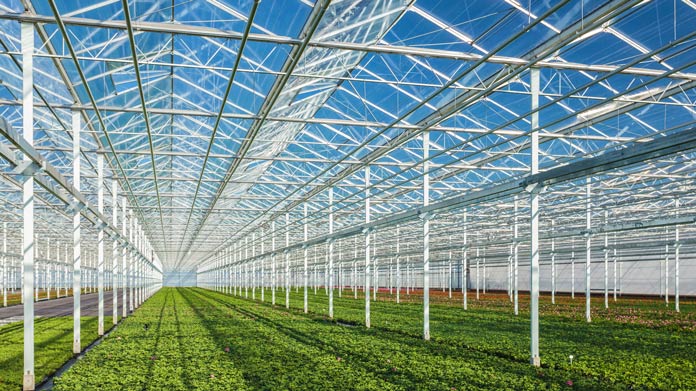
Homeowners, business owners, and even some apartment tenants shop at greenhouses. These businesses typically sells plants, flowers, vegetables, seeds and items related to gardening/landscaping.
Our guide is in 3 parts:
Money must be spent on the construction or rental of the greenhouse, as well as inventory, irrigation, fertilizer, fans and hoses, benches and tables, cash registers, insurance, and employee wages.
You can purchase property for your greenhouse, or rent an existing building. Such a space will likely cost a significant sum of money. Expect to pay upwards of a couple hundred thousand dollars to purchase the amount of land necessary for an expansive greenhouse. If you rent such a space, it will likely cost several thousand dollars per month, simply because an abundance of space is required to develop and present your inventory.
You will have to purchase all sorts of plants, flowers, produce, seeds, and other items relating to gardening and landscaping. Expect to spend $5,000-$10,000 or more in initial inventory, and at least $500-$1,000 each month in recurring inventory costs. The exact figure hinges on the size of your greenhouse.
Utilities, including water and electric, will likely cost several hundred dollars per month. Budget in at least a couple hundred dollars per month for marketing costs. Employees will require wages of at least $10 per hour, which could certainly be higher in some areas. If you eventually hire marketing and accounting professionals, they will likely command yearly salaries of $35,000-$50,000.
The ideal customer is a business owner who requires a diverse array of flowers and plants. Examples include farmers, nursery owners, grocers, florists, etc. Greenhouse business owners also prefer to sell to homeowners who have green thumbs. The aim is to sell a wide array of inventory to each customer in order to maintain a consistent flow of flowers, plants, produce and other vegetables so inventory stays as fresh as possible.
Greenhouse businesses make money by selling plants, flowers, produce, and other gardening and landscaping items to customers.
The prices of greenhouse products vary by plant quality, desirability, lifespan, and a number of other factors. Plants, flowers, and produce can be sold for amounts ranging from a couple dollars, to $100 and more. Seeds typically cost between 75 cents and a few dollars per packet. Gardening and landscaping supplies typically run between $5 and $50.
A greenhouse can make a tidy profit in its initial years, especially if located in an area where people have a passion for gardening, greenery, and nature. It is not out of the question for a greenhouse to generate a profit of $50,000-$100,000 per year. If the greenhouse owner expands operations and opens additional locations, profits can reach several hundred thousand dollars or more per year.
A greenhouse owner can sell items related to gardening and landscaping such as hand trowels, sprinklers, gardening gloves, hoes, shovels, shears, loppers, pitchforks, tillers, cultivators, soil, mulch, peat moss, etc. Additional profit can be obtained by selling vegetable and/or flower seeds. Some greenhouse owners make extra money by charging for deliveries.
Greenhouse business owners enjoy diverse workdays with a plethora of activities. They do everything from ordering inventory to situating products for display, advertising the business, directing staff, assisting customers, establishing relationships with vendors, assessing profit margins, and beyond.
A genuine interest in the growing process is critically important to the success of your greenhouse business. You should understand the merits of specific plants, flowers, and produce. You should also be able to answer questions about the growing process, and how to properly care for greenery. It also helps to have marketing savviness. If you can advertise your greenhouse business in a low-cost manner, you will enjoy a steady stream of customers.
The growth potential for this business hinges on the number of interested customers in the greenhouse’s locale. A greenhouse situated in an upscale suburb will likely grow quickly, as will one in a rural area that can be accessed by a large number of people without a lengthy commute. It is possible to grow a small greenhouse business into an enterprise with numerous locations in less than five years. If your greenhouse business generates a considerable profit, you can regionalize the business and expand across a portion of your state, or even open new locations in other states.
Presentation is essential to success. The placement of your inventory matters a great deal. Customers are swayed by the aesthetics of your plants, so sweat the small stuff when considering how to best present your inventory. It will also help to hire knowledgeable staff who can educate interested parties about the nuances and merits of specific items.
Be sure to reach out to your local zoning authority to find out the specific rules governing greenhouses in the area. Opt for a location that has plenty of parking. It is also prudent to select land that has a reliable water supply, high-quality soil, allows for run-off, provides unfettered access to utilities and sources of shade. Conduct research on the optimal growing conditions, soil types, planting times, run-off requirements and so on. Research the merits of solar greenhouses to boot. Though all greenhouses collect energy from the sun, certain types are better at collecting and storing this energy than others.
It is worth noting that greenhouse owners who sell organic produce must keep their land free of pesticides for a minimum of three consecutive years, so find out how your land was used in the past if you wish to offer organics. It is also necessary to certify your produce. Finally, make sure your greenhouse has sufficient windows to improve ventilation during hot summer months.
A greenhouse owner will likely require employees from the start. It is not typically possible for one person to do all of the work. Employees are necessary to work the cash register, water plants, replenish stock, provide customer service, order inventory, market the business, and handle accounting. Though the business owner can initially handle some of these responsibilities, it will be necessary to delegate work as the business grows.
Read our greenhouse business hiring guide to learn about the different roles a greenhouse business typically fills, how much to budget for employee salaries, and how to build your team exactly how you want it.
Business Evaluation & Strategy Tool
We'll walk you through the four pillars every business needs: Points of Leverage, Marketing Strategy, Financial Model, and Personal Compatibility. At the end you'll see a personalized report and your action plan below will be tailored to your answers.
Every viable business has natural advantages. Below are common leverage points across four categories. Pick the ones that apply to your Greenhouse business. We've pre-suggested a few based on your idea — review and adjust.
Without a way to connect with customers, even great businesses fail. Pick the channels you plan to use to reach your customers.
Enter your monthly baseline costs — the minimum overhead to keep the business running. Then we'll calculate how many sales per month you need to break even.
A business that doesn't fit your life will fail no matter how good the numbers look. Tell us how this business fits you.
Complete the four pillars and your personalized summary will appear here.
Nine concrete steps to take you from idea to open business, grouped into 30-day phases. Complete the planner above and we'll highlight what's most important for your situation.
An LLC keeps your personal assets separate from business debts and lawsuits — the most common reason small business owners choose this structure. Sole proprietorships and partnerships do not provide this protection.
Apply for your free Employer Identification Number through the IRS, then register for any state or local taxes that apply to your business (sales tax, franchise tax).
A dedicated business account is required to maintain personal asset protection. Mixing personal and business finances ('piercing the corporate veil') can void your LLC's liability shield.
Recording expenses and income from day one makes tax filing easier and lets you see when the business is actually profitable. Use software (QuickBooks, Wave) or a part-time bookkeeper.
State and local requirements vary widely. Brick-and-mortar businesses typically need a Certificate of Occupancy; service businesses may need specific professional licensing; food businesses need health permits.
General Liability Insurance is the most common starting point. If you'll have employees, most states require Workers' Compensation. Specific industries need additional coverage (product liability, professional liability, etc.).
Your brand is how customers perceive and remember you. A clear name, logo, and visual identity make every later marketing decision easier and protect you legally as you grow.
Every legitimate business needs a website. Social media pages are not a substitute — you don't own the platform. Modern website builders mean you can launch a clean site in a weekend without a developer.
A dedicated business number keeps your personal life private, makes the business look legitimate, and lets you route calls professionally. Cloud phone services start under $20/month.
Starting a Greenhouse business typically costs $10,000 to $100,000. It is considered a high capital-intensity business.
A Greenhouse business runs roughly a 6% net profit margin, and most owners reach break-even in about 4 to 12 months.
You can usually launch a Greenhouse business in about 12 to 36 weeks, and it is commonly run full time.
A Greenhouse business is generally an intermediate-skill business to start, with stable demand. TRUiC rates it 47 out of 100 on our Idea Score.
Most Greenhouse businesses register as an LLC or other legal entity and obtain a general business license. Depending on your state and city you may also need industry-specific permits, sales tax registration, and zoning or health approvals, so check your local requirements before you launch.