Startup cost
$500–$20k
TRUiC Business Ideas
Decision Snapshot
Idea Score
52
Startup cost
$500–$20k
Profit margin
8%
Break-even
4 mo–12 mo
Time to launch
12 wk–36 wk
Demand trend
Stable
5-yr failure rate
—
Capital intensity
Medium
Time commitment
Seasonal
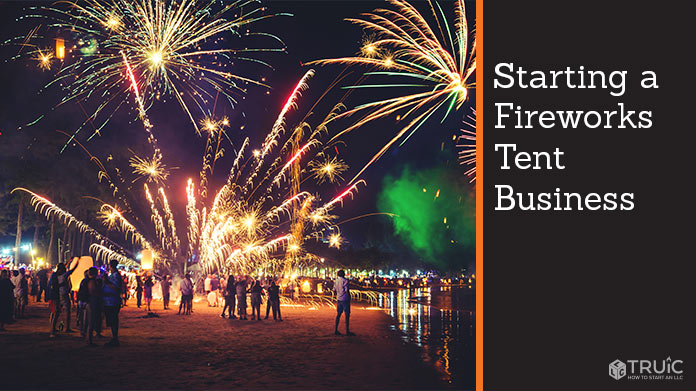
Starting a fireworks tent business can be an exciting and rewarding business venture for entrepreneurs who are passionate about popular national celebrations and want to provide a memorable experience to their customers.
Having said that, you should keep in mind that launching a successful fireworks tent business requires careful planning, significant investment, and a wide range of skills.
In this comprehensive guide, we’ll walk you through all the essential steps you’ll need to take to start your own fireworks tent business, from finding a suitable location and purchasing inventory to obtaining licenses, setting up operations, and attracting customers.
Our guide is in 3 parts:
The fireworks industry in the U.S. has consistently seen significant growth, with consumer fireworks revenue alone increasing from $636 million in 2010 to $2.2 billion by 2023.
This surge is primarily being fueled by the rising popularity of personal fireworks displays for holidays like the 4th of July and New Year’s Eve, as well as regulatory changes that have expanded access to fireworks in many states.
If you’re considering whether a fireworks tent business is right for you, the first thing you’ll need to know is whether it’s a) affordable, and b) worth the investment. I mean, how much can you actually make running your own fireworks tent business?
Well, it depends. The initial investment for a fireworks tent business varies widely based on factors such as the scale of your business’s operations, its inventory size, and the specific products it offers:
Fireworks inventory will make up the largest portion of your startup costs. In fact, depending on the variety and quantity of fireworks you intend to sell, you can expect to spend anywhere between $5,000 and $20,000 on this alone. This should be enough to be a wide variety of products (e.g., sparklers, aerial fireworks, firecrackers, etc) for your store — especially considering the many discounts offered by wholesalers for bulk purchases.
Tent and equipment rentals are another significant cost to bear in mind when looking to start your fireworks tent. Rentals will typically cost between $1,000 and $3,000 depending on the size, quality, and duration of the tent. However, if you decide to buy one instead, it can range from as little as $500 to $2,000 for a small to medium sized tent up to between $6,000 and $15,000 for a heavy-duty commercial tent. Additional expenses for tables, chairs, signage, lighting, and point-of-sale systems will likely add another $500 to $1,500.
Licensing, permits, and insurance will also take up a substantial portion of your initial budget due to the inherently hazardous nature of fireworks — which necessitates their strict regulation. In total, you can easily spend between $1,500 to $4,000 on local sales permits, temporary tent permits, fireworks-specific licenses, and the various types of insurance you’ll need.
In addition to these upfront costs, it’s important to bear in mind the ongoing costs associated with running this type of business. For a fireworks tent in particular, the main ones you’ll primarily be faced with include restocking your inventory, insurance premiums and license renewals, and tent and equipment rental.
However, if you decide to scale up your operations and hire any employees, these will also represent a significant portion of your ongoing costs.
Fireworks tent businesses have the potential to earn significant profit margins by buying fireworks in bulk from suppliers and then selling them piecemeal to customers; this — combined with high seasonal demand — will form the core of your earning potential.
More specifically, your business will primarily thrive around key events like the 4th of July and New Year’s Eve. However, this does present the challenge of how to handle unsold inventory once the 4th of July has passed. Since fireworks sales tend to plummet outside of peak holidays, it’s critical to manage your stock carefully.
That said, while this business is highly seasonal, you shouldn’t worry too much about leftover inventory as long as you plan to keep running. Since fireworks generally store quite well (if they’re kept in a cool, dry place), you can easily sell any remaining products the following year without a loss in quality or safety.
Due to the fact that many people wait until the last minute to purchase fireworks for their celebrations, sales will often surge in the weeks (and especially the final days) leading up to the 4th of July.
In order to boost profits, many fireworks tent owners choose to sacrifice their own July 4th celebrations by staying open for last-minute customers. By catering to these spontaneous buyers, you’ll likely see a noticeable increase in sales, ensuring you maximize your earnings during the busiest time of the year.
To start a fireworks tent business, you’ll need three essential things: a tent or collapsible structure, the fireworks themselves, and money for staffing (and potentially security) during the season.
However the cost of each of these can vary greatly depending on what you choose to invest in. For example, investing in a more durable tent may cost more upfront but less in the long run than replacing a cheap one each year.
The primary market for a fireworks tent business is individuals and families planning events for celebrations like 4th of July or New Years Eve.
Depending on what your state allows, your customers can range from families seeking smaller, family-friendly items to adults looking for larger, more dramatic displays. Due to this, it’s imperative that you offer a variety of fireworks at different price points so that you cater to different needs and budgets.
Fireworks tent businesses make money by purchasing fireworks in bulk at discounted rates and selling them individually to consumers.
In this way, acting as a middleman between suppliers and customers allows for significant profit margins. However, success often depends on effective marketing, location, and understanding customer preferences, all of which can significantly boost sales during peak holiday season.
If run correctly, firework businesses can be highly profitable — especially during peak seasons like the 4th of July and New Year’s Eve.
Profitability comes from purchasing fireworks in bulk at lower prices and selling them on to consumers at a significant markup. However, this can vary depending on your location, marketing, inventory management, and planning.
Business Evaluation & Strategy Tool
We'll walk you through the four pillars every business needs: Points of Leverage, Marketing Strategy, Financial Model, and Personal Compatibility. At the end you'll see a personalized report and your action plan below will be tailored to your answers.
Every viable business has natural advantages. Below are common leverage points across four categories. Pick the ones that apply to your Fireworks Tent business. We've pre-suggested a few based on your idea — review and adjust.
Without a way to connect with customers, even great businesses fail. Pick the channels you plan to use to reach your customers.
Enter your monthly baseline costs — the minimum overhead to keep the business running. Then we'll calculate how many sales per month you need to break even.
A business that doesn't fit your life will fail no matter how good the numbers look. Tell us how this business fits you.
Complete the four pillars and your personalized summary will appear here.
Nine concrete steps to take you from idea to open business, grouped into 30-day phases. Complete the planner above and we'll highlight what's most important for your situation.
An LLC keeps your personal assets separate from business debts and lawsuits — the most common reason small business owners choose this structure. Sole proprietorships and partnerships do not provide this protection.
Apply for your free Employer Identification Number through the IRS, then register for any state or local taxes that apply to your business (sales tax, franchise tax).
A dedicated business account is required to maintain personal asset protection. Mixing personal and business finances ('piercing the corporate veil') can void your LLC's liability shield.
Recording expenses and income from day one makes tax filing easier and lets you see when the business is actually profitable. Use software (QuickBooks, Wave) or a part-time bookkeeper.
State and local requirements vary widely. Brick-and-mortar businesses typically need a Certificate of Occupancy; service businesses may need specific professional licensing; food businesses need health permits.
General Liability Insurance is the most common starting point. If you'll have employees, most states require Workers' Compensation. Specific industries need additional coverage (product liability, professional liability, etc.).
Your brand is how customers perceive and remember you. A clear name, logo, and visual identity make every later marketing decision easier and protect you legally as you grow.
Every legitimate business needs a website. Social media pages are not a substitute — you don't own the platform. Modern website builders mean you can launch a clean site in a weekend without a developer.
A dedicated business number keeps your personal life private, makes the business look legitimate, and lets you route calls professionally. Cloud phone services start under $20/month.
Starting a Fireworks Tent business typically costs $500 to $20,000. It is considered a medium capital-intensity business.
A Fireworks Tent business runs roughly a 8% net profit margin, and most owners reach break-even in about 4 to 12 months.
You can usually launch a Fireworks Tent business in about 12 to 36 weeks, and it is commonly run seasonal.
A Fireworks Tent business is generally an intermediate-skill business to start, with stable demand. TRUiC rates it 52 out of 100 on our Idea Score.
Most Fireworks Tent businesses register as an LLC or other legal entity and obtain a general business license. Depending on your state and city you may also need industry-specific permits, sales tax registration, and zoning or health approvals, so check your local requirements before you launch.