Startup cost
$15k–$50k
TRUiC Business Ideas
Decision Snapshot
Idea Score
68
Startup cost
$15k–$50k
Profit margin
36%
Break-even
4 mo–12 mo
Time to launch
12 wk–36 wk
Demand trend
Stable
5-yr failure rate
—
Capital intensity
High
Time commitment
Full time
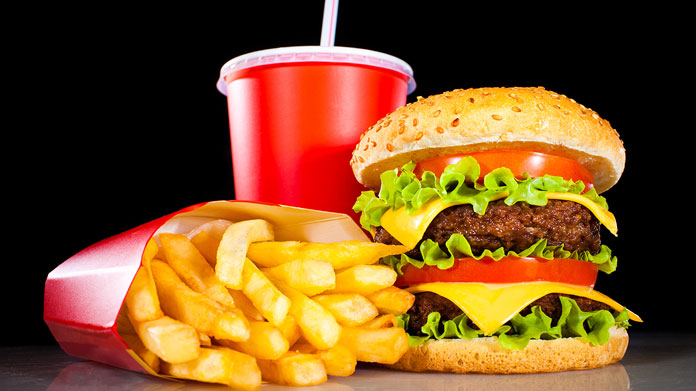
A fast food business sells affordable food to customers in as little time as possible. These restaurants provide service by way of drive-thrus as well as traditional sit-down meals. Some customers opt to bring their order with them in a “to go” fashion. This business is quite popular as it provides tasty food in a quick, low-cost manner. Open a fast food business and you will provide people with an affordable means of eating, staying energized, and feeling fulfilled.
Our guide is in 3 parts:
This business requires the physical restaurant itself, cooking equipment, food/ingredients, labor, insurance and marketing. Building a restaurant can cost upwards of $100,000 or more. The cost of cooking equipment and ingredients will likely be several thousand dollars if not tens of thousands of dollars.
This business requires laborers, marketing, insurance, cooking equipment, monthly rent, and utilities. Laborers who take customer orders, cook food, serve meals, and clean the facility usually earn $7 to $10 per hour. Fast food restaurant managers earn between $25,000 and $55,000 per year. Accountants and marketing professionals earn a yearly salary in the range of $35,000 to $60,000. Budget several hundred dollars or more per month for utilities. Plan on spending $500 to $1,000 or more per month to market your fast foo restaurant. Cooking equipment and ingredients will cost several thousand dollars per month. Most fast food restaurant owners own their facility. Yet there might be a monthly loan payment. Budget $1,000 to $2,000 or more for the monthly loan/rent payment.
The target market is busy individuals who do not have the time or energy to cook meals. Youngsters and those who earn low wages are also target customers due to the comparably low cost of fast food.
This business makes money by selling food and drinks to customers.
Customers should be charged anywhere from a few dollars to $10 for the typical order. Fast food restaurants typically charge a dollar or two for a beverage and around $5 for the average food order.
This business can rake in plenty of money. A single fast food restaurant can generate $50,000 to $100,000 or more per year. Open additional locations and it is possible to earn millions of dollars per year.
Add additional drive-thru lanes to accommodate additional customers. It is also possible for fast food restaurants to provide catering services for local businesses, organizations and events. Do not throw out old cooking equipment. Sell it to other restaurants and reinvest the proceeds in new equipment and improvements for your fast food restaurant.
The typical day at a fast food restaurant involves preparing, cooking, and serving food to customers. Employees take customer orders, make food, clean the restaurant and prepare ingredients for upcoming days. The fast food restaurant manager delegates work to employees, resolves customer complaints, interacts with the restaurant owner, and ensures customers are enjoying their experience at the restaurant.
An individual who has a background in food service or customer service will likely succeed in this line of business. The business owner should be hyper-focused on efficiency, cost reduction, and providing high-quality food in as little time as possible. He/she must be able to delegate work to others, keep labor costs under control and anticipate customer demand with a high level of accuracy.
Fast food businesses are extraordinarily popular. Most people work at least eight hours per day. There is little time left to cook meals once one has completed his/her workday, traveled home and taken care of additional responsibilities. This is precisely why fast food businesses are popular and growing. Establish a successful fast food restaurant, open up a second location, and continue to grow the business across the region. The potential for growth is unlimited.
The success of this business is dependent on the customer experience. Hire mystery shoppers to get a gauge the quality of the typical customer’s experience in terms of how long it takes to receive one’s order, food quality, and employee friendliness. Of critical importance is speed. If it takes more than five minutes to take and complete a customer order, customers won’t perceive the restaurant as an establishment that serves “fast food”. Make sure enough employees are available to fill orders in a timely manner.
Be sure to offer unique food items that can’t be found at other local fast food restaurants. Try to offer healthy items so health-conscious customers have something tasty to order at your establishment. Location is critically important. Situate your fast food restaurant in a busy area of town with ample traffic so people can see and patronize your restaurant with ease. Many fast food restaurant entrepreneurs find it easier to open up a franchised location that is regularly assisted by a corporate headquarters. Such a setup provides the entrepreneur with guidance for every aspect of the business. However, opening up a franchised fast food restaurant limits the entrepreneur’s ability to expand/alter the menu and operate the business in the manner he/she desires. So be sure to weigh all the positives and negatives of opening a franchised fast food restaurant versus those of launching your own unique fast food business.
It is important to hire employees right away. The business will require cashiers, line cooks, cleaning staff, a manager, a marketing expert, and an accountant. Though the business owner can handle marketing, accounting, and possibly even management duties at the outset of the restaurant launch, professionals must fill these roles as the business grows.
Business Evaluation & Strategy Tool
We'll walk you through the four pillars every business needs: Points of Leverage, Marketing Strategy, Financial Model, and Personal Compatibility. At the end you'll see a personalized report and your action plan below will be tailored to your answers.
Every viable business has natural advantages. Below are common leverage points across four categories. Pick the ones that apply to your Fast Food business. We've pre-suggested a few based on your idea — review and adjust.
Without a way to connect with customers, even great businesses fail. Pick the channels you plan to use to reach your customers.
Enter your monthly baseline costs — the minimum overhead to keep the business running. Then we'll calculate how many sales per month you need to break even.
A business that doesn't fit your life will fail no matter how good the numbers look. Tell us how this business fits you.
Complete the four pillars and your personalized summary will appear here.
Nine concrete steps to take you from idea to open business, grouped into 30-day phases. Complete the planner above and we'll highlight what's most important for your situation.
An LLC keeps your personal assets separate from business debts and lawsuits — the most common reason small business owners choose this structure. Sole proprietorships and partnerships do not provide this protection.
Apply for your free Employer Identification Number through the IRS, then register for any state or local taxes that apply to your business (sales tax, franchise tax).
A dedicated business account is required to maintain personal asset protection. Mixing personal and business finances ('piercing the corporate veil') can void your LLC's liability shield.
Recording expenses and income from day one makes tax filing easier and lets you see when the business is actually profitable. Use software (QuickBooks, Wave) or a part-time bookkeeper.
State and local requirements vary widely. Brick-and-mortar businesses typically need a Certificate of Occupancy; service businesses may need specific professional licensing; food businesses need health permits.
General Liability Insurance is the most common starting point. If you'll have employees, most states require Workers' Compensation. Specific industries need additional coverage (product liability, professional liability, etc.).
Your brand is how customers perceive and remember you. A clear name, logo, and visual identity make every later marketing decision easier and protect you legally as you grow.
Every legitimate business needs a website. Social media pages are not a substitute — you don't own the platform. Modern website builders mean you can launch a clean site in a weekend without a developer.
A dedicated business number keeps your personal life private, makes the business look legitimate, and lets you route calls professionally. Cloud phone services start under $20/month.
Starting a Fast Food business typically costs $15,000 to $50,000. It is considered a high capital-intensity business.
A Fast Food business runs roughly a 36% net profit margin, and most owners reach break-even in about 4 to 12 months.
You can usually launch a Fast Food business in about 12 to 36 weeks, and it is commonly run full time.
A Fast Food business is generally an intermediate-skill business to start, with stable demand. TRUiC rates it 68 out of 100 on our Idea Score.
Most Fast Food businesses register as an LLC or other legal entity and obtain a general business license. Depending on your state and city you may also need industry-specific permits, sales tax registration, and zoning or health approvals, so check your local requirements before you launch.