Startup cost
$25k–$250k
TRUiC Business Ideas
Decision Snapshot
Idea Score
49
Startup cost
$25k–$250k
Profit margin
8%
Break-even
4 mo–12 mo
Time to launch
12 wk–36 wk
Demand trend
Rising
5-yr failure rate
—
Capital intensity
Very high
Time commitment
Full time
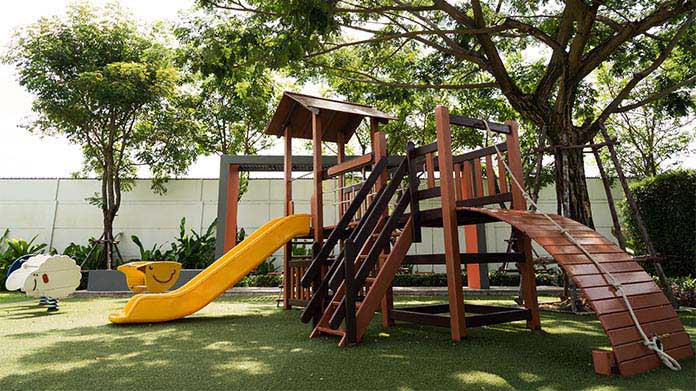
Outdoor garden rooms, pools, and kitchens have become more popular and more grand in recent years, and this trend of suburban outdoor living has now reached the playset industry. An increasing number of parents are purchasing custom playsets for their children — and they’re paying significant sums for the playsets. For business owners, this trend represents both immediate and sustained opportunity.
Custom playset businesses are often included in the broader category of Outdoor and Sports Gear, which the Denver Post reports is a $2.9 billion industry that’s remained over the past couple years. Donald Hoffman, who owns a custom playset business, notes that his sales have slowed a little as the housing market has slowed down. The customers who are ordering swing sets from him are getting larger and pricier ones, though.
Our guide is in 3 parts:
Opening a custom playset business that has an online design platform like CedarWorks requires a substantial investment, for the custom web design work is expensive. Business owners don’t need such a fancy website, though.
Business owners who have limited capital can get started for very little if they already have the necessary tools and a workshop (or garage). Business owners need:
Tools for constructing and assembling playsets
A vehicle for transporting playsets to installation sites
A space for building individual parts
Marketing materials
Those who don’t have these things can keep their costs minimal by purchasing used tools, renting a pickup truck when they need one, and working outside on fair-weather days. Marketing materials can be as simple as a few business cards and flyers when first starting out.
To make sure customers don’t cancel orders, business owners can require an upfront deposit. The deposit can be used to purchase any necessary building materials and features (e.g. slides).
The ongoing expenses for a custom playset business are minimal. They include rent (if leasing a workshop), utilities, vehicle costs, and any advertising expenses.
Parents are the target market for a custom playset business. Most customers are parents who have discretionary income and live in suburbia, where backyards afford space for swing sets.
A custom playset business makes money by selling playsets. Sometimes an installation fee is charged as a separate cost, and sometimes it’s included in the price of a playset. In a few cases, customers may choose to install a playset themselves so that there is no installation fee.
John Lapp, an Amish custom playset business owner, sells basic playsets for $375 and fancy ones for as much as $3,000. Other businesses sell custom models for $5,000 or more. Barrett Brown, who owns CedarWorks, sold one playset for $40,000.
Installation usually runs between $200 and $700, although it can be more for larger playsets.
The profit potential for a custom playset business is substantial. John Lapp sold around 700 playsets in a single year, which would have generated a revenue between $262,500 and $2.1 million depending on how fancy those playsets were.
A custom playset business can increase revenue by offering maintenance services for playsets and/or providing moving services for larger playsets. CedarWorks also makes indoor play spaces, which may appeal to some customers.
Custom playset business owners and employees spend a lot of their time building playsets and installing those playsets. When not actively constructing or putting together a playset, business owners pick up supplies and help customers custom-design their playsets.
While business owners should have some basic woodworking and handyman skills, an advanced knowledge of carpentry isn’t necessary to start a custom playset business. Businesses that don’t already have these skills can gain them by either enrolling at a local vocational school or working for a playset installation business in the area.
In order to ensure that custom-designed playsets are safe, business owners should familiarize themselves with the ASTM International standard F1148. This is a voluntary standard for home playground equipment. AAA State of Play makes ASTM-certified playsets and explains why this standard is so important.
For help with the actual designing of custom playsets, business owners can look at what other companies are offering and consult books like Backyards for Kids, Homesthetics.net, and Paul’s Playhouses have a number of design ideas that can be incorporated into designs.
Most custom playset businesses have a single location where they make playsets. Some businesses offer installation only throughout the local area around their workshop or factory, while other businesses partner with playset installers so they can serve customers throughout the Continental U.S. (and occasionally Canada, Alaska and Hawaii). A few businesses grow to have their own stores throughout the U.S.
CNY Playsets in East Syracuse, NY is a typical small custom playset business that serves the surrounding community. Swingsets Lancaster offers delivery and installation throughout the Continental U.S., and Adventure World Playsets partners with dealers in several states.
Parents who purchase custom playsets pay a premium price for durability, customization, and service. Businesses that focus on these will find that past customers frequently recommend them to other parents. Therefore, custom playset businesses should:
Only offer playsets made from high-quality materials that’ll last
Offer as many customization options as is possible
Spend as much time with customers as is needed
Most custom playset businesses start out with at least one employee, for installation goes much faster when there are two people to handle large parts. Additional employees can be added as demand grows and the need arises.
Business Evaluation & Strategy Tool
We'll walk you through the four pillars every business needs: Points of Leverage, Marketing Strategy, Financial Model, and Personal Compatibility. At the end you'll see a personalized report and your action plan below will be tailored to your answers.
Every viable business has natural advantages. Below are common leverage points across four categories. Pick the ones that apply to your Custom Playsets business. We've pre-suggested a few based on your idea — review and adjust.
Without a way to connect with customers, even great businesses fail. Pick the channels you plan to use to reach your customers.
Enter your monthly baseline costs — the minimum overhead to keep the business running. Then we'll calculate how many sales per month you need to break even.
A business that doesn't fit your life will fail no matter how good the numbers look. Tell us how this business fits you.
Complete the four pillars and your personalized summary will appear here.
Nine concrete steps to take you from idea to open business, grouped into 30-day phases. Complete the planner above and we'll highlight what's most important for your situation.
An LLC keeps your personal assets separate from business debts and lawsuits — the most common reason small business owners choose this structure. Sole proprietorships and partnerships do not provide this protection.
Apply for your free Employer Identification Number through the IRS, then register for any state or local taxes that apply to your business (sales tax, franchise tax).
A dedicated business account is required to maintain personal asset protection. Mixing personal and business finances ('piercing the corporate veil') can void your LLC's liability shield.
Recording expenses and income from day one makes tax filing easier and lets you see when the business is actually profitable. Use software (QuickBooks, Wave) or a part-time bookkeeper.
State and local requirements vary widely. Brick-and-mortar businesses typically need a Certificate of Occupancy; service businesses may need specific professional licensing; food businesses need health permits.
General Liability Insurance is the most common starting point. If you'll have employees, most states require Workers' Compensation. Specific industries need additional coverage (product liability, professional liability, etc.).
Your brand is how customers perceive and remember you. A clear name, logo, and visual identity make every later marketing decision easier and protect you legally as you grow.
Every legitimate business needs a website. Social media pages are not a substitute — you don't own the platform. Modern website builders mean you can launch a clean site in a weekend without a developer.
A dedicated business number keeps your personal life private, makes the business look legitimate, and lets you route calls professionally. Cloud phone services start under $20/month.
Starting a Custom Playsets business typically costs $25,000 to $250,000. It is considered a very high capital-intensity business.
A Custom Playsets business runs roughly a 8% net profit margin, and most owners reach break-even in about 4 to 12 months.
You can usually launch a Custom Playsets business in about 12 to 36 weeks, and it is commonly run full time.
A Custom Playsets business is generally an intermediate-skill business to start, with rising demand. TRUiC rates it 49 out of 100 on our Idea Score.
Most Custom Playsets businesses register as an LLC or other legal entity and obtain a general business license. Depending on your state and city you may also need industry-specific permits, sales tax registration, and zoning or health approvals, so check your local requirements before you launch.