Startup cost
$25k–$250k
TRUiC Business Ideas
Decision Snapshot
Idea Score
49
Startup cost
$25k–$250k
Profit margin
8%
Break-even
4 mo–12 mo
Time to launch
12 wk–36 wk
Demand trend
Rising
5-yr failure rate
—
Capital intensity
Very high
Time commitment
Part time
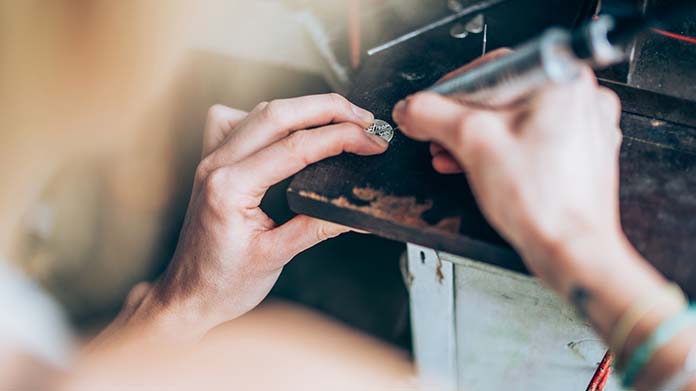
In today’s consumer world, we can have anything at the touch of a button. Amazon and other online sellers make gift-getting fast and easy, and many people want to go the extra mile to provide custom gifts to people they care about.
Our guide is in 3 parts:
In addition to basic business startup costs (e.g., paying an accountant to set up books, licensing fees, office space and supplies, IT support, etc.), the most expensive part of starting a custom engraving business is purchasing a laser engraving machine. These machines can be expensive and are the cornerstone of your business.
Ongoing expenses for a laser engraving business include:
Equipment repair and maintenance
Advertising
Material acquisition
Office space costs
Payroll
There are several target markets for custom engraving, including managers/supervisors (i.e., those in charge of presenting awards/honoring achievements), schools, nonprofit organizations, and everyday people who want to add a personal touch to both their own items and gifts for others. In essence, most people can benefit from a local custom engraving business.
A custom engraving business makes money by charging a price that’s fair for customers while still allowing the business to profit. Custom engraving businesses may cut a deal with materials suppliers, helping them to cut costs on raw materials. Money can also be made by working with organizations as their exclusive engraving company, as well as by running specials that attract new clients.
Pricing will depend on the quality of your engraving equipment, as well as your business strategy. Many custom engraving businesses charge a flat fee of $10 per item (which includes a set number of words) and more for extensive or more cumbersome projects. Of course, special pricing is often worked out on large orders.
Like many things in the professional world, the profit made from laser engraving is closely related to how much you invest in the business. Laser quality, materials quality, reputation, accuracy, customer reviews, and speed of service all affect the profit margin of a laser engraving company. It’s possible to quickly begin to turn a profit with a new laser custom engraving company.
Working closely with suppliers can lower costs, making business more profitable. Digitizing as much of the business as possible (encouraging customers to place orders online rather than over the phone) can also streamline the workload and increase accuracy.
The owner of a custom engraving business may have a changing to-do list from day to day. Some common aspects of day-to-day life as the owner of a custom engraving business may include:
Meeting with potential clients (such as schools and corporations) to bid on large-scale engraving products (such as commemorative bricks, plaques for award winners, etc.)
Comparing bids from material suppliers to try to cut costs and increase profits
Meetings with all employees to discuss deadlines and large jobs as well as troubleshoot any issues
One-on-one meetings with employees to go over timelines and small-scale projects
Troubleshooting with any customers who are unhappy with their custom engraving orders
Reaching out directly to high-level clients who have provided unclear instructions for their custom engraving orders
Working directly with technical support staff to ensure a customer-friendly website for custom engraving orders
Some business know-how is ideal for the start of a custom engraving business, as the business owner needs to understand how to increase profits while cutting costs. Experience in supplier relations, management, and customer relations can all make it easier to start a custom engraving business.
In addition to basic business skills, experience creating custom engraving products can make it easier to start a custom engraving business. While it’s possible to learn these skills on the job, knowing the ins and outs of digital engraving is important for business owners to ensure that their customers are getting the highest-quality products possible.
Over the past decade, the laser engraving market has grown significantly.
There are several reasons why more people are using laser engraving services now than ever, including:
Accessibility: Ordering online means that customers don’t have to physically go to a shop or wait for a shop to be open to place their order.
The desire for unique items: Today, gifts and other items are easy to order and send to someone’s doorstep. Engraving adds a personal, thoughtful, and unique touch.
Importance of branding: Startup companies depend on social media photos to make others aware of their presence, and it’s important for these businesses to have custom items emblazoned with their logo. Custom engraving makes that possible at a fair price.
Getting things off the ground can be tough for any business. Custom engraving business owners may want to work with local businesses and organizations — including gift shops, jewelry stores, hospitals, and schools — to entice them to give their services a try. Many custom engraving business owners initially offer services to such organizations at a large discount in exchange for an endorsement or review. Offering convenience — such as free delivery within a reasonable area — can also help set a custom engraving business apart and jump-start your business.
Bringing on part-time employees as early as possible can help to lessen the load of starting a new custom engraving business. There’s no need to build a full team from the start — it’s normal to hire as the business grows.
Business Evaluation & Strategy Tool
We'll walk you through the four pillars every business needs: Points of Leverage, Marketing Strategy, Financial Model, and Personal Compatibility. At the end you'll see a personalized report and your action plan below will be tailored to your answers.
Every viable business has natural advantages. Below are common leverage points across four categories. Pick the ones that apply to your Custom Engraving business. We've pre-suggested a few based on your idea — review and adjust.
Without a way to connect with customers, even great businesses fail. Pick the channels you plan to use to reach your customers.
Enter your monthly baseline costs — the minimum overhead to keep the business running. Then we'll calculate how many sales per month you need to break even.
A business that doesn't fit your life will fail no matter how good the numbers look. Tell us how this business fits you.
Complete the four pillars and your personalized summary will appear here.
Nine concrete steps to take you from idea to open business, grouped into 30-day phases. Complete the planner above and we'll highlight what's most important for your situation.
An LLC keeps your personal assets separate from business debts and lawsuits — the most common reason small business owners choose this structure. Sole proprietorships and partnerships do not provide this protection.
Apply for your free Employer Identification Number through the IRS, then register for any state or local taxes that apply to your business (sales tax, franchise tax).
A dedicated business account is required to maintain personal asset protection. Mixing personal and business finances ('piercing the corporate veil') can void your LLC's liability shield.
Recording expenses and income from day one makes tax filing easier and lets you see when the business is actually profitable. Use software (QuickBooks, Wave) or a part-time bookkeeper.
State and local requirements vary widely. Brick-and-mortar businesses typically need a Certificate of Occupancy; service businesses may need specific professional licensing; food businesses need health permits.
General Liability Insurance is the most common starting point. If you'll have employees, most states require Workers' Compensation. Specific industries need additional coverage (product liability, professional liability, etc.).
Your brand is how customers perceive and remember you. A clear name, logo, and visual identity make every later marketing decision easier and protect you legally as you grow.
Every legitimate business needs a website. Social media pages are not a substitute — you don't own the platform. Modern website builders mean you can launch a clean site in a weekend without a developer.
A dedicated business number keeps your personal life private, makes the business look legitimate, and lets you route calls professionally. Cloud phone services start under $20/month.
Starting a Custom Engraving business typically costs $25,000 to $250,000. It is considered a very high capital-intensity business.
A Custom Engraving business runs roughly a 8% net profit margin, and most owners reach break-even in about 4 to 12 months.
You can usually launch a Custom Engraving business in about 12 to 36 weeks, and it is commonly run part time.
A Custom Engraving business is generally an intermediate-skill business to start, with rising demand. TRUiC rates it 49 out of 100 on our Idea Score.
Most Custom Engraving businesses register as an LLC or other legal entity and obtain a general business license. Depending on your state and city you may also need industry-specific permits, sales tax registration, and zoning or health approvals, so check your local requirements before you launch.