Startup cost
$500–$5k
TRUiC Business Ideas
Decision Snapshot
Idea Score
65
Startup cost
$500–$5k
Profit margin
21%
Break-even
4 mo–12 mo
Time to launch
12 wk–36 wk
Demand trend
Stable
5-yr failure rate
—
Capital intensity
Low
Time commitment
Flexible
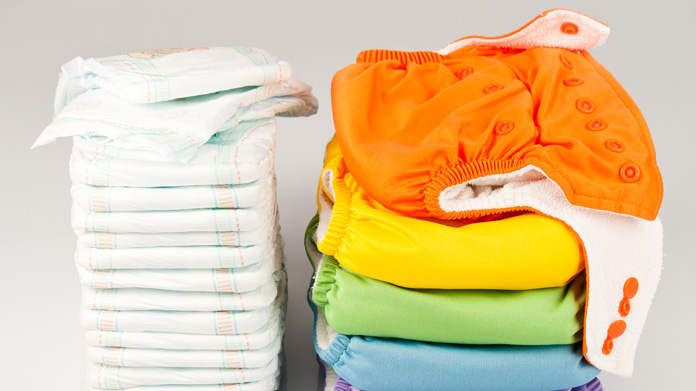
An increasing number of parents are interested in the environmental and economic benefits that cloth diapers offer, but not all parents want to deal with washing them. Cloth diaper services provide and launder cloth diapers so that parents don’t have to. Through 2022, the global diaper market is projected to reach an annual revenue of $67.46 billion. A significant portion of this growth is expected to come from environmentally friendly solutions like biodegradable disposable diapers and cloth diapers. This growth should create many opportunities for new cloth diaper services.
Our guide is in 3 parts:
The startup costs involved in opening a cloth diaper service are fairly low. A service generally needs:
One-size diapers: $220 for 12 pack
Large diaper bags: $30 each
Transportation; It’s very efficient to use your personal vehicle.
Rubber gloves: ~$10
Washing machine; Using your personal washer is ideal.
Detergent: ~$14 per 68 loads
Cloth diaper pail: ~$50 for 7 gallons, 1-2 day pail
How many cloth diapers business owners need to purchase initially depends on what brand of cloth diapers they get. Some brands offer just one size, while others have two or three different sizes.
Business owners who want to keep their startup costs as low as possible can begin by purchasing just three weeks’ worth of cloth diapers. This should be sufficient for one client, as it allows:
1 week’s worth of diapers to be with the client
1 week’s worth of diapers to be in the laundry
1 week’s worth of diapers as a backup emergency supply
For Mother Earth Baby, a basic full week’s supply is 80 diapers, so three weeks would be 240 diapers. (If using a brand that has multiple sizes, a service should purchase three weeks’ worth of diapers in each size available.)
While this only provides enough diapers for a single client, more diapers can be purchased as additional clients sign up. The one-week emergency supply should suffice for a week while new diapers are ordered. This lets business owners use the first payment that new clients make to pay for any additional diapers that are required.
Business owners can further reduce their upfront expenses by using their own car and washing machine. A special car isn’t needed, as most vehicles are big enough for diapers. A special washing machine also isn’t required, although it’s important to have hot water.
Read our cloth diaper service purchasing guide to learn about the materials and equipment you’ll need to start a cloth diaper service, how much to budget, and where to make purchases.
The ongoing expenses for a cloth diaper service businesses are fairly low. They primarily include:
fuel and maintenance for a vehicle
detergent
hot water
A cloth diaper service’s ideal clients are busy parents with a decent amount of discretionary income. If you are able to find a nursery business that uses cloth diapers, that could be an easy way to increase business.
A cloth diaper service makes money by charging for the rental and laundering of cloth diapers. Most services charge a flat weekly or monthly fee.
Many cloth diaper services charge between about $25 and $50 per week. Mother Earth Baby, for instance, offers a basic diaper service for $25 per week and an all-in-one diaper service for $50 per week.
How much a cloth diaper service can make depends entirely on how many clients it has. Nelson reports that services can have annual revenues around $25,000 with 20 clients.
Many cloth diaper service businesses increase their revenue slightly by offering cloth wipes and selling cloth diapers. Cloth wipes are typically an add-on service that’s between $5 and $8 per week. Cloth diapers may be sold new or used, with new ones commanding much higher prices.
Cloth diaper service owners spend much of their time exchanging and cleaning diapers. On any given day, they may:
drive to client’s homes, where they pick up dirty diapers and drop off clean ones
count how many dirty diapers a client used, so they know how many to drop off the next week
wash diapers, which sometimes requires multiple cycles
dry diapers, which may require letting them air-dry
sort diapers for the next week’s deliveries
When not doing these things, business owners are frequently marketing their business and managing bills.
Business owners should be familiar with both how to use cloth diapers and how to properly launder them. Although they’ll only be laundering the diapers, clients may have questions about using them—and they’ll expect business owners to know how to use the products they provide.
Many cloth diaper companies (which sell cloth diapers) and cloth diaper services offer classes on properly using and washing cloth diapers. For example, Jillian’s Drawers offers a free cloth diapering class, and Diaper Lab in Boston has a course for $30.
There are also books that have helpful tips on how to use cloth diapers. Confessions of a Cloth Diaper Convert and Cloth Diapers are two popular titles.
Cloth diaper services serve a single geographic area, such as a city or small regional area. Since you will probably be doing daily drop-offs and pick-ups, you will most likely be relatively limited in how far you can go. However, once you have enough income to hire additional drivers and maybe even additional branches, there is no limit to the area you can reach.
When washing cloth diapers, it’s extremely important to disinfect them. A good wash routine, Angie Nelson says, will use water that’s at least 160 degrees Fahrenheit. It also may involve multiple washings—some services use up to 13 changes of water when washing diapers.
Cloth diaper services can be run as one-person operations. If revenue grows enough, one or more employees may be hired to help with pickups, dropoffs and laundering. It is important to find employees with good social skills (if they will be delivering the diapers).
Read our cloth diaper service hiring guide to learn about the different roles a cloth diaper service typically fills, how much to budget for employee salaries, and how to build your team exactly how you want it.
Business Evaluation & Strategy Tool
We'll walk you through the four pillars every business needs: Points of Leverage, Marketing Strategy, Financial Model, and Personal Compatibility. At the end you'll see a personalized report and your action plan below will be tailored to your answers.
Every viable business has natural advantages. Below are common leverage points across four categories. Pick the ones that apply to your Cloth Diaper Service business. We've pre-suggested a few based on your idea — review and adjust.
Without a way to connect with customers, even great businesses fail. Pick the channels you plan to use to reach your customers.
Enter your monthly baseline costs — the minimum overhead to keep the business running. Then we'll calculate how many sales per month you need to break even.
A business that doesn't fit your life will fail no matter how good the numbers look. Tell us how this business fits you.
Complete the four pillars and your personalized summary will appear here.
Nine concrete steps to take you from idea to open business, grouped into 30-day phases. Complete the planner above and we'll highlight what's most important for your situation.
An LLC keeps your personal assets separate from business debts and lawsuits — the most common reason small business owners choose this structure. Sole proprietorships and partnerships do not provide this protection.
Apply for your free Employer Identification Number through the IRS, then register for any state or local taxes that apply to your business (sales tax, franchise tax).
A dedicated business account is required to maintain personal asset protection. Mixing personal and business finances ('piercing the corporate veil') can void your LLC's liability shield.
Recording expenses and income from day one makes tax filing easier and lets you see when the business is actually profitable. Use software (QuickBooks, Wave) or a part-time bookkeeper.
State and local requirements vary widely. Brick-and-mortar businesses typically need a Certificate of Occupancy; service businesses may need specific professional licensing; food businesses need health permits.
General Liability Insurance is the most common starting point. If you'll have employees, most states require Workers' Compensation. Specific industries need additional coverage (product liability, professional liability, etc.).
Your brand is how customers perceive and remember you. A clear name, logo, and visual identity make every later marketing decision easier and protect you legally as you grow.
Every legitimate business needs a website. Social media pages are not a substitute — you don't own the platform. Modern website builders mean you can launch a clean site in a weekend without a developer.
A dedicated business number keeps your personal life private, makes the business look legitimate, and lets you route calls professionally. Cloud phone services start under $20/month.
Starting a Cloth Diaper Service business typically costs $500 to $5,000. It is considered a low capital-intensity business.
A Cloth Diaper Service business runs roughly a 21% net profit margin, and most owners reach break-even in about 4 to 12 months.
You can usually launch a Cloth Diaper Service business in about 12 to 36 weeks, and it is commonly run flexible.
A Cloth Diaper Service business is generally an intermediate-skill business to start, with stable demand. TRUiC rates it 65 out of 100 on our Idea Score.
Most Cloth Diaper Service businesses register as an LLC or other legal entity and obtain a general business license. Depending on your state and city you may also need industry-specific permits, sales tax registration, and zoning or health approvals, so check your local requirements before you launch.