Startup cost
$1.0k–$10k
TRUiC Business Ideas
Decision Snapshot
Idea Score
48
Startup cost
$1.0k–$10k
Profit margin
4%
Break-even
4 mo–12 mo
Time to launch
12 wk–36 wk
Demand trend
Stable
5-yr failure rate
—
Capital intensity
Medium
Time commitment
Part time
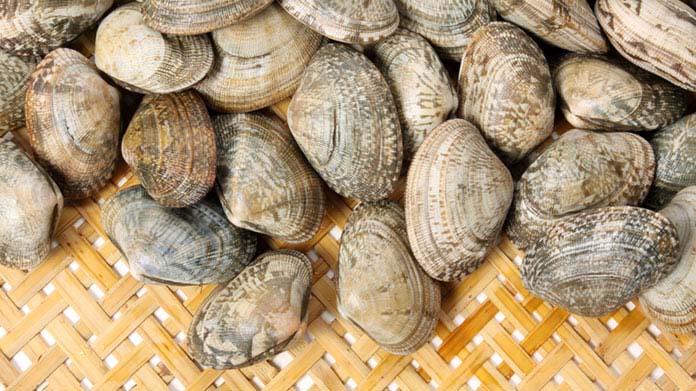
Clams are a highly popular shellfish that people enjoy in many dishes. They appear in everything from inexpensive fried clam baskets to pricey trays of clams casino, not to mention the clam chowder that many New Englanders and New Yorkers grow up on.
Many of the clams that people eat are harvested by small business owners who dig for clams in dirt and mud along the shoreline. While there are some boats that fish for clams in deeper waters, small clamming businesses dig and rake up millions of pounds of clams every year.
Our guide is in 3 parts:
The costs associated with opening a clamming business are minimal. Business owners need:
A commercial shellfish license
A metal gauge for measuring clams
A few 5-gallon buckets
Footwear that offers protection (wetsuit shoes work well)
If desired, a rake, inner tube and rolling machine (for sorting) may also be purchased. Even with these items, it’s often possible to outfit a clamming business for just a few hundred dollars including any necessary licenses.
Business owners who need a boat to reach clamming grounds will have to spend more, but a used rowboat or skiff suffices and doesn’t cost much.
The ongoing expenses for a clamming business are almost nothing. If a business has a powerboat, then fuel and oil must be purchased. Otherwise, the only main ongoing expense is whatever annual fee must be paid to keep licenses current.
Clams eventually make their way to seafood shops, grocery stores and restaurants. Clamming businesses, however, sell to clam wholesalers who are middlemen in the supply chain.
Once clams are sorted, they’re sold to a wholesaler in the area. Most clamming regions have only one or two wholesalers.
The wholesale price of clams is determined by the market. Most clams sell for around $2.25 per pound, but littlenecks can command higher prices.
Business owners can earn between $100 and $200 per half-day of work. Exactly how much business owners make depends on how hard they work and how plentiful the clams are.
In addition to harvesting clams, business owners may also be able to gather certain crabs or mussels that they come across while working. These won’t be major income streams, but they can provide a little boost if there’s someone in the area who will buy them.
A clamming business owners’ day is dictated by low tide, as Luke Jenks explains. Luke and his clamming partner Mike start their day 2 to 2.5 hours before low tide and continue working until 2 to 2.5 hours after low tide. Outside of this time frame, the water is too deep to work effectively. Most clammers don’t work in the middle of the night, which is why work is limited each day.
After arriving at a clamming location by foot or boat, business owners begin searching for clams. Luke feels around for them with his feet, but others use rakes or shovels (see Jump-Starting). Once clams are gathered, they’re put into a bucket and sorted at the end of the day. Many clammers use an innertube to stabilize and move the bucket. Sorting can be done by hand or with a mechanical sorter.
Running a clamming business requires little more than knowing how to find and harvest clams.
There are classes on clamming (e.g. The University of Rhode Island offer courses), but taking a course is often unnecessary. Business owners can usually find a fellow clammer in the area who will teach them the tricks of the trade and not charge a fee for doing so.
Those who don’t have a mentor or want additional information can read books, such as The Compleat Clammer and Here’s How To… Clamming.
Clamming businesses remain small, and most are one-person operations. There are few barriers to prevent would-be employees from establishing their own businesses, and the profit margin often doesn’t justify hiring employees. Additionally, work in many states is seasonal.
How much a clamming business makes depends directly on how many clams are harvested. There are several ways to harvest, and which is the most effective depends on what type of clams are being harvested and what the harvesting area is like. The main techniques are:
Treading (feeling for clams with the feet and then picking them up by hand)
Raking (using a rake with a wire basket attached to collect clams)
Shinicocking (another type of raking)
Digging (using a shovel akin to a post-hole digger to get “digger clams”)
Most clamming business owners don’t hire employees. A few may work with family members, but these working relationships are generally more like a family business than a typical employer-employee arrangement.
Business Evaluation & Strategy Tool
We'll walk you through the four pillars every business needs: Points of Leverage, Marketing Strategy, Financial Model, and Personal Compatibility. At the end you'll see a personalized report and your action plan below will be tailored to your answers.
Every viable business has natural advantages. Below are common leverage points across four categories. Pick the ones that apply to your Clamming business. We've pre-suggested a few based on your idea — review and adjust.
Without a way to connect with customers, even great businesses fail. Pick the channels you plan to use to reach your customers.
Enter your monthly baseline costs — the minimum overhead to keep the business running. Then we'll calculate how many sales per month you need to break even.
A business that doesn't fit your life will fail no matter how good the numbers look. Tell us how this business fits you.
Complete the four pillars and your personalized summary will appear here.
Nine concrete steps to take you from idea to open business, grouped into 30-day phases. Complete the planner above and we'll highlight what's most important for your situation.
An LLC keeps your personal assets separate from business debts and lawsuits — the most common reason small business owners choose this structure. Sole proprietorships and partnerships do not provide this protection.
Apply for your free Employer Identification Number through the IRS, then register for any state or local taxes that apply to your business (sales tax, franchise tax).
A dedicated business account is required to maintain personal asset protection. Mixing personal and business finances ('piercing the corporate veil') can void your LLC's liability shield.
Recording expenses and income from day one makes tax filing easier and lets you see when the business is actually profitable. Use software (QuickBooks, Wave) or a part-time bookkeeper.
State and local requirements vary widely. Brick-and-mortar businesses typically need a Certificate of Occupancy; service businesses may need specific professional licensing; food businesses need health permits.
General Liability Insurance is the most common starting point. If you'll have employees, most states require Workers' Compensation. Specific industries need additional coverage (product liability, professional liability, etc.).
Your brand is how customers perceive and remember you. A clear name, logo, and visual identity make every later marketing decision easier and protect you legally as you grow.
Every legitimate business needs a website. Social media pages are not a substitute — you don't own the platform. Modern website builders mean you can launch a clean site in a weekend without a developer.
A dedicated business number keeps your personal life private, makes the business look legitimate, and lets you route calls professionally. Cloud phone services start under $20/month.
Starting a Clamming business typically costs $1,000 to $10,000. It is considered a medium capital-intensity business.
A Clamming business runs roughly a 4% net profit margin, and most owners reach break-even in about 4 to 12 months.
You can usually launch a Clamming business in about 12 to 36 weeks, and it is commonly run part time.
A Clamming business is generally a beginner-skill business to start, with stable demand. TRUiC rates it 48 out of 100 on our Idea Score.
Most Clamming businesses register as an LLC or other legal entity and obtain a general business license. Depending on your state and city you may also need industry-specific permits, sales tax registration, and zoning or health approvals, so check your local requirements before you launch.