Startup cost
$500–$5k
TRUiC Business Ideas
Decision Snapshot
Idea Score
48
Startup cost
$500–$5k
Profit margin
4%
Break-even
4 mo–12 mo
Time to launch
12 wk–36 wk
Demand trend
Stable
5-yr failure rate
—
Capital intensity
Low
Time commitment
Full time
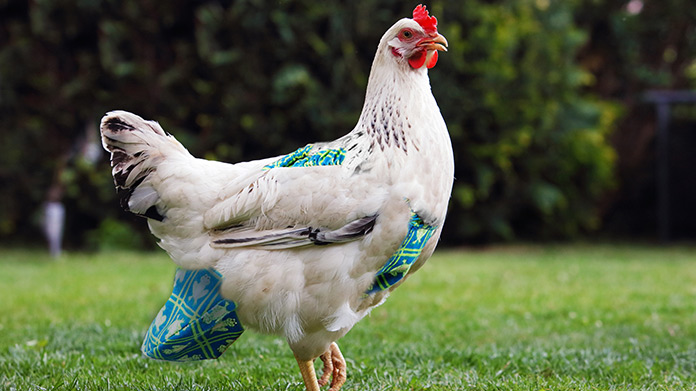
Chicken diapers are a fashion accessory only die-hard chicken breeders knew about 10 years ago. Those who don’t have chickens often still raise their eyebrows at the idea of diapering poultry. Among a rising culture of urban chicken owners, however, there is a steady demand for functional and handsome chicken diapers.
A survey of four major cities (Denver, Miami, New York City, and Los Angeles) found that 0.8% of residents already owned at least one chicken, and another 4% intended to purchase chickens within five years.
While these percentages may seem small, just a fractional percentage of any one of these cities equates to thousands of chicken owners. Moreover, almost all of these owners need diapers for their poultry because the birds are kept at least partially indoors. Chicken diaper businesses specialize in making fashionable and practical diapers for these birds.
You may also be interested in additional unique business ideas.
Our guide is in 3 parts:
The startup costs for a chicken diapering business are extremely low.
Business owners who already have a sewing machine and serger need little more than a website and materials. A website can be created for less than $100 on platforms like Wix and Shopify. Materials cost little, and business owners who have limited capital can start out with only what they need to create their store’s sample diapers. The materials required for customers’ orders can be purchased after orders are placed.
Those who don’t have a sewing machine and serger will need to acquire each. Amazon has many sewing machines available for a few hundred dollars, and sergers run in a similar price range. (A computerized sewing machine isn’t necessary.)
The ongoing expenses for a chicken diaper business are minimal. They mostly consist of website hosting and maintenance fees and material costs. Businesses that have a seamstress must also factor in employee wages.
The target market for chicken diaper businesses is primarily people who have smaller flocks of chickens. Some customers are backyard chicken raisers, generally keeping flocks of twenty or fewer birds. Others are urbanites who have just one or two birds indoors.
A chicken diaper business makes money by selling diapers that are designed for poultry. Most businesses sell diapers individually at retail prices, but business owners could theoretically also sell diapers wholesale.
Pampered Poultry sells their diapers for around $18, and Love A Chicken sells diapers for about $17. My Pet Chicken’s diapers are custom-made and cost nearly $30.
Successful chicken diaper businesses bring in substantial revenue. Pampered Poultry sells between 500 and 1,000 diapers each month, generating an annual revenue over $50,000. Since operating expenses are so low, most of this is profit.
A chicken diaper business can increase revenue by selling other, related products. Pampered Poultry also has peep pouches (for chicks), saddles (to protect hens during mating) and dresses (which serve no practical function). The business sells around 100 dresses per month.
A typical day at a chicken diaper business involves sewing diapers, shipping orders, and ordering supplies as needed. When not working on these tasks, business owners spend time designing new pieces and marketing their business.
In order to design chicken diapers well, business owners should have experience owning chickens and sewing. Those who don’t already have chickens may want to spend a year raising them before they get into this line of work.
Anyone who isn’t an accomplished sewer ought to take classes on sewing and/or pattern making. Jo-Ann Fabrics offers in-person sewing classes, and Craftsy has online sewing courses. SkillShare and Craftsy both have online pattern-making courses.
Chicken diaper businesses are limited by the size of the market. While businesses can be quite successful and ship to all 50 states, even the most well-known ones are still small businesses. Some of the more recognized names in the industry are Pampered Poultry, and My Pet Chicken.
Business owners can quickly increase their brand’s visibility and credibility by supplying diapers for show chickens. Even if a chicken doesn’t win its show, everyone at the show will see the diaper and the business can advertise that the diapers were used in the show.
Business owners don’t have to hire employees as long as they can do all the sewing themselves. Some, however, choose to hire a seamstress to help with the workload. According to Indeed, the average wage for a seamstress is $12.15 per hour.
Business Evaluation & Strategy Tool
We'll walk you through the four pillars every business needs: Points of Leverage, Marketing Strategy, Financial Model, and Personal Compatibility. At the end you'll see a personalized report and your action plan below will be tailored to your answers.
Every viable business has natural advantages. Below are common leverage points across four categories. Pick the ones that apply to your Chicken Diaper business. We've pre-suggested a few based on your idea — review and adjust.
Without a way to connect with customers, even great businesses fail. Pick the channels you plan to use to reach your customers.
Enter your monthly baseline costs — the minimum overhead to keep the business running. Then we'll calculate how many sales per month you need to break even.
A business that doesn't fit your life will fail no matter how good the numbers look. Tell us how this business fits you.
Complete the four pillars and your personalized summary will appear here.
Nine concrete steps to take you from idea to open business, grouped into 30-day phases. Complete the planner above and we'll highlight what's most important for your situation.
An LLC keeps your personal assets separate from business debts and lawsuits — the most common reason small business owners choose this structure. Sole proprietorships and partnerships do not provide this protection.
Apply for your free Employer Identification Number through the IRS, then register for any state or local taxes that apply to your business (sales tax, franchise tax).
A dedicated business account is required to maintain personal asset protection. Mixing personal and business finances ('piercing the corporate veil') can void your LLC's liability shield.
Recording expenses and income from day one makes tax filing easier and lets you see when the business is actually profitable. Use software (QuickBooks, Wave) or a part-time bookkeeper.
State and local requirements vary widely. Brick-and-mortar businesses typically need a Certificate of Occupancy; service businesses may need specific professional licensing; food businesses need health permits.
General Liability Insurance is the most common starting point. If you'll have employees, most states require Workers' Compensation. Specific industries need additional coverage (product liability, professional liability, etc.).
Your brand is how customers perceive and remember you. A clear name, logo, and visual identity make every later marketing decision easier and protect you legally as you grow.
Every legitimate business needs a website. Social media pages are not a substitute — you don't own the platform. Modern website builders mean you can launch a clean site in a weekend without a developer.
A dedicated business number keeps your personal life private, makes the business look legitimate, and lets you route calls professionally. Cloud phone services start under $20/month.
Starting a Chicken Diaper business typically costs $500 to $5,000. It is considered a low capital-intensity business.
A Chicken Diaper business runs roughly a 4% net profit margin, and most owners reach break-even in about 4 to 12 months.
You can usually launch a Chicken Diaper business in about 12 to 36 weeks, and it is commonly run full time.
A Chicken Diaper business is generally an intermediate-skill business to start, with stable demand. TRUiC rates it 48 out of 100 on our Idea Score.
Most Chicken Diaper businesses register as an LLC or other legal entity and obtain a general business license. Depending on your state and city you may also need industry-specific permits, sales tax registration, and zoning or health approvals, so check your local requirements before you launch.