Startup cost
$500k–$1.5M
TRUiC Business Ideas
Decision Snapshot
Idea Score
31
Startup cost
$500k–$1.5M
Profit margin
6%
Break-even
4 mo–12 mo
Time to launch
12 wk–36 wk
Demand trend
Stable
5-yr failure rate
—
Capital intensity
Very high
Time commitment
Flexible
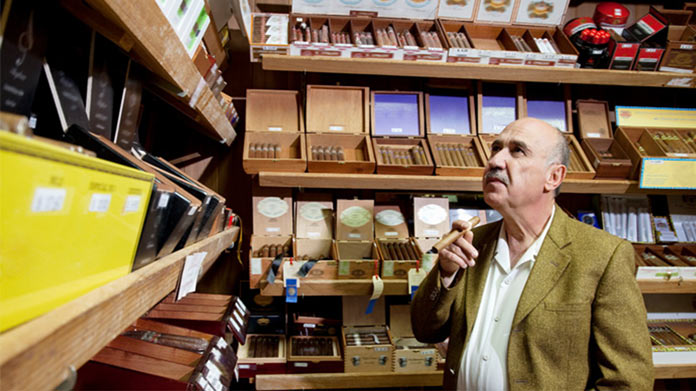
Despite public health campaigns and legislation against tobacco products, the demand for cigars remains strong. In fact, the limits placed on where people can smoke may actually be helping cigar shops. Where allowed, cigar shops sometimes double as smoking lounges and are one of the few places at which people can still enjoy a smoking product.
According to IBISWorld, cigar lounges in the United States have grown at 2.7 percent annually in recent years and have an annual revenue of $903 million. With just 930 businesses in the industry, there’s lots of opportunity for newcomers to open cigar shops.
Our guide is in 3 parts:
The startup costs involved in opening a cigar shop business are significant. Lionel Melendi, who owns a cigar shop in Brooklyn, recommends that business owners have at least $500,000 in funding. Savvy business owners, however, might be able to open a shop for a little less up front.
Some of the biggest expenses incurred when opening a cigar shop include:
securing a location for the business
building out the location
purchasing inventory to sell
acquiring a humidor for storing cigars
buying cutters and lighters (if also serving as a lounge)
In addition to these, there are legal and insurance costs.
Business owners who have limited funds can save by selecting a smaller location that’s still in a high-traffic area. If only selling cigars (and not serving as a lounge), something as small as a mall kiosk could work. Alternatively, a little storefront at a significant intersection could be excellent. Cigars don’t require a large place to display or store, which is why total space isn’t all that important.
To reduce overall inventory costs, business owners can order a variety of cigars but not too many of any one cigar. Cigars are small and light, so they can be shipped in one or two days if necessary. While regularly overnighting orders isn’t a wise long-term plan, it does let business owners get started without tying too much capital up in inventory — which can take months to sell.
The one expense business owners shouldn’t skimp on is the humidor. A good humidor can cost $20,000 but is absolutely necessary. It’s the humidor that keeps the cigars in stable conditions so they don’t spoil. Without a high-quality humidor, a shop’s entire stock could be ruined.
The ongoing expenses for a cigar shop are manageable. They include employees’ wages, lease and utility payments, and inventory expenses.
The cigar-smoking population is traditionally thought of as older men. This remains generally true, but trends among cigar smokers are changing. The target market for a cigar shop business is:
98 percent male, but growing among women
mostly between 40 and 60 years old, but growing among young adults
Well-educated about cigars, regardless of gender or age
A cigar shop business makes money by selling cigars. Cigars are normally sold by the stick or the box.
Holt’s Clubhouse notes that cigars typically start between $5 and $8, and can go up to between $40 and $50. In a few cases, sought-after cigars may be priced even higher.
A successful cigar shop business can bring in a significant revenue. Mike’s Cigars in Miami currently sells 25-30 million cigars each year. Just from cigar sales, Mike’s Cigars has an annual revenue in the tens of millions.
Cigar shop businesses have several ways to increase profits. Shops may sell lottery tickets, beverages and food items, along with other smoking items. Some shops sell smoking accessories, tobacco, hookah, and vapes. Alternatively, shops can create their own white label cigar brands to sell.
A typical day at a cigar shop involves a variety of activities. Businesses owners:
check inventory and humidor settings
welcome customers and recommend cigars
cut and light cigars (at shops that double as lounges)
order more inventory as necessary
sell other products (see “make your business more profitable”)
Similar to a bar setting, business owners might also spend time talking with customers. Some customers will want to have lengthy discussions on almost any topic, while others will simply want to buy a cigar or visit with their friends.
In order to successfully run a cigar shop, business owners must be familiar with both cigars and running a retail business.
Business owners can learn about cigars through:
For business owners who don’t already have retail experience, and preferably retail experience within the tobacco industry, there are several resources that might help. Working in an existing cigar shop business will provide firsthand experience, and business owners in other areas may be willing to serve as mentors. Online courses in general retail can also be helpful. Coursera and EdX both offer such courses.
A cigar store may be a small operation with just one location, or it can grow to be a multi-site business. Cheap Smokes & Cigars is an example of a franchised business in Alberta, Canada. Ithaca Cigars and Sheik’s are two examples of local cigar shops in Upstate New York.
A cigar shop business must have a knowledgeable staff and a captivating atmosphere. Business owners should never stop reading about cigars, including everything from the science of storing them to interesting anecdotes about their history. Moreover, a cigar shop should have a relaxed vibe that encourages customers to linger and enjoy their time at the shop.
Ultimately, it’s these two factors — knowledge and atmosphere — that will convince customers to purchase cigars in person rather than online.
As a retail business, a cigar shop must have a small team of employees from the outset. Multiple employees are needed to maintain the retail hours customers expect.
Business Evaluation & Strategy Tool
We'll walk you through the four pillars every business needs: Points of Leverage, Marketing Strategy, Financial Model, and Personal Compatibility. At the end you'll see a personalized report and your action plan below will be tailored to your answers.
Every viable business has natural advantages. Below are common leverage points across four categories. Pick the ones that apply to your Cigar Shop business. We've pre-suggested a few based on your idea — review and adjust.
Without a way to connect with customers, even great businesses fail. Pick the channels you plan to use to reach your customers.
Enter your monthly baseline costs — the minimum overhead to keep the business running. Then we'll calculate how many sales per month you need to break even.
A business that doesn't fit your life will fail no matter how good the numbers look. Tell us how this business fits you.
Complete the four pillars and your personalized summary will appear here.
Nine concrete steps to take you from idea to open business, grouped into 30-day phases. Complete the planner above and we'll highlight what's most important for your situation.
An LLC keeps your personal assets separate from business debts and lawsuits — the most common reason small business owners choose this structure. Sole proprietorships and partnerships do not provide this protection.
Apply for your free Employer Identification Number through the IRS, then register for any state or local taxes that apply to your business (sales tax, franchise tax).
A dedicated business account is required to maintain personal asset protection. Mixing personal and business finances ('piercing the corporate veil') can void your LLC's liability shield.
Recording expenses and income from day one makes tax filing easier and lets you see when the business is actually profitable. Use software (QuickBooks, Wave) or a part-time bookkeeper.
State and local requirements vary widely. Brick-and-mortar businesses typically need a Certificate of Occupancy; service businesses may need specific professional licensing; food businesses need health permits.
General Liability Insurance is the most common starting point. If you'll have employees, most states require Workers' Compensation. Specific industries need additional coverage (product liability, professional liability, etc.).
Your brand is how customers perceive and remember you. A clear name, logo, and visual identity make every later marketing decision easier and protect you legally as you grow.
Every legitimate business needs a website. Social media pages are not a substitute — you don't own the platform. Modern website builders mean you can launch a clean site in a weekend without a developer.
A dedicated business number keeps your personal life private, makes the business look legitimate, and lets you route calls professionally. Cloud phone services start under $20/month.
Starting a Cigar Shop business typically costs $500,000 to $1,500,000. It is considered a very high capital-intensity business.
A Cigar Shop business runs roughly a 6% net profit margin, and most owners reach break-even in about 4 to 12 months.
You can usually launch a Cigar Shop business in about 12 to 36 weeks, and it is commonly run flexible.
A Cigar Shop business is generally an intermediate-skill business to start, with stable demand. TRUiC rates it 31 out of 100 on our Idea Score.
Most Cigar Shop businesses register as an LLC or other legal entity and obtain a general business license. Depending on your state and city you may also need industry-specific permits, sales tax registration, and zoning or health approvals, so check your local requirements before you launch.