Startup cost
$2.1k–$23k
TRUiC Business Ideas
Decision Snapshot
Idea Score
58
Startup cost
$2.1k–$23k
Profit margin
11%
Break-even
4 mo–12 mo
Time to launch
2 wk–12 wk
Demand trend
Stable
5-yr failure rate
—
Capital intensity
Medium
Time commitment
Flexible
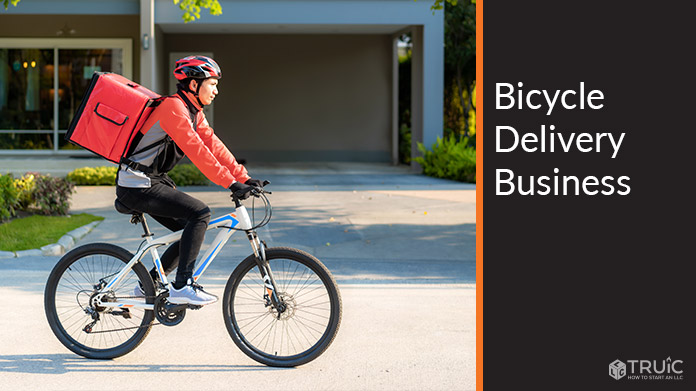
Individuals and businesses across the globe use bicycle delivery services to ensure their packages arrive safely. Also known as bicycle couriers, these companies deliver anything from legal correspondence to food.
Our guide is in 3 parts:
Startup costs for a bicycle delivery service are minimal. Your most important business tools are your bike and a cell phone. While you could get by on just those two things, you will need to make further investments to build a sustainable business. Reports indicate a minimum startup budget of $2,100, with an average budget of $22,768. Common startup costs include:
Office – Many business owners elect to operate out of a home office, rather than paying thousands of dollars in rent and utilities each month.
Business registration, permits, and licensing – Depending on your region, these cost $50 to $1,500.
Business insurance – Work with an agent to determine your business insurance needs. Policy premiums range from $500 to $1,200 annually.
Computer and business management software – While it may seem like a frivolous expense, investing in business software that automates your processes saves both time and money.
Employee expenses – Employee expenses include more than payroll. It’s important that your employees look professional and are easy to identify. Uniforms with the company logo cost up to $500 but are a worthy investment.
Website and advertising – Your website should be user-friendly and contain SEO-driven content to ensure visitors understand the services you offer.
To start, you’ll need at least one bike and one reliable vehicle. When you start to build your team, you’ll need to decide if you want to furnish each employee with a bike or if they will use their own. As you start to develop a team, you’ll need to invest in a dispatch system. This will keep the lines of communication open and ensure everyone’s time is used appropriately.
If your business runs out of your home, your ongoing expenses will be fairly minimal. Payroll/independent contractor fees will be the largest line on your budget. After that, your standard business expenses will include insurance, marketing, and website maintenance costs.
The target market for this business venture ranges from local food restaurants to professional businesses. The professional businesses you serve should include law firms and accountants.
Bicycle delivery businesses charge their customers a fee for each delivery made. Depending on what goods your business model delivers, some customers may offer a tip for prompt delivery.
When setting your fee schedule, consider your business expenses, time, and delivery details. Most couriers charge a flat rate, with an additional mileage fee for longer deliveries. After-hours, rush orders, and waiting fees should also be assessed.
Profits are directly tied to the number of deliveries made and your overhead expenses. The owner of Dashed, now known as GrubHub, started out as a single delivery driver. Before selling, the business expanded to service over 500 restaurants in five cities and was valued at over $4.6 million.
To maximize profits, consider offering both bicycle and fuel-efficient car delivery. This will enable you to service more areas and deliver packages that are too heavy or bulky for bike delivery.
As a bicycle delivery business owner, you will spend your days taking customer orders, picking up packages from clients, and delivering them to their intended destinations. Depending on the delivered item, many clients require a signature as evidence of receipt.
As the business starts to gain traction, you may opt to remove yourself as a driver and take on a more administrative role. In this role, you will be charged with taking orders, assigning orders to drivers based on location and delivery time needs, invoicing and accepting payments, and marketing.
Launching this type of business requires some degree of physical fitness, as you will be transporting items via bicycle. Business owners and their staff must also be detail-oriented, reliable, and mindful of time constraints and scheduling. Your job will often entail delivering confidential documents, so discretion is of the utmost importance.
Customer service and interpersonal skills are also important for this industry. Your clients may change the details of an order many times without warning. You and your staff must be patient and flexible, putting the clients’ needs above all else.
While you will advertise as a bicycle delivery service, it’s important that you are able to serve all your clients’ needs. Therefore, it is a good idea to have an automobile and a valid driver’s license for larger package deliveries.
Demand for this type of service is high and recession-proof, making it the ideal business venture for many entrepreneurs. There are, however, some oversaturated niches. If your goal is to build a scalable business that reaches beyond your region, research what delivery service niches are lacking and make your mark there.
This industry offers new growth and expansion options regularly. To ensure long-term success, pay close attention to market trends, local and global events, and identify unique ways you can meet your clients’ evolving needs.
For long-term success, you will need to continually expand your service area and hire employees to service those regions. The business will need more drivers during peak times of the day and certain times of the year. Some companies employ their team direly, while others hire team members as independent contractors. Both options come with their own set of pros and cons.
Every team member should be professional, well-groomed, and reliable. Since they represent your company every time they put their uniform on, it’s also important that they are trained and understand the rules of the roadway.
Business Evaluation & Strategy Tool
We'll walk you through the four pillars every business needs: Points of Leverage, Marketing Strategy, Financial Model, and Personal Compatibility. At the end you'll see a personalized report and your action plan below will be tailored to your answers.
Every viable business has natural advantages. Below are common leverage points across four categories. Pick the ones that apply to your Bicycle Delivery business. We've pre-suggested a few based on your idea — review and adjust.
Without a way to connect with customers, even great businesses fail. Pick the channels you plan to use to reach your customers.
Enter your monthly baseline costs — the minimum overhead to keep the business running. Then we'll calculate how many sales per month you need to break even.
A business that doesn't fit your life will fail no matter how good the numbers look. Tell us how this business fits you.
Complete the four pillars and your personalized summary will appear here.
Nine concrete steps to take you from idea to open business, grouped into 30-day phases. Complete the planner above and we'll highlight what's most important for your situation.
An LLC keeps your personal assets separate from business debts and lawsuits — the most common reason small business owners choose this structure. Sole proprietorships and partnerships do not provide this protection.
Apply for your free Employer Identification Number through the IRS, then register for any state or local taxes that apply to your business (sales tax, franchise tax).
A dedicated business account is required to maintain personal asset protection. Mixing personal and business finances ('piercing the corporate veil') can void your LLC's liability shield.
Recording expenses and income from day one makes tax filing easier and lets you see when the business is actually profitable. Use software (QuickBooks, Wave) or a part-time bookkeeper.
State and local requirements vary widely. Brick-and-mortar businesses typically need a Certificate of Occupancy; service businesses may need specific professional licensing; food businesses need health permits.
General Liability Insurance is the most common starting point. If you'll have employees, most states require Workers' Compensation. Specific industries need additional coverage (product liability, professional liability, etc.).
Your brand is how customers perceive and remember you. A clear name, logo, and visual identity make every later marketing decision easier and protect you legally as you grow.
Every legitimate business needs a website. Social media pages are not a substitute — you don't own the platform. Modern website builders mean you can launch a clean site in a weekend without a developer.
A dedicated business number keeps your personal life private, makes the business look legitimate, and lets you route calls professionally. Cloud phone services start under $20/month.
Starting a Bicycle Delivery business typically costs $2,100 to $22,768. It is considered a medium capital-intensity business.
A Bicycle Delivery business runs roughly a 11% net profit margin, and most owners reach break-even in about 4 to 12 months.
You can usually launch a Bicycle Delivery business in about 2 to 12 weeks, and it is commonly run flexible.
A Bicycle Delivery business is generally an intermediate-skill business to start, with stable demand. TRUiC rates it 58 out of 100 on our Idea Score.
Most Bicycle Delivery businesses register as an LLC or other legal entity and obtain a general business license. Depending on your state and city you may also need industry-specific permits, sales tax registration, and zoning or health approvals, so check your local requirements before you launch.