Startup cost
$1.0M–$10.0M
TRUiC Business Ideas
Decision Snapshot
Idea Score
32
Startup cost
$1.0M–$10.0M
Profit margin
3%
Break-even
4 mo–12 mo
Time to launch
2 wk–8 wk
Demand trend
Stable
5-yr failure rate
—
Capital intensity
Very high
Time commitment
Flexible
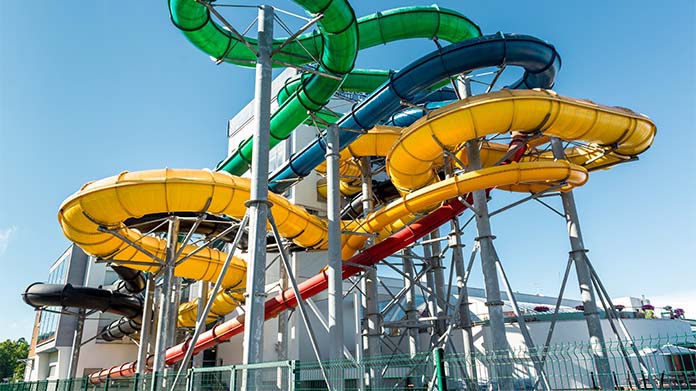
Amusement parks are a popular vacation destination for families all over the world. Few things are more exhilarating than experiencing the rides, laughing and screaming as you make your way to the bottom. Couple that with water, and you have a family friendly adventure for individuals of all ages.
Our guide is in 3 parts:
Costs associated with taking on such an endeavor will depend largely on your short and long-term goals for the park. Your first, and most important investment, will be in land. When choosing your location, carefully research the areas you’re considering. Choose a well-populated areas, centrally located for easy customer access. If your vision is to operate a large tourist attraction, choose a city with an airport. Visitors arriving from other states, cities, and countries will be ready to start their experience. If they have to travel several additional hours to get to their final destination, they may decide to make other plans. Experienced waterpark owners recommend purchasing between 8 and 15 acres of land, depending upon what type of waterpark you plan to build:
Indoor parks average approximately 8-10 acres, with an average building size of almost 25,000 square feet.
Outdoor parks require 13-15 acres
An indoor-outdoor facility would need 9-12 acres, with an average building size of 23,000 square feet.
Once you’ve purchased the land, meet with an experienced consultant and contractor to begin the planning process.
Construction costs will vary depending upon how large of a facility you wish to build and where in the country you’re building, but average between $250 and $600 per square foot. Reports indicate an indoor park with 2720 square feet would set you back almost $690,000. Included in these costs are: building, HVAC, pools, mechanical, snack bar, supporting areas, theming, and waterslides and recreation equipment. For the same construction services, a 9450 square foot indoor park would run close to $2.5 million, averaging $273 per square foot. Owners of exclusively outdoor park report startup costs of approximately $1.5 million.
Do not let these numbers discourage you. To save on costs, many park owners purchase enough land to fulfill their vision, but start out with the essentials that fit into their budget. As business picks up, they invest a portion of their profit back into the business, adding attractions over time. In addition to saving your startup budget, this also helps retain customers. Families are excited to return, as they’re anxious to see what’s new. They start to feel as though they’re part of the process and will develop a loyalty that is unmatchable.
It’s difficult to quantify a park’s ongoing expenses, as there are a number of factors that directly influence these numbers. The following are items you should include in your monthly budget:
Maintenance of attractions, facility, and equipment – a preventative and predictive maintenance program can save you tens of thousands of dollars.
Utilities and chemicals -this, combined with maintenance, averages approximately 8-12% of your operational costs.
Construction of new attractions
Operational supplies – 3-5% of your budget
Cleaning
Ongoing training for staff
Insurance
Payroll – personnel costs will comprise 50-80% of your operational budget, depending upon the size, hours of operations, and staffing levels required to maintain a safe customer experience.
Many parks cater to the needs of customers spanning every age group. For some, tourists encompass a large portion of their customer base. For others, local families, teens, and young adults are the focus of their marketing efforts.
Waterparks charge an admission for each visitor that enters. Many offer additional activities and services–like food and equipment rentals–which improve visitor satisfaction and profit potential.
Some parks charge a flat admission fee, regardless of age (2 and under free) while others offer special pricing depending upon age or height. If you have quite a few rides whose height requirements would exclude a large group of customers, consider doing the latter. Some parks charge an across the board average $43 per person. Pricing based on age/height is approximately: 48″ and taller – $35, under 48” – $27, senior and military – $17. Fees include admission into the park and unlimited water slide rides. Customers are charged extra for additional services and attractions.
This industry has realized significant growth over the last decade and is expected to continue at approximately 3.5% annually. While there are is no published information regarding a water park’s potential profit, research does indicate that over 375 million guests visit these establishments in the United States each year. With a meticulous operational strategy in place, your park can earn a piece of this multi-billion dollar industry’s profits.
Many parks expand their goods and services to include more than just water slides/rides. To make your business more profitable, consider implementing some of these strategies:
Make it a true vacation destination by building a hotel as part of the water park.
For a nominal fee, allow local businesses to display signage in the parking lot and throughout the park.
From the onset, invest in water recycling and energy efficiency programs. Your initial costs will be greater, but you’ll save a significant amount of money over time.
Offer group rates, state resident discounts, and annual passes
Include extra services for an additional fee – cabanas, lockers, souvenirs, food, and private party rooms.
Provide additional entertainment, such as mini-golf, go-carts, climbing walls, bumper boats, and a gaming and redemption center.
Offer retail space for tenants to lease. This will help reduce your overhead expenses as you support other businesses within the community.
Host special events during your “off” season. Many parks build haunted houses during Halloween, drawing a significant number of guests each day.
Rather than building a concrete park, make Mother Nature your park. Entrepreneurs have found success opening establishments like Bob’s River Place, where visitors can float on rafts, rope swing, slide, jump in platform, log roll, water volleyball, grill, and picnic. Startup and ongoing expenses will be a fraction of the cost, as you use natural resources to your advantage.
When introducing your waterpark, you’ll want to take an active role in most aspects of the business. Your park will be frequented by customers of all ages – safety should be the top priority at all times. As you gain a better understanding of the intricacies of running a business of this magnitude, you can start building an experienced and knowledgeable management team to relieve you of some of your duties. Most days you’ll either perform the following duties, or delegate them to a valued team member:
Make sure the park and parking lot are clean at all times
Build relationships with vendors and place orders whenever necessary
Conduct regular health and safety checks throughout the park
Manage your staff
Manage the customer experience
Network within the community and industry
Market your park
Strategically plan and implement strategies to continuously improve employee and visitor satisfaction
Research and develop new concepts to expand the park
Liaise with contractors and other professionals to implement new concepts
Oversee personnel and/or human resources
Track industry trends, including legislation, on a national and local level and monitor the competition
Build relationship with members of the community. Work with them to alleviate any issues or concerns they might have
Set budgetary and financial strategies and oversee the organization’s finances
Before opening your business, draft a business plan that outlines your vision for the park. Consider how large of a role you wish to take in running the business, as well as your growth goals for the park.
Owning a water park requires a high level of business finesse and leadership skills. Everyone you surround yourself with, from park builders to management and staff, will be instrumental in defining success. Therefore, it’s critical for you to be adept at identifying and employing individuals whose intentions align with the company’s mission.
While knowledge of business and/or hospitality management would prove beneficial, prior experience in customer service is invaluable to your business’ success. Leaders must be skilled in communicating with and motivating staff, and should be decisive and resourceful in making business decisions. This industry demands constant innovation. Thus, many park owners have prior experience in design, often viewing the park’s attractions as a form of art.
Those considering entering this industry are urged to gain firsthand experience. This will offer invaluable insight into who your target audience is and what they’re looking for in a waterpark experience. Additionally, membership with the World Waterpark Association would prove beneficial. Members have access to educational resources, annual symposiums, suppliers, and much more.
While a majority of U.S. waterparks start out small, many entrepreneurs are now realizing the profit potential behind consistent park expansion. Those offering customers a well-rounded experience are able to attract visitors from all over the world. Over the last five years, park owners have expanded their business strategy to encompass international markets. Regions such as Asia are virtually untapped, while the demand is high. Assuming the park is well-managed and maintained, business owners have the potential to realize long-term growth and success, regardless of how modest or grandiose their vision for the park is.
The following are some tips from successful waterpark owners:
Cleanliness is paramount to your business’ success. Remember – first impressions can make or break you, so include the parking lot in your cleaning and maintenance plan.
Provide ample parking and ensure your customers’ security at all times by having plenty of lighting.
Don’t limit yourself to just water slides. Lazy rivers can be enjoyed by consumers of all ages.
Offer a wide range of additional activities to draw in the individuals who need a break from the fun in the sun. Depending upon the specifics, you could experience seasonal fluctuations. Indoor activities will help ensure year round business.
Invest in state of the art technology and continuously research to ensure you’re on the forefront of the latest trends.
Build your park in an area that’s easily accessible and with high traffic areas to maximize public exposure.
Work with a consultant who can help design a facility with overcrowding in mind.
Hire an experienced management team.
Unlike other small businesses, you will not be able to operate the water park alone. Start the hiring process several months before opening day. Safety is your top priority; invest in your team by offering them quality training on safety standards, CPR, and standard operational practices. Since customers will often be children and teenagers, many parks strategically employ high school and college students, as they’re more easily relatable.
Your entire team will consist of several subsets, including:
Lifeguards
Trained medical staff to handle light emergencies
Game attendants
Water park hosts
Special event hosts
Ticketing clerks
Vendors/servers – for food, drink, and novelty items
Administrative staff
Facilities management – a FM team can help ensure the facility runs efficiently and economically
Business Evaluation & Strategy Tool
We'll walk you through the four pillars every business needs: Points of Leverage, Marketing Strategy, Financial Model, and Personal Compatibility. At the end you'll see a personalized report and your action plan below will be tailored to your answers.
Every viable business has natural advantages. Below are common leverage points across four categories. Pick the ones that apply to your Waterpark business. We've pre-suggested a few based on your idea — review and adjust.
Without a way to connect with customers, even great businesses fail. Pick the channels you plan to use to reach your customers.
Enter your monthly baseline costs — the minimum overhead to keep the business running. Then we'll calculate how many sales per month you need to break even.
A business that doesn't fit your life will fail no matter how good the numbers look. Tell us how this business fits you.
Complete the four pillars and your personalized summary will appear here.
Nine concrete steps to take you from idea to open business, grouped into 30-day phases. Complete the planner above and we'll highlight what's most important for your situation.
An LLC keeps your personal assets separate from business debts and lawsuits — the most common reason small business owners choose this structure. Sole proprietorships and partnerships do not provide this protection.
Apply for your free Employer Identification Number through the IRS, then register for any state or local taxes that apply to your business (sales tax, franchise tax).
A dedicated business account is required to maintain personal asset protection. Mixing personal and business finances ('piercing the corporate veil') can void your LLC's liability shield.
Recording expenses and income from day one makes tax filing easier and lets you see when the business is actually profitable. Use software (QuickBooks, Wave) or a part-time bookkeeper.
State and local requirements vary widely. Brick-and-mortar businesses typically need a Certificate of Occupancy; service businesses may need specific professional licensing; food businesses need health permits.
General Liability Insurance is the most common starting point. If you'll have employees, most states require Workers' Compensation. Specific industries need additional coverage (product liability, professional liability, etc.).
Your brand is how customers perceive and remember you. A clear name, logo, and visual identity make every later marketing decision easier and protect you legally as you grow.
Every legitimate business needs a website. Social media pages are not a substitute — you don't own the platform. Modern website builders mean you can launch a clean site in a weekend without a developer.
A dedicated business number keeps your personal life private, makes the business look legitimate, and lets you route calls professionally. Cloud phone services start under $20/month.
Starting a Waterpark business typically costs $1,000,000 to $10,000,000. It is considered a very high capital-intensity business.
A Waterpark business runs roughly a 3% net profit margin, and most owners reach break-even in about 4 to 12 months.
You can usually launch a Waterpark business in about 2 to 8 weeks, and it is commonly run flexible.
A Waterpark business is generally an intermediate-skill business to start, with stable demand. TRUiC rates it 32 out of 100 on our Idea Score.
Most Waterpark businesses register as an LLC or other legal entity and obtain a general business license. Depending on your state and city you may also need industry-specific permits, sales tax registration, and zoning or health approvals, so check your local requirements before you launch.