Startup cost
$15k–$40k
TRUiC Business Ideas
Decision Snapshot
Idea Score
51
Startup cost
$15k–$40k
Profit margin
4%
Break-even
18 mo–36 mo
Time to launch
2 wk–8 wk
Demand trend
Stable
5-yr failure rate
—
Capital intensity
Medium
Time commitment
Full time
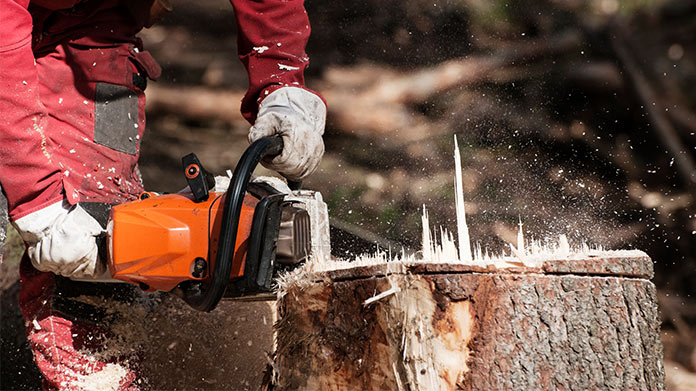
If you enjoy working outdoors and have a knack for practical, hands-on problem-solving, starting a tree stump removal business could be a highly rewarding path for you.
These businesses help property owners clear unwanted stumps, making their yards safer, more attractive, and easier to maintain, and preventing issues such as pest infestations and/or tripping hazards.
In this comprehensive guide, we’ll walk you through all the essential steps you’ll need to take to start your own tree stump removal business, from conducting market research to purchasing the necessary equipment, setting up operations, and attracting customers.
Our guide is in 3 parts:
The tree stump removal sector falls under the landscaping and property maintenance industry, which is projected to grow at a rate of 4.2% annually over the next 10 years.
This growth is largely fueled by the ongoing expansion of metropolitan and suburban areas, where rising demand for new housing, commercial developments, and public infrastructure is continuously driving the need for land clearing services, including those that relate to tree and stump removal.
In addition to new construction demands, there is a rising focus on landscape beautification, which further drives the need for stump removal services.
In general, this sector — which is primarily composed of smaller, independent providers — offers an ideal environment for new businesses to enter and thrive.
If you’re considering whether a tree stump removal business is right for you, the first thing you’ll need to know is whether it’s a) affordable, and b) worth the investment. I mean, how much can you actually make running your own tree stump removal business?
In the section below, we’ve broken down the main costs associated with getting started:
Equipment Purchase ($5,000 – $20,000): You’ll need to invest in a stump grinder to handle various stump sizes and types effectively, as well as additional tools like chainsaws, shovels, and safety gear, with the total cost varying based on the quality and type of equipment you choose.
Vehicle and Trailer ($15,000 – $40,000): You will need, at the very least, a truck or van to transport your equipment, and a trailer to carry larger machinery or additional tools. The cost will depend on factors such as whether you buy new or second-hand, as well as the size and condition of the vehicle and trailer in question.
Business Registration and Licensing ($100 – $500): You’ll need to budget for registering your business and securing any necessary local or state licenses, with exact fees varying by location.
Marketing and Advertising ($500 – $3,000): You’ll need to set aside a budget for marketing to reach potential clients, which can include building a website, placing local ads, and using digital tools like social media and search engine ads.
Fuel and Maintenance ($2,000 – $5,000 Annually): You will need to account for fuel and regular maintenance to ensure your vehicles and equipment are kept in good working condition.
Note: It’s important to remember that things can always go better than expected, but just as often, they don’t, which is why it is highly recommended to have a contingency fund in place. For a tree stump removal business, this should ideally be around $5,000 to $10,000 to help cover any unexpected expenses that come up.
The tree stump removal business offers strong profit margins and can be highly lucrative, with most providers charging between $100 and $400 per stump — sometimes more for larger or more complex jobs.
At first glance, it might seem like all you need to get started is a grinder, a truck, and a willingness to work, giving the impression that this is a simple, quick path to profit.
Having said that, the full picture is more nuanced; like any well-paying business, success in stump removal requires more than just equipment — it requires skill and know-how.
Removing stumps effectively isn’t easy; it’s labor-intensive, takes time, and to do it well, you will need to put in a lot of effort — so it’s important to start with realistic expectations about the work involved.
That said, for those willing to invest the time and effort to learn and develop the necessary skills, starting a tree stump removal business can be a highly profitable and rewarding business venture.
You can realistically make anywhere from $60,000 to $120,000 annually running a tree stump removal business, depending on factors such as your pricing, job volume, and operational efficiency.
This estimate doesn’t include revenue from additional services, such as site leveling or applying topsoil and grass seed, which may significantly boost your overall earnings.
Operating a stump grinder can be challenging, especially for beginners, as it requires physical strength, coordination, and practice to use effectively.
The equipment is powerful and can be difficult to control without experience, making it a task that often requires training to handle well.
Professionals typically use a stump grinder, a powerful machine that grinds the stump into wood chips below ground level.
The resulting wood chips can be left to fill the hole or removed, after which the area is often covered with soil to create a smooth surface suitable for replanting or landscaping.
Yes, starting a stump grinding business can be worth it due to its high demand, low competition, and strong profit margins.
That said, it’s labor-intensive and requires an investment in specialized equipment as well as the stamina to handle hands-on, outdoor work.
Business Evaluation & Strategy Tool
We'll walk you through the four pillars every business needs: Points of Leverage, Marketing Strategy, Financial Model, and Personal Compatibility. At the end you'll see a personalized report and your action plan below will be tailored to your answers.
Every viable business has natural advantages. Below are common leverage points across four categories. Pick the ones that apply to your Tree Stump Removal business. We've pre-suggested a few based on your idea — review and adjust.
Without a way to connect with customers, even great businesses fail. Pick the channels you plan to use to reach your customers.
Enter your monthly baseline costs — the minimum overhead to keep the business running. Then we'll calculate how many sales per month you need to break even.
A business that doesn't fit your life will fail no matter how good the numbers look. Tell us how this business fits you.
Complete the four pillars and your personalized summary will appear here.
Nine concrete steps to take you from idea to open business, grouped into 30-day phases. Complete the planner above and we'll highlight what's most important for your situation.
An LLC keeps your personal assets separate from business debts and lawsuits — the most common reason small business owners choose this structure. Sole proprietorships and partnerships do not provide this protection.
Apply for your free Employer Identification Number through the IRS, then register for any state or local taxes that apply to your business (sales tax, franchise tax).
A dedicated business account is required to maintain personal asset protection. Mixing personal and business finances ('piercing the corporate veil') can void your LLC's liability shield.
Recording expenses and income from day one makes tax filing easier and lets you see when the business is actually profitable. Use software (QuickBooks, Wave) or a part-time bookkeeper.
State and local requirements vary widely. Brick-and-mortar businesses typically need a Certificate of Occupancy; service businesses may need specific professional licensing; food businesses need health permits.
General Liability Insurance is the most common starting point. If you'll have employees, most states require Workers' Compensation. Specific industries need additional coverage (product liability, professional liability, etc.).
Your brand is how customers perceive and remember you. A clear name, logo, and visual identity make every later marketing decision easier and protect you legally as you grow.
Every legitimate business needs a website. Social media pages are not a substitute — you don't own the platform. Modern website builders mean you can launch a clean site in a weekend without a developer.
A dedicated business number keeps your personal life private, makes the business look legitimate, and lets you route calls professionally. Cloud phone services start under $20/month.
Starting a Tree Stump Removal business typically costs $15,000 to $40,000. It is considered a medium capital-intensity business.
A Tree Stump Removal business runs roughly a 4% net profit margin, and most owners reach break-even in about 18 to 36 months.
You can usually launch a Tree Stump Removal business in about 2 to 8 weeks, and it is commonly run full time.
A Tree Stump Removal business is generally an expert-skill business to start, with stable demand. TRUiC rates it 51 out of 100 on our Idea Score.
Most Tree Stump Removal businesses register as an LLC or other legal entity and obtain a general business license. Depending on your state and city you may also need industry-specific permits, sales tax registration, and zoning or health approvals, so check your local requirements before you launch.