Startup cost
$8k–$21k
TRUiC Business Ideas
Decision Snapshot
Idea Score
71
Startup cost
$8k–$21k
Profit margin
23%
Break-even
4 mo–12 mo
Time to launch
2 wk–8 wk
Demand trend
Stable
5-yr failure rate
—
Capital intensity
Medium
Time commitment
Full time
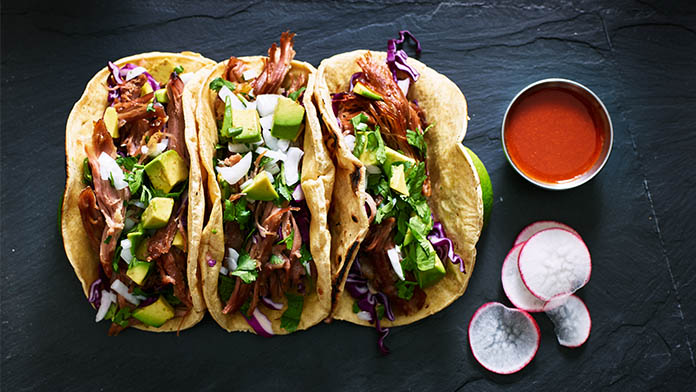
The term “taqueria” originated in Mexico, where street vendors sold inexpensive Mexican food in local gathering places. While menu specifics and ingredients vary, tacos have always been an integral part of the taqueria. Americans have embraced this unique business model, making food stands and trucks one of the fastest growing industries today.
Our guide is in 3 parts:
Taqueria business owners report start-up costs of between $8,000 and $21,000. Geographical location and the specifics of your business model will impact your upfront costs. Consider the following needs when determining your budget:
Location – Some taco stands are mobile, while others operate out of a permanent structure. Your taco stand should be in a visible, high-traffic location with ample parking. Food truck owners pay a fee to the land owner, while permanent locations will need to pay rent and a deposit.
Buildout, furnishing, and equipment – Save on upfront costs by finding a location that is designed for this type of business.
Permits and insurance
Food ingredients and restaurant essentials
Payroll
Point of sale (POS) system
Signage and marketing materials – Save money and support your local community by hiring an artist to paint your sign and design your logo, etc.
Part of the appeal of running this type of business is the low overhead costs. With a carefully chosen establishment, rent and utilities should be a fraction of the cost of running a larger restaurant. Payroll expenses, insurance, and maintaining your stock will represent the greatest part of your budget.
Patrons that frequent this type of establishment are looking for a quick and casual meal at affordable prices. When building your menu, consider the area and what niche is currently lacking. If your goal is to serve authentic Mexican cuisine, yet the area is saturated, concentrate on a different niche, such as fusion or Tex-Mex.
A taqueria business generates revenue from the sale of each food item. Most taquerias focus on tacos, with a variety of ingredient options available for a small fee. Low overhead costs offer the potential for higher profits.
Your prices should be directly tied to food costs. As a rule, set your prices between 30% and 35% of the menu items’ food costs. Most taquerias have set menu items, with the option to add additional items for a nominal fee.
Unlike the vast majority of businesses, many taco stand business owners report a profit in the first year, with between $112,000 – $156,000 by the third year.
As mentioned, offering add-ons will help drive the prices up. Experienced owners also encourage offering double portions as part of your upsell strategy. If you have the space, hiring a local band as entertainment can help increase your customer base. Additionally, speak with your local patrons and determine if there is a market for offering a delivery service.
Whether it’s taking orders, answering questions, and interacting with customers, customer service will be the focal point of your day. Re-stocking ingredients, maintaining accurate records and finances, and marketing the business will also be a part of your daily activities.
As a restaurant owner, you must have a diverse set of skills. Since customer service plays a large role in your success, it is critical that you possess strong interpersonal and communication skills. Whether you plan to be involved in the kitchen or leave that to your staff, a culinary background would prove beneficial. To maximize profits, you’ll need to maintain detailed, accurate records. Therefore, strong business and leadership skills are also essential. Those who do not have a hospitality background are encouraged to gain real-world experience.
The food truck phenomenon has changed the business model for many entrepreneurs looking to open a restaurant. Consumers are attracted to the idea of supporting a small, local business and enjoy the relaxed setting. Due to higher profit margins, many taqueria business owners have been able to invest their money back into the business, opening multiple locations throughout the city.
In this type of business, the overhead costs are low. Taqueria owners are able to pass these savings on to the customer through lower prices, without eating into their profits. Keep it simple by offering canned/bottled drinks. Focus your energy on ensuring you serve high-quality, fresh food, with recipes that are simple yet palatable. Before opening your doors, know your recipes. This will not only help ensure consistency and shape your budget, it will impact your brand and how you market. Your taqueria’s location will have a direct impact on your hours of operation. Be flexible with your hours until you have determined peak days and times.
Operating a taqueria business requires detailed planning and a strong staff. During the planning stages, hire key employees. Leave ample time to train front and back-of-house personnel and ensure your team is knowledgeable about your menu and food preparation. Your kitchen staff should have cooking experience and your front-of-house employees should have prior restaurant or customer service experience.
Business Evaluation & Strategy Tool
We'll walk you through the four pillars every business needs: Points of Leverage, Marketing Strategy, Financial Model, and Personal Compatibility. At the end you'll see a personalized report and your action plan below will be tailored to your answers.
Every viable business has natural advantages. Below are common leverage points across four categories. Pick the ones that apply to your Taqueria business. We've pre-suggested a few based on your idea — review and adjust.
Without a way to connect with customers, even great businesses fail. Pick the channels you plan to use to reach your customers.
Enter your monthly baseline costs — the minimum overhead to keep the business running. Then we'll calculate how many sales per month you need to break even.
A business that doesn't fit your life will fail no matter how good the numbers look. Tell us how this business fits you.
Complete the four pillars and your personalized summary will appear here.
Nine concrete steps to take you from idea to open business, grouped into 30-day phases. Complete the planner above and we'll highlight what's most important for your situation.
An LLC keeps your personal assets separate from business debts and lawsuits — the most common reason small business owners choose this structure. Sole proprietorships and partnerships do not provide this protection.
Apply for your free Employer Identification Number through the IRS, then register for any state or local taxes that apply to your business (sales tax, franchise tax).
A dedicated business account is required to maintain personal asset protection. Mixing personal and business finances ('piercing the corporate veil') can void your LLC's liability shield.
Recording expenses and income from day one makes tax filing easier and lets you see when the business is actually profitable. Use software (QuickBooks, Wave) or a part-time bookkeeper.
State and local requirements vary widely. Brick-and-mortar businesses typically need a Certificate of Occupancy; service businesses may need specific professional licensing; food businesses need health permits.
General Liability Insurance is the most common starting point. If you'll have employees, most states require Workers' Compensation. Specific industries need additional coverage (product liability, professional liability, etc.).
Your brand is how customers perceive and remember you. A clear name, logo, and visual identity make every later marketing decision easier and protect you legally as you grow.
Every legitimate business needs a website. Social media pages are not a substitute — you don't own the platform. Modern website builders mean you can launch a clean site in a weekend without a developer.
A dedicated business number keeps your personal life private, makes the business look legitimate, and lets you route calls professionally. Cloud phone services start under $20/month.
Starting a Taqueria business typically costs $8,000 to $21,000. It is considered a medium capital-intensity business.
A Taqueria business runs roughly a 23% net profit margin, and most owners reach break-even in about 4 to 12 months.
You can usually launch a Taqueria business in about 2 to 8 weeks, and it is commonly run full time.
A Taqueria business is generally an intermediate-skill business to start, with stable demand. TRUiC rates it 71 out of 100 on our Idea Score.
Most Taqueria businesses register as an LLC or other legal entity and obtain a general business license. Depending on your state and city you may also need industry-specific permits, sales tax registration, and zoning or health approvals, so check your local requirements before you launch.