Startup cost
$31k
TRUiC Business Ideas
Decision Snapshot
Idea Score
53
Startup cost
$31k
Profit margin
10%
Break-even
4 mo–12 mo
Time to launch
12 wk–36 wk
Demand trend
Stable
5-yr failure rate
—
Capital intensity
Medium
Time commitment
Full time
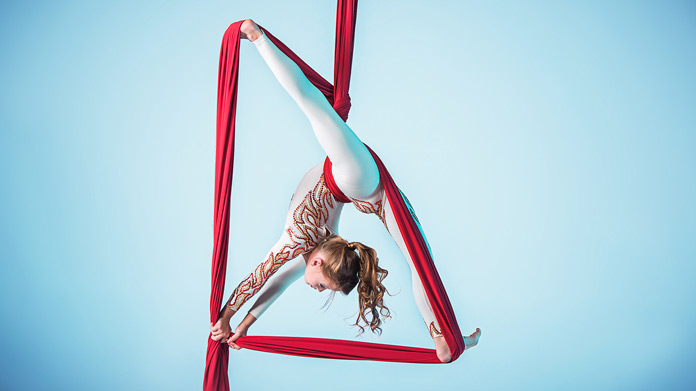
Most people want to get in shape so they look, feel, and perform better. The problem is exercising can be boring and monotonous. An acrobatics, gymnastics, and aerial arts instructor helps people make the changes they want to see in their body and mind. And, they can often do it in a way that keeps people interested and motivated in during their workout routine.
An aerial art studio teaches students to do acrobatic movements and dancing in the air, either by hanging from a fabric (hammock, silk), a short bar (trapeze), a hoop (lyra), or a rope. This form of dancing or acrobatic movement is a total body workout that requires strength and flexibility. As a result, lots of people do it for fitness purposes and, if they stick with it, become very strong and flexible.
Our guide is in 3 parts:
Costs for starting this type of business vary, but generally include a building that’s specifically designed for aerial arts (it must be modified with braces installed for trapeze, rope, and fabric/silk use). Overhead anchor points may also need to be added to the existing interior support beams. This may range between $5,000 and $25,000 depending on the building and existing infrastructure.
Gear includes padding per station at $800 each. Hardware, like carabiners, swivels, ropes, anchor slings, lowering devices and other related equipment will run you $400-$800. Fabric will run you $120 to $150 per person.
Insurance typically costs between $400 and $800 annually and includes general liability coverage. It’s expected you will have all students sign a waiver of liability to limit your insurance needs. All instructors must also carry their own aerial instructors liability insurance.
Instructor pay varies, but is generally between $30 and $60 per hour.
Marketing for the business may run between $1,000 and $10,000 or more depending on whether you purchase space advertisements, run radio or T.V. spots, or do local advertising through fliers and business cards.
Ongoing expenses are minimal and include regular maintenance of the rigs and equipment, along with instructor salary. Expect to pay several thousand dollars per year for a small to medium-sized studio.
The target market is fitness enthusiasts, yoga practitioners, Pilates practitioners, and individuals who are interested in learning circus arts and want a career in aerial or circus arts.
Aerial arts studios make money by charging a fee for classes. Many instructors and facilities charge a per-hour rate for classes and may have different rates for members and non-members.
Typical fees for aerial classes range between $15 and $25 per hour, with some studios charging up to $60 per hour for classes. You can also charge a flat fee for specific programming. For example, instead of charging $15 per hour, you could charge a flat fee of $150 for five 2-hour classes per month of instruction.
Profit for a studio depends on your hourly rate or flat fee program and where your studio is. You may achieve a 10% profit margin, but many studios operate on much thinner margins.
Make your studio more profitable by offering supplementary classes and mixing other disciplines into your core aerial arts programming. For example, consider offering aerial yoga or aerial Pilates. You may even want to partner with local yoga instructors to bring in more students.
Aerial arts instructors have busy days. Before students arrive, they often train privately for their own benefit and to put together a program and schedule for students. Instructors spend a lot of time making sure rigs are safe, inspected, and maintained. They also ensure student safety by spending time going over safety procedures with students.
An instructor may have one-on-one classes or small group classes. Beginners, intermediates, and advanced aerialists are often grouped together in different classes, but some instructors do choose to teach mixed classes.
Several routines are performed during a class, with beginners focusing on basic moves that will prepare them for more challenging maneuvers later on. Instructors often have to deal with first-timers’ dizziness, muscle aches and pain due to the unusual nature and use of the ropes and fabric used during class.
You must be an expert aerial artist if you want to be actively involved in teaching it to others. Usually, this takes many years of practice. Most business owners are actively involved in the business. However, if you know or can hire expert trainers, it’s possible to simply run the business side of things with input from your instructors.
Growth potential for this business is usually small, but can be quite large depending on your ambition. Most instructors choose to maintain a small business so they can focus on quality instruction. However, some studios maintain several locations and build networks with other non-competing studios to further expand reach.
Start with your local community. Find a demand for your services first, and then offer a few free classes. Gauge interest. Partner with yoga studios to offer aerial arts for more advanced yoga students. Finally, consider partnering with other health and fitness providers, including gyms, to kickstart your business.
Most studios don’t need a large staff. If you are an instructor, it can be just you. Otherwise, consider hiring between 2 and 3 other instructors for a small studio and between 5 and 10 instructors for a large studio.
Business Evaluation & Strategy Tool
We'll walk you through the four pillars every business needs: Points of Leverage, Marketing Strategy, Financial Model, and Personal Compatibility. At the end you'll see a personalized report and your action plan below will be tailored to your answers.
Every viable business has natural advantages. Below are common leverage points across four categories. Pick the ones that apply to your Aerial Arts business. We've pre-suggested a few based on your idea — review and adjust.
Without a way to connect with customers, even great businesses fail. Pick the channels you plan to use to reach your customers.
Enter your monthly baseline costs — the minimum overhead to keep the business running. Then we'll calculate how many sales per month you need to break even.
A business that doesn't fit your life will fail no matter how good the numbers look. Tell us how this business fits you.
Complete the four pillars and your personalized summary will appear here.
Nine concrete steps to take you from idea to open business, grouped into 30-day phases. Complete the planner above and we'll highlight what's most important for your situation.
An LLC keeps your personal assets separate from business debts and lawsuits — the most common reason small business owners choose this structure. Sole proprietorships and partnerships do not provide this protection.
Apply for your free Employer Identification Number through the IRS, then register for any state or local taxes that apply to your business (sales tax, franchise tax).
A dedicated business account is required to maintain personal asset protection. Mixing personal and business finances ('piercing the corporate veil') can void your LLC's liability shield.
Recording expenses and income from day one makes tax filing easier and lets you see when the business is actually profitable. Use software (QuickBooks, Wave) or a part-time bookkeeper.
State and local requirements vary widely. Brick-and-mortar businesses typically need a Certificate of Occupancy; service businesses may need specific professional licensing; food businesses need health permits.
General Liability Insurance is the most common starting point. If you'll have employees, most states require Workers' Compensation. Specific industries need additional coverage (product liability, professional liability, etc.).
Your brand is how customers perceive and remember you. A clear name, logo, and visual identity make every later marketing decision easier and protect you legally as you grow.
Every legitimate business needs a website. Social media pages are not a substitute — you don't own the platform. Modern website builders mean you can launch a clean site in a weekend without a developer.
A dedicated business number keeps your personal life private, makes the business look legitimate, and lets you route calls professionally. Cloud phone services start under $20/month.
Starting an Aerial Arts business typically costs $30,800. The largest cost is usually build-out and space. It is considered a medium capital-intensity business.
An Aerial Arts business runs roughly a 10% net profit margin, and most owners reach break-even in about 4 to 12 months.
You can usually launch an Aerial Arts business in about 12 to 36 weeks, and it is commonly run full time.
An Aerial Arts business is generally an expert-skill business to start, with stable demand. TRUiC rates it 53 out of 100 on our Idea Score.
Most Aerial Arts businesses register as an LLC or other legal entity and obtain a general business license. Depending on your state and city you may also need industry-specific permits, sales tax registration, and zoning or health approvals, so check your local requirements before you launch.