Startup cost
$10k–$50k
TRUiC Business Ideas
Decision Snapshot
Idea Score
68
Startup cost
$10k–$50k
Profit margin
28%
Break-even
4 mo–12 mo
Time to launch
12 wk–36 wk
Demand trend
Stable
5-yr failure rate
—
Capital intensity
High
Time commitment
Flexible
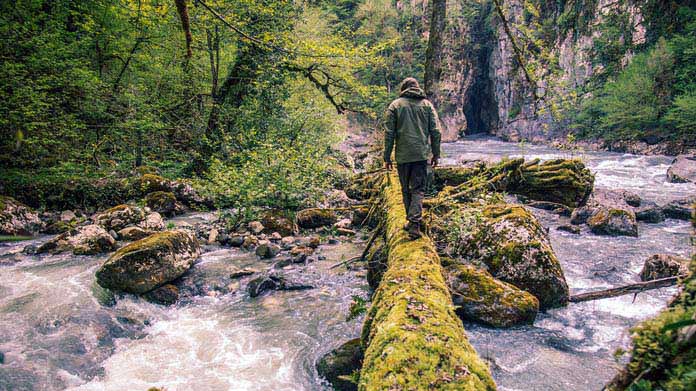
If you love the outdoors and have a passion for teaching others to experience nature and improve their life skills, the survival school business might be right for you. Your students might be children, families, or friends out for an interesting weekend experience. You may even attract people who are active adventurers seeking to learn practical survival skills for their next big trip. Your school might focus on barebones survival, or bushcraft, which places an emphasis on thriving over longer periods in the wilderness, or perhaps a mix of both.
Our guide is in 3 parts:
Location — Zero to $100 a day for camp or more. This cost will be dependent on where your sessions take place. If you use property you already own, there’s no out-of-pocket cost in this area, but you might otherwise have to deal with private property owners or public lands.
Transportation — A few hundred dollars or less to $1,000 or more. This expense depends on where you conduct your classes. If they’re held on your own or neighboring property this cost is minimal and might only involve expenses to get you to and from areas where you’ll conduct free intro programs or otherwise solicit business.
Certification training — Zero to several thousand dollars. Certification as a wilderness survival instructor is a good way of gaining credibility in your field. But you might not see it to be necessary if you have significant experience in wildlife survival.
Gear — Several hundred dollars to $2,500 or more. This can include such camping basics as tent, backpack, mess kit, knife, axe, and first aid kit. Additional gear will depend on your location and the type of training you’ll provide.
Logo, website and other marketing communications tools — $200 or more. Websites and social media accounts can he had for free or very little cost, but invest in a logo and site design that supports your image of professionalism.
Legal, licensure and insurance — Several thousand dollars. Liability insurance is critical, especially if there’s a distinct possibility of calamity. For instance, if your camp takes place during harsh weather (Canadian winters or desert training), or if there’s the threat of bears, poisonous snakes, fast-moving water, sudden storms, etc. Be sure to discuss this with a lawyer too. Also, ask your lawyer about licensing needs. For instance, will you need a food license if wilderness trapping or hunting and food preparation are part of your curriculum?
Your largest and most consistent costs will likely be expenses related to your survival curriculum. This might include transporting students to and from select locations, supplying them with gear or specific kinds of equipment, or hiring assistant teachers or other guest speakers to cover all of the material planned out for that day’s class.
Your audience could range from serious outdoors enthusiasts to groups merely looking for a unique form of weekend recreation. But all will want to spend time outdoors and learn more about nature and their relationship with the outdoors. Be sure to adequately describe courses and expectations to avoid disappointing attendees.
You’ll charge participants either a per-day fee for workshops and weekend training, or a predetermined course fee for classes that are ongoing over a period of time.
Your audience expects to pay at least $100 a day in most parts of the country. This fee is in addition to students’ responsibility for transportation to and from the site and, usually, food (unless trapping or eating off the land will be part of the curriculum).
That’s highly variable, depending on the number of classes you run and the amount of students you have enrolled. Some school owners run their enterprise on a full-time basis while others combine it with work as farmers, guides or other outdoor pursuits.
The longer you’re in the business the more credibility you’ll have as a wilderness expert. If you have a knack for writing, consider authoring books on the subject. Offer your titles for sale on your website or take them along on your courses.
Also consider hiring yourself out as a guest teacher with larger survival schools, such as Sigma 3.
You’ll likely find yourself spending about one-third of your time on marketing and promotion, one third on typical business-related endeavors and one-third actually out in the field with students. Typical responsibilities can include the following.
Communicating on social media and creating and implementing other means of getting your message out to prospective students
Contacting property owners or public lands officials to schedule courses
Booking classes and answering questions from prospective students
Presenting seminars and workshops at coffee houses, libraries, civic centers, and other locations to inspire camp sign-ups
Conducting on-site training programs that could last from one to five days or longer
It’s critical that you have ample outdoor and wilderness survival experience before you can teach it. If this is a skill set that’s in your background, consider earning certification as an instructor from a credible program, such as this one from Sigma 3 Survival School.
Survival training has become a big business since about 2012. This level of acceptance from the community means that more prospective students will know about it and seek classes, but it might also mean that you’ll find stiffer competition in the field and constrained revenue.
The business can go into so many different directions that it’s imperative to start by writing a business plan. This will help you not only refine your idea and figure out exactly what (and where) you’re going to teach, but also to identify your audience. It’s a very different experience to operate a summer day camp for grade-school children than it is to run a week-long stringent session in harsh climates for safety forces or military.
Once you’ve found your specific audience, run a few “soft opening” courses for family or friends to safely map out your concept. From this you’ll be able to identify unexpected challenges or obstacles and find areas of training that have the greatest impact, whether positive or negative.
As you meet avid wilderness survivalists, consider recruiting them for your business to either go along and help you run individual classes or to lead classes alone as you expand your curriculum. You also need to have more assistance if you’re leading groups of kids.
Business Evaluation & Strategy Tool
We'll walk you through the four pillars every business needs: Points of Leverage, Marketing Strategy, Financial Model, and Personal Compatibility. At the end you'll see a personalized report and your action plan below will be tailored to your answers.
Every viable business has natural advantages. Below are common leverage points across four categories. Pick the ones that apply to your Survival School business. We've pre-suggested a few based on your idea — review and adjust.
Without a way to connect with customers, even great businesses fail. Pick the channels you plan to use to reach your customers.
Enter your monthly baseline costs — the minimum overhead to keep the business running. Then we'll calculate how many sales per month you need to break even.
A business that doesn't fit your life will fail no matter how good the numbers look. Tell us how this business fits you.
Complete the four pillars and your personalized summary will appear here.
Nine concrete steps to take you from idea to open business, grouped into 30-day phases. Complete the planner above and we'll highlight what's most important for your situation.
An LLC keeps your personal assets separate from business debts and lawsuits — the most common reason small business owners choose this structure. Sole proprietorships and partnerships do not provide this protection.
Apply for your free Employer Identification Number through the IRS, then register for any state or local taxes that apply to your business (sales tax, franchise tax).
A dedicated business account is required to maintain personal asset protection. Mixing personal and business finances ('piercing the corporate veil') can void your LLC's liability shield.
Recording expenses and income from day one makes tax filing easier and lets you see when the business is actually profitable. Use software (QuickBooks, Wave) or a part-time bookkeeper.
State and local requirements vary widely. Brick-and-mortar businesses typically need a Certificate of Occupancy; service businesses may need specific professional licensing; food businesses need health permits.
General Liability Insurance is the most common starting point. If you'll have employees, most states require Workers' Compensation. Specific industries need additional coverage (product liability, professional liability, etc.).
Your brand is how customers perceive and remember you. A clear name, logo, and visual identity make every later marketing decision easier and protect you legally as you grow.
Every legitimate business needs a website. Social media pages are not a substitute — you don't own the platform. Modern website builders mean you can launch a clean site in a weekend without a developer.
A dedicated business number keeps your personal life private, makes the business look legitimate, and lets you route calls professionally. Cloud phone services start under $20/month.
Starting a Survival School business typically costs $10,000 to $50,000. The largest cost is usually equipment. It is considered a high capital-intensity business.
A Survival School business runs roughly a 28% net profit margin, and most owners reach break-even in about 4 to 12 months.
You can usually launch a Survival School business in about 12 to 36 weeks, and it is commonly run flexible.
A Survival School business is generally an intermediate-skill business to start, with stable demand. TRUiC rates it 68 out of 100 on our Idea Score.
Most Survival School businesses register as an LLC or other legal entity and obtain a general business license. Depending on your state and city you may also need industry-specific permits, sales tax registration, and zoning or health approvals, so check your local requirements before you launch.