Startup cost
$3k–$10k
TRUiC Business Ideas
Decision Snapshot
Idea Score
75
Startup cost
$3k–$10k
Profit margin
33%
Break-even
4 mo–12 mo
Time to launch
12 wk–36 wk
Demand trend
Rising
5-yr failure rate
—
Capital intensity
Medium
Time commitment
Part time
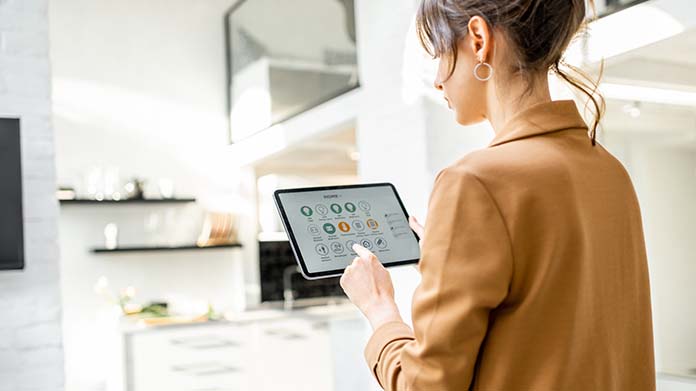
Smart homes automate mundane tasks, freeing up time and energy for more appealing pursuits. They also empower people to control fixtures and appliances remotely. For example, this technology can automatically turn on the lights at dusk or let you unlock doors with a smartphone. If you find this concept intriguing, you might become interested in opening a smart-home business. You could sell and install home-automation equipment, such as light fixtures, security alarms, and thermostats.
Our guide is in 3 parts:
You may incur some educational expenses at first. Loxone provides training for installers who use its equipment; the company charges about $225 to $300. Competitors like Savant also offer classes. You’ll have to spend money on the initial inventory, tools, office equipment, and any licenses required in your area. A reliable vehicle with cargo space proves necessary as well. You probably won’t need a large truck since most automation businesses don’t sell or deliver major appliances.
Marketing, office supplies, wages, fuel, rent, and utilities represent recurring costs. If you serve a sizable geographic area, consider adding a toll-free phone number for about $15 per month. This occupation also calls for liability insurance, and you’ll need commercial vehicle coverage when using an automobile for any business purpose. On average, these two policies cost around $2,100 annually.
Smart-home products remain most popular among men under 50, but seniors desire professional installation more frequently. Older Americans tend to prefer subscriptions; young customers want one-time fees. Most buyers have relatively high incomes. The wealthiest clients thoroughly automate their homes while middle-income customers focus on certain devices.
Many companies bill customers for products and installation. The total price should cover the cost of wholesale equipment while providing adequate compensation for setup labor and technical assistance. An alternative is to charge a flat monthly fee. Some memberships include long-term support, repairs, battery replacement, and security monitoring.
HomeAdvisor indicates that clients spend anywhere from $2,000 to $150,000 on custom installation. The average setup costs nearly $28,000, according to CE Pro. Pricing depends on how comprehensively you automate the home. For example, a low-end service call may only involve setting up a single device. Major projects entail automation of all appliances, electronics, fixtures, and HVAC equipment in a large house. You might boost sales by providing discounts when customers choose to automate multiple systems or devices simultaneously. Subscription-based services fetch about $83 per month on average.
Home-automation installers achieve profit margins of 33% on average, according to CE Pro. The merchandise can yield comparatively high margins even if you sell it without installation.
Provide all of the desired products and services in one place to create more profit. People often pay extra for convenience. Seek customers with large dwellings. Greater per-project earnings will cut marketing and travel expenses. Offer detailed instructions, FAQ lists, and tutorial videos. These reduce the need for technical support and product returns.
Promote your business economically by offering a small reward to clients who refer their friends or relatives to you.
Consider outsourcing security monitoring services instead of investing in costly equipment, licensing, and training.
You can plan on regularly communicating with clients in person and by phone. The first step in selling a home automation system is to help the customer choose products. Next, you’ll need to provide an estimate, deliver the equipment, and install it. After-sale support is also important. Clients will have questions about using and maintaining the system. Smart-home entrepreneurs must promote their businesses, order merchandise, and keep records as well.
You can start learning by installing and using an automation system in your home. Professionals also profit from previous work experience with computers, networking, electrical wiring, security cameras, or HVAC equipment. The setup has gradually become less complicated, so you don’t necessarily need computer programming skills. A training course could help you prepare while enhancing your credibility. Lowe’s offers useful facts regarding certification programs.
A minority of homes currently benefit from thorough automation, so this industry still has great growth potential. Some companies stay local while others expand into chains. For example, Vivint has locations in 49 states and 12 Canadian provinces. Multiple smart-home franchises exist as well. Another common path to growth involves providing related home services, such as heating, cooling, or electrical upgrades.
Clients might hold you partially or fully responsible for any problems they experience. Warn customers about hacking-related risks, and give advice on how to maximize security. Discuss safety precautions and the possible dangers associated with things like preheating an oven remotely.
Remember that security concerns represent one of the biggest obstacles to selling this equipment. Always be ready to reassure customers with specific details about privacy protections and reliability. If a prospective client hesitates because of the expense, point out the potential increase in property value. Smart locks, smoke alarms, surveillance cameras, and thermostats help homes sell quickly or fetch high prices, according to Consumer Reports.
Select a brand of smart-home products carefully. Consider the cost, features, quality, ease of use, and level of integration. Every system has its pros and cons. For instance, some installers favor Nexia because clients can control all of their equipment from the same smartphone app. You should also know how to help people who buy their own automation hardware. Some individuals order these products only to discover that they don’t have the time and expertise needed to install them.
Think about partnering with an appliance dealer or the hardware store where you purchase tools. The retailer could refer shoppers to you for expert installation when they buy its smart-home devices. Consider supplying the store with business cards and exclusive coupons.
It makes sense to hire at least one part-time employee as soon as you gain multiple customers. This person could answer questions and accept orders while you install equipment in clients’ homes. Additional staff can help you set up devices more swiftly. After all, faster service increases customer satisfaction and allows you to serve more people. ZipRecruiter reports that most smart-home technicians earn $20 to $46 per hour. Remember to ensure safety by performing background checks
Business Evaluation & Strategy Tool
We'll walk you through the four pillars every business needs: Points of Leverage, Marketing Strategy, Financial Model, and Personal Compatibility. At the end you'll see a personalized report and your action plan below will be tailored to your answers.
Every viable business has natural advantages. Below are common leverage points across four categories. Pick the ones that apply to your Smart Home business. We've pre-suggested a few based on your idea — review and adjust.
Without a way to connect with customers, even great businesses fail. Pick the channels you plan to use to reach your customers.
Enter your monthly baseline costs — the minimum overhead to keep the business running. Then we'll calculate how many sales per month you need to break even.
A business that doesn't fit your life will fail no matter how good the numbers look. Tell us how this business fits you.
Complete the four pillars and your personalized summary will appear here.
Nine concrete steps to take you from idea to open business, grouped into 30-day phases. Complete the planner above and we'll highlight what's most important for your situation.
An LLC keeps your personal assets separate from business debts and lawsuits — the most common reason small business owners choose this structure. Sole proprietorships and partnerships do not provide this protection.
Apply for your free Employer Identification Number through the IRS, then register for any state or local taxes that apply to your business (sales tax, franchise tax).
A dedicated business account is required to maintain personal asset protection. Mixing personal and business finances ('piercing the corporate veil') can void your LLC's liability shield.
Recording expenses and income from day one makes tax filing easier and lets you see when the business is actually profitable. Use software (QuickBooks, Wave) or a part-time bookkeeper.
State and local requirements vary widely. Brick-and-mortar businesses typically need a Certificate of Occupancy; service businesses may need specific professional licensing; food businesses need health permits.
General Liability Insurance is the most common starting point. If you'll have employees, most states require Workers' Compensation. Specific industries need additional coverage (product liability, professional liability, etc.).
Your brand is how customers perceive and remember you. A clear name, logo, and visual identity make every later marketing decision easier and protect you legally as you grow.
Every legitimate business needs a website. Social media pages are not a substitute — you don't own the platform. Modern website builders mean you can launch a clean site in a weekend without a developer.
A dedicated business number keeps your personal life private, makes the business look legitimate, and lets you route calls professionally. Cloud phone services start under $20/month.
Starting a Smart Home business typically costs $3,000 to $10,000. It is considered a medium capital-intensity business.
A Smart Home business runs roughly a 33% net profit margin, and most owners reach break-even in about 4 to 12 months.
You can usually launch a Smart Home business in about 12 to 36 weeks, and it is commonly run part time.
A Smart Home business is generally an expert-skill business to start, with rising demand. TRUiC rates it 75 out of 100 on our Idea Score.
Most Smart Home businesses register as an LLC or other legal entity and obtain a general business license. Depending on your state and city you may also need industry-specific permits, sales tax registration, and zoning or health approvals, so check your local requirements before you launch.