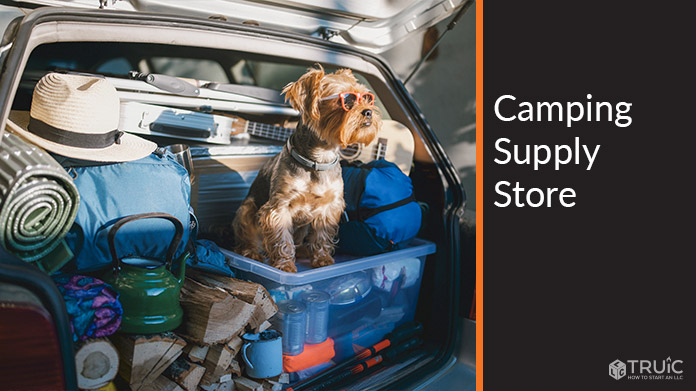
Part 1 - How to Start a Camping Supply Store - Background
Do you like camping or have fond memories of doing so? Perhaps you’d enjoy running a shop that specializes in outdoor recreation products and allows you to discuss camping with like-minded individuals and play an important role in customers’ outdoor adventures. These stores sell a variety of equipment, such as tents, butane stoves, and lanterns. They also carry single-use supplies like waterproof matches.
Our guide is in 3 parts:
- Part 1 - How to start a Camping Supply Store business - Background
- Part 2 - Our planner tool to see if this idea is the right fit for you
- Part 3 - Action plan to get started
What are the costs involved in opening a camping supply store?
Plan for a retail location or online storefront, opening inventory, shelving and displays, a checkout system, storage, signage, and launch marketing. Your product range determines how much stock you need: tents and stoves require more space and cash than small consumables such as waterproof matches. Obtain supplier quotes and a location-specific budget before committing to purchases. For an illustrative sourcing worksheet, confirm brand/dealer approval, allowed sales channels, actual opening/reorder quantities, delivered costs, payment/credit terms, returns and warranty support. Liberty Mountain’s application illustrates that account and channel approval are separate from merely finding a product. Check actual site/use/access, tax, employment, insurer and any fuel/fire-storage requirements for the selected stock. Before promising shipment of fuels, matches, batteries or other potentially regulated goods, determine the actual product and carrier conditions using qualified help; DOT’s shipping overview is a starting point rather than product-specific permission.
What are the ongoing expenses for a camping supply store?
Recurring costs include replenishing inventory, rent, utilities, insurance, website or checkout fees, marketing, and any employee wages. Include delivery and shipping costs if you sell online. Track slow-moving stock so that cash is not tied up in products customers rarely buy. In an illustrative full-cost budget, also include owner work, staff benefits/training, damage/shrinkage, returns and warranty handling, security, required storage/transport controls, taxes and replenishment/repair reserves. Track cash by season and product group, including supplier payments and inventory held before a busy period. Confirm actual freight, handling and supplier-return terms rather than treating the invoice unit price as landed stock cost.
Who is the target market?
Your customers are campers and other outdoor recreation enthusiasts who need equipment or replacement supplies. Depending on your location and selection, you may serve families preparing for a first camping trip, regular campers replacing gear, and visitors buying last-minute essentials. In an illustrative local demand test, compare actual inquiries, requested products, paid conversion, repeat sales and returns by customer group and season. Validate the assortment and service level against those observations before committing more cash to stock; broad outdoor participation or tourism spending does not establish sales for an individual shop.
How does a camping supply store make money?
A camping supply store earns revenue by selling outdoor equipment and consumable supplies. Products can include tents, butane stoves, lanterns, and waterproof matches. The store buys inventory from suppliers and sells it to customers at retail prices through its chosen sales channels.
How much can you charge customers?
Set prices by comparing supplier costs, competing stores, product quality, and the level of service you provide. Allow for shipping, payment fees, returns, and discounts when estimating the margin on each sale. Use separate pricing decisions for larger equipment and frequently replenished supplies. For one consumer-price observation, Coleman’s Triton stove listing shows an $89.99 sale price against $119.99 list, with the fuel cylinder separate and the page marking the item out of stock when checked. This is a specific retail listing, not your wholesale acquisition cost or a confirmed available quote. Check current equivalent models, supplier/channel terms and the full collected contribution before setting your own offer.
How much profit can a camping supply store make?
Profit is the sales revenue left after inventory costs and operating expenses. It depends on the mix of equipment and consumables sold, stock turnover, seasonal demand, rent, and staffing. Build your estimate from supplier quotes and realistic sales assumptions rather than treating total sales as owner income. In an illustrative product/channel model, subtract actual landed inventory, payment charges, fulfillment and variable handling/return costs from collected sales for contribution, then account for full staff/owner work and fixed overhead for the relevant profit measure. Reconcile stock purchases and taxes, deposits/refunds, supplier credit, seasonal inventory and replacement capital separately in cash flow. Test break-even against actual sell-through and funded staffing rather than an assumed recovery period.
How can you make your business more profitable?
Review which products sell together and keep dependable stocks of frequently requested essentials. Adjust buying quantities to demand, reduce slow-moving inventory, and offer useful product guidance that gives customers a reason to return. Check whether promotions still cover the costs of each sale.
Day-to-Day and Growth
What happens during a typical day at a camping supply store?
Daily work includes receiving and checking stock, helping customers choose equipment, processing sales and returns, replenishing displays, and keeping inventory records current. Owners also manage supplier orders, online listings where applicable, and preparation for busy camping periods. Maintain exact model/lot and supplier records and a procedure for product alerts, complaints and recalls. For example, CPSC’s November26,2025 recall identifies Ozark Trail butane stove modelBG2247A1 and its remedy; it does not apply to every camping stove. Check actual affected stock, remove it from sale and follow the official instructions, coordinating customer communication and required reporting with qualified support.
What are some skills and experiences that will help you build a successful camping supply store?
Camping experience and familiarity with the products help you answer customer questions. Retail customer service, inventory management, purchasing, and basic bookkeeping are also useful. Learn the features and instructions for the equipment you sell so you can give customers accurate product information. Keep original warnings and instructions with the products and train staff to explain their actual intended use and limits. CPSC’s camping-equipment alert highlights potentially fatal carbon-monoxide risks from fuel-burning gear; product experience does not replace those instructions or authorize medical or technical advice beyond staff competence. Establish actual storage, handling, returns and supplier/escalation procedures for the assortment sold.
Part 2 - Is this business right for you?
Business Evaluation & Strategy Tool
We'll walk you through the four pillars every business needs: Points of Leverage, Marketing Strategy, Financial Model, and Personal Compatibility. At the end you'll see a personalized report and your action plan below will be tailored to your answers.
This guide's benchmarks are under editorial review. Enter your own figures and choose the assumptions that fit your business.
Step 1 of 4 — Points of Leverage
Every viable business has natural advantages. Below are common leverage points across four categories. Pick the ones that apply to your Camping Supply Store business.
Step 2 of 4 — Marketing Strategy
Without a way to connect with customers, even great businesses fail. Pick the channels you plan to use to reach your customers.
Step 3 of 4 — Financial Model
Enter your monthly baseline costs — the minimum overhead to keep the business running. Then we'll estimate how many customer transactions would cover that overhead before variable costs.
Step 4 of 4 — Personal Compatibility
A business that doesn't fit your life will fail no matter how good the numbers look. Tell us how this business fits you.
Your Camping Supply Store Evaluation Report
Complete the four pillars and your personalized summary will appear here.
Points of Leverage
Marketing Strategy
Financial Model
Personal Compatibility
Part 3 - Your business launch action plan
Before committing to launch costs, test your business idea with potential customers. Use the free worksheet to record the offer, evidence and next decision.
Nine concrete steps to take you from idea to open business, grouped into 30-day phases. Adjust the phases to fit your funding, permits, and operating needs. Complete the planner above and we'll highlight what's most important for your situation.
First 30 days — Foundation
-
Choose a permitted business structure
Compare structures permitted for your activity, location, ownership and tax situation. Professional practices can have special entity and ownership rules. Check those requirements before filing; an LLC does not protect against every kind of personal liability.
-
Check tax IDs and registrations
Determine whether you need an EIN based on ownership, tax treatment, employees and applicable tax obligations. Some sole-owner businesses do not need one for federal income-tax purposes, while a bank or state may still require it. Apply directly with the IRS when needed and check applicable state or local registrations.
-
Separate business finances
Choose an appropriate business account and keep clear financial records. Separating business and personal transactions supports bookkeeping and entity formalities. Banks have their own eligibility and documentation requirements; a separate account is not a guarantee against personal liability.
-
Set up business accounting
Recording expenses and income from day one makes tax filing easier and lets you see when the business is actually profitable. Use software (QuickBooks, Wave) or a part-time bookkeeper.
Days 30–60 — Compliance & Risk
-
Get permits and licenses
Check the authorities responsible for your business activity and operating location. Professional authorization, tax registration, facility permits and product requirements are different questions. Online or mobile operations can still have licensing and other regulatory obligations.
-
Get business insurance
Identify the risks and coverage obligations for your activities, workers and location. Review applicable liability, property, professional or product coverage and workers’ compensation with the relevant state authority and a licensed insurance professional. Required coverage varies by jurisdiction and operation.
Days 60–90 — Launch
-
Define your brand
Choose a name, message and visual identity that help your intended customers understand the business. Check relevant name and trademark requirements before investing in a brand; a logo or business-name registration alone does not establish complete legal protection.
-
Create your business website
Choose a web presence that fits how your customers research and buy. A website can explain your offer, support inquiries or sales, and connect your marketing channels. Plan the content, accessibility, privacy and maintenance requirements for the features you need.
-
Set up your business phone system
Choose a customer-contact setup that fits your sales and service process. Compare current provider terms, business-use eligibility, routing features and ongoing costs, and decide how you will keep personal contact details separate.