Startup cost
$10k–$15k
TRUiC Business Ideas
Decision Snapshot
Idea Score
58
Startup cost
$10k–$15k
Profit margin
8%
Break-even
4 mo–12 mo
Time to launch
12 wk–36 wk
Demand trend
Rising
5-yr failure rate
—
Capital intensity
Medium
Time commitment
Flexible
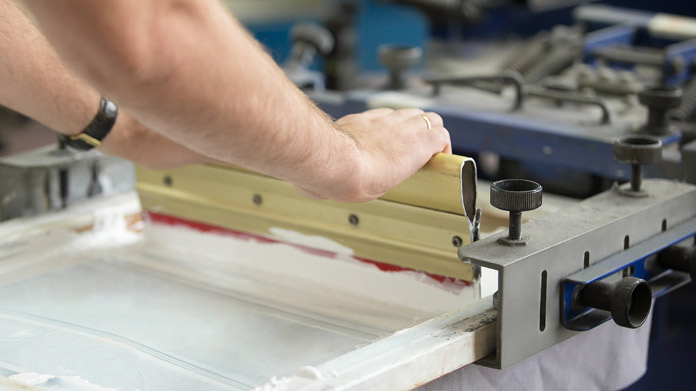
A screen printing business specializes in printing images on t-shirts or other items of clothing. There is flexibility to operate such a business completely online or via a traditional store. The store may also offer pre-set options for images and phrases as well as allowing customers to submit their own designs. The ability of such a store to create t-shirts for schools and businesses also provides a great way to build community spirit.
Our guide is in 3 parts:
It is relatively cheap to open a screen printing business. The specialized printer you need can typically costs $10,000 or less; the supplies you need to start, including many shirts to print on, can typically be obtained for less than $5,000. Such a business can be operated from your home, so there is no need to lease a separate space. Instead, you can spend about $500 to design a professional website, and about $5,000 on traditional advertising, including radio ads, newspaper ads, and a combination of fliers, business cards, and direct mail.
The ongoing expenses for this business are variable because you may have to order more materials in some months and fewer materials in other months. Generally, you will spend about two dollars per t-shirt, and about $1.50 per silk screen you create. If you buy pre-made silk screens, they cost about $25 a piece, and ink costs amount to about five cents per shirt. Beyond this—and the need to pay a hundred dollars or less per year to host your website—you don’t really have any ongoing expenses, as extra costs such as shipping are billed to the customer directly.
While people of all demographics buy screen printed t-shirts, your target market is typically males between the ages of 15 and 25. Such a demographic is more social and enjoys using custom t-shirts to express aspects of their interests and identity to new people that they meet.
A screen printing business makes money by selling individuals t-shirts and other items of clothing with preset or customized designs on them.
How much you charge customers varies based on many factors such as t-shirt colors, amount of shirts, and how quickly the customer needs them. For instance, you might charge nine dollars for printing a design on a single color shirt, but if the same customer orders a hundred or more, you may charge them as little as five or six dollars. For someone ordering a shirt with six colors, you’d likely charge between twelve and fourteen dollars for the shirt or as low as eight dollars if they are buying in bulk.
The amount of profit you can make is completely dependent on how many customers and orders you get per year. Some successful screen printers make $100,000 a year or more by amassing large numbers of clients that need to regularly order shirts in bulk. Realistically, your profits will be smaller to start with, although the ability to do this business from home means that you can start it as a second job and build your brand and reputation before making this your sole form of income.
Most of your customers will order from you online, so consider investing in some form of software to help you monitor customer data and email them about your latest products and deals. Try to offer a large variety of clothing options—while every screenprinter sells t-shirts, you may be able to sell things like hoodies and tank tops that the competition simply doesn’t have. Finally, keep detailed records of what is selling well and what is not, and use each quarter to refocus your business on giving your customers more of what they want.
The daily activities of a screen printing business are pretty straightforward: much of your time is spent communicating with existing customers, advertising to prospective customers, and finalizing designs for shirts. Beyond this, your time is spent buying and receiving raw materials, printing designs on shirts, and delivering them to your customers.
Skills in Photoshop and other image manipulation software will be invaluable in starting your business. Similarly, previous experience printing your own t-shirt designs for friends and family is a major help before doing so professionally. Photography experience can also be useful because there are some parallel skills, including working in specialized dark rooms.
The growth potential for such a business is modest, with the industry growing nearly two percent between 2011 and 2016. It is worth noting that the increasing popularity of buying custom products online through sites such as Etsy gives you more venues to find customers.
Try to quickly identify a target market and create a specialty product for that market. Be sure to give yourself ample time to learn how to operate the machinery and develop shirts in short amounts before doing it full time. Finally, don’t forget to attach tags to the shirts you sell—this serves as an additional way to build your brand and advertise your products.
Because many screen printing businesses are run from people’s homes, it is unlikely you will need a team such as a formal retail team. However, you may want to partner with gifted artists in order to offer a greater diversity of designs for your products. If you do so, you should wait until after the first year (at minimum) to ensure there is enough demand to warrant expanding your team and splitting your profits.
Business Evaluation & Strategy Tool
We'll walk you through the four pillars every business needs: Points of Leverage, Marketing Strategy, Financial Model, and Personal Compatibility. At the end you'll see a personalized report and your action plan below will be tailored to your answers.
Every viable business has natural advantages. Below are common leverage points across four categories. Pick the ones that apply to your Screenprinting business. We've pre-suggested a few based on your idea — review and adjust.
Without a way to connect with customers, even great businesses fail. Pick the channels you plan to use to reach your customers.
Enter your monthly baseline costs — the minimum overhead to keep the business running. Then we'll calculate how many sales per month you need to break even.
A business that doesn't fit your life will fail no matter how good the numbers look. Tell us how this business fits you.
Complete the four pillars and your personalized summary will appear here.
Nine concrete steps to take you from idea to open business, grouped into 30-day phases. Complete the planner above and we'll highlight what's most important for your situation.
An LLC keeps your personal assets separate from business debts and lawsuits — the most common reason small business owners choose this structure. Sole proprietorships and partnerships do not provide this protection.
Apply for your free Employer Identification Number through the IRS, then register for any state or local taxes that apply to your business (sales tax, franchise tax).
A dedicated business account is required to maintain personal asset protection. Mixing personal and business finances ('piercing the corporate veil') can void your LLC's liability shield.
Recording expenses and income from day one makes tax filing easier and lets you see when the business is actually profitable. Use software (QuickBooks, Wave) or a part-time bookkeeper.
State and local requirements vary widely. Brick-and-mortar businesses typically need a Certificate of Occupancy; service businesses may need specific professional licensing; food businesses need health permits.
General Liability Insurance is the most common starting point. If you'll have employees, most states require Workers' Compensation. Specific industries need additional coverage (product liability, professional liability, etc.).
Your brand is how customers perceive and remember you. A clear name, logo, and visual identity make every later marketing decision easier and protect you legally as you grow.
Every legitimate business needs a website. Social media pages are not a substitute — you don't own the platform. Modern website builders mean you can launch a clean site in a weekend without a developer.
A dedicated business number keeps your personal life private, makes the business look legitimate, and lets you route calls professionally. Cloud phone services start under $20/month.
Starting a Screenprinting business typically costs $10,000 to $15,000. It is considered a medium capital-intensity business.
A Screenprinting business runs roughly a 8% net profit margin, and most owners reach break-even in about 4 to 12 months.
You can usually launch a Screenprinting business in about 12 to 36 weeks, and it is commonly run flexible.
A Screenprinting business is generally an intermediate-skill business to start, with rising demand. TRUiC rates it 58 out of 100 on our Idea Score.
Most Screenprinting businesses register as an LLC or other legal entity and obtain a general business license. Depending on your state and city you may also need industry-specific permits, sales tax registration, and zoning or health approvals, so check your local requirements before you launch.