Startup cost
$10k–$50k
TRUiC Business Ideas
Decision Snapshot
Idea Score
67
Startup cost
$10k–$50k
Profit margin
25%
Break-even
4 mo–12 mo
Time to launch
12 wk–36 wk
Demand trend
Stable
5-yr failure rate
—
Capital intensity
High
Time commitment
Flexible
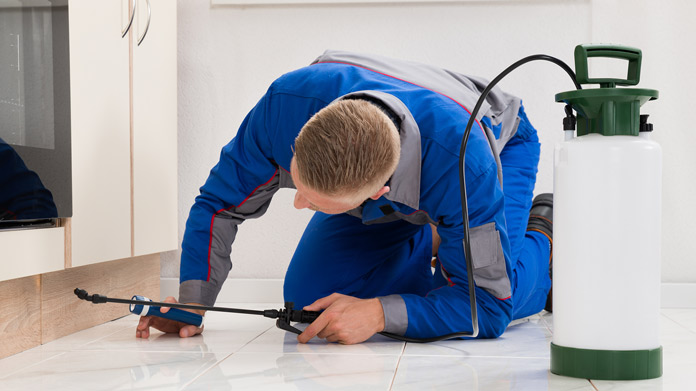
Just about every building has bugs or rodents of some sort. Pest control businesses eliminate or significantly reduce the presence of these pests with chemicals and other treatments. Pest control businesses treat homes, businesses, schools, government buildings and structures of other varieties.
Our guide is in 3 parts:
Pest control businesses have myriad costs ranging from equipment costs to labor costs, office costs, insurance costs, monthly rent and vehicle expenses. It is also necessary to license, register and insure the business.
Ongoing expenses include office rent, utilities for the office, labor costs, marketing costs, equipment costs, insurance costs and marketing expenses. Expect to spend a couple hundred dollars on marketing each month when the business is in its infancy. This figure can reach a thousand dollars or more per month when the business has matured. In terms of labor, a secretary will cost $10-$15 per hour. Exterminators will likely earn between $15 and $25 per hour. If you hire a marketing professional, he will command a salary in the range of $30,000 to $50,000 per year. The same salary range will apply to your business’s accountant.
If you do not purchase property for your office, your monthly rent will likely be between $600 and $1,200 depending on your location and the size of the facility. Office utilities will likely run between $75 and $200 per month. High-speed Internet will likely cost $50 per month. Equipment is a major expense. Your business needs trucks to transport the equipment and the chemicals required to send pests scurrying away. A single truck will cost at least $20,000 when purchased new. Gear like sprayers, bait guns, vacuums, safety equipment and fogging equipment will cost thousands of dollars. As an example, a single gallon foamer typically costs about $200. A single gallon sprayer usually runs $250. A respirator will likely cost about $100.
The ideal customer is a property owner who owns several buildings. Examples of such business owners include rental property owners, businessmen who own several commercial properties and government agencies with numerous offices. Those who own large properties are favored over those who own diminutive buildings as a higher rate can be charged for additional square footage.
Pest control businesses make money by charging clients for pest removal services. Many clients elect to have their property sprayed with pest removal chemicals several times per year. Some are content with having their property treated only when pests rear their ugly heads.
The typical one-time treatment costs between $250 and $550. You can charge around $1,000 to treat a massive infestation of termites. You can charge $100 to $200 to remove a single animal such as a mouse. Many customers opt for monthly, bi-annual or yearly treatments of the exterior of their property. You can charge $100 to $150 or more for these fairly superficial treatments. The cost of the treatment largely depends on the size of the property and the extent of the infestation. Particularly large properties and properties with a deeply rooted infestation are opportunities for pest control experts to charge higher prices.
It is possible for a pest control business to make $50,000 to $75,000 in the first couple of years of operation. The profitability hinges on the company’s market, unique overhead costs and the number of clients. If the business expands across the region, profitability can jump to several hundred thousand dollars per year or even reach the six-figure range. A pest control company that goes nationwide can rake in millions of dollars per year.
The best way to boost profitability is to forge new relationships with property owners. Be sure to let customers know about your monthly, bi-annual and yearly exterior and interior sprayings to prevent the return of pests. Oftentimes, current customers will pay for these add-on services to reduce the odds of those nasty pests returning to their home, office or other building. You can also make money by selling old equipment to other pest removal companies when it is time to upgrade.
A pest control business owner’s daily activities include seeking new clients, marketing the company’s services, assessing infested sites, performing pest removal and educating customers about pest prevention tactics. Pest control business owners also manage employees, handle logistics matters, purchase pest removal equipment and maintain equipment.
Pest control business owners must have knowledge of insects, rodents and other animals that find their way into homes, businesses and other structures. These businessmen will likely start out performing pest removals on their own so they should not be uneasy around unsavory critters hiding in homes and offices. Furthermore, the entrepreneur should have a knack for marketing and have rock-solid interpersonal skills. The success of the business partially hinges on the owner’s ability to establish connections with new customers and generate a rapport with prospects.
A successful pest control business has the potential to become a regional business and eventually a national business. Initial growth occurs in one’s local area. If the business develops a solid reputation, additional opportunities for pest removal will pop up as time progresses. If costs are kept low, the business can expand throughout the area, open up new offices, hire additional employees and expand far and wide.
It is prudent to pass through an apprenticeship with an experienced pest removal expert before attempting to launch a pest control enterprise. This is not the type of business a layman can launch and turn into a million dollar enterprise. Perform extensive research about the best pest removal tactics and the latest pest removal products and technologies. Keep in mind that competitors have access to the same equipment, chemicals and resources. Your personality, cordiality, price and brand recognition must separate you from the pack.
Though you can operate your pest control business on your own for the first weeks and months, a team will eventually be necessary. It is prudent to hire a secretary to field phone calls, schedule consultations/pest removal projects, answer prospects’ questions and address concerns. Though you can perform pest removal services on your own when the business is first launched, you will likely have to hire exterminators as you add clients in the following months and years. You will also have to add a marketing professional and accountant as the business grows.
Business Evaluation & Strategy Tool
We'll walk you through the four pillars every business needs: Points of Leverage, Marketing Strategy, Financial Model, and Personal Compatibility. At the end you'll see a personalized report and your action plan below will be tailored to your answers.
Every viable business has natural advantages. Below are common leverage points across four categories. Pick the ones that apply to your Pest Control business. We've pre-suggested a few based on your idea — review and adjust.
Without a way to connect with customers, even great businesses fail. Pick the channels you plan to use to reach your customers.
Enter your monthly baseline costs — the minimum overhead to keep the business running. Then we'll calculate how many sales per month you need to break even.
A business that doesn't fit your life will fail no matter how good the numbers look. Tell us how this business fits you.
Complete the four pillars and your personalized summary will appear here.
Nine concrete steps to take you from idea to open business, grouped into 30-day phases. Complete the planner above and we'll highlight what's most important for your situation.
An LLC keeps your personal assets separate from business debts and lawsuits — the most common reason small business owners choose this structure. Sole proprietorships and partnerships do not provide this protection.
Apply for your free Employer Identification Number through the IRS, then register for any state or local taxes that apply to your business (sales tax, franchise tax).
A dedicated business account is required to maintain personal asset protection. Mixing personal and business finances ('piercing the corporate veil') can void your LLC's liability shield.
Recording expenses and income from day one makes tax filing easier and lets you see when the business is actually profitable. Use software (QuickBooks, Wave) or a part-time bookkeeper.
State and local requirements vary widely. Brick-and-mortar businesses typically need a Certificate of Occupancy; service businesses may need specific professional licensing; food businesses need health permits.
General Liability Insurance is the most common starting point. If you'll have employees, most states require Workers' Compensation. Specific industries need additional coverage (product liability, professional liability, etc.).
Your brand is how customers perceive and remember you. A clear name, logo, and visual identity make every later marketing decision easier and protect you legally as you grow.
Every legitimate business needs a website. Social media pages are not a substitute — you don't own the platform. Modern website builders mean you can launch a clean site in a weekend without a developer.
A dedicated business number keeps your personal life private, makes the business look legitimate, and lets you route calls professionally. Cloud phone services start under $20/month.
Starting a Pest Control business typically costs $10,000 to $50,000. It is considered a high capital-intensity business.
A Pest Control business runs roughly a 25% net profit margin, and most owners reach break-even in about 4 to 12 months.
You can usually launch a Pest Control business in about 12 to 36 weeks, and it is commonly run flexible.
A Pest Control business is generally an intermediate-skill business to start, with stable demand. TRUiC rates it 67 out of 100 on our Idea Score.
Most Pest Control businesses register as an LLC or other legal entity and obtain a general business license. Depending on your state and city you may also need industry-specific permits, sales tax registration, and zoning or health approvals, so check your local requirements before you launch.