Startup cost
$7k–$17k
TRUiC Business Ideas
Decision Snapshot
Idea Score
47
Startup cost
$7k–$17k
Profit margin
3%
Break-even
4 mo–12 mo
Time to launch
12 wk–36 wk
Demand trend
Stable
5-yr failure rate
—
Capital intensity
Medium
Time commitment
Full time
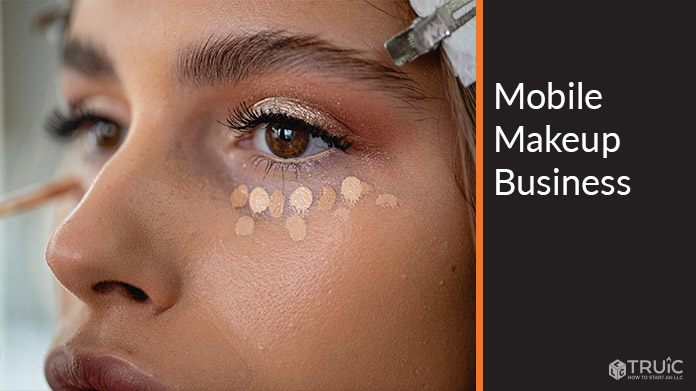
A mobile makeup business provides beauty services and products to its customers. Unlike makeup artists working out of a salon, mobile artists travel, bringing their tools and talents to their clients. They work out of residences, theaters, businesses, and production sites. Some mobile makeup businesses work exclusively with one brand, traveling across the country helping to market the brand’s products.
Our guide is in 3 parts:
If you do not have professional training, start there. Makeup school costs between $7,000 and $17,000, depending on what school you attend. The school you settle on should:
While education can be expensive, it will lay the foundation for your career and is your most valuable startup cost. After that, you’ll just need to make a few more investments.
The total cost for these items vary, but you can expect to spend between $500 and $1,500. Since each job will be at a different location, make sure you have reliable transportation and a business credit card that offers rewards for frequent travelers.
Once you’ve made your initial investment in makeup, your business expenses will remain low. Depending on the type of work you do, you’ll spend $150 to $300 per month on makeup and supplies. Your marketing budget should cost $175 or less. Be sure to include a line on your expense budget for insurance and travel expenses.
Mobile makeup businesses have a large pool of potential clients to choose from. While you do not have to pigeonhole yourself into one niche, starting out with one focus will help you sharpen your skills. Potential target markets for makeup artists include:
There are two things to consider when defining your target market. What type of work excites you the most? Where are your services most needed?
Mobile makeup artists make money by collecting a fee for their makeup services. Many businesses increase profits by selling makeup and supplies.
Pricing for your services will vary significantly from one project to the next. If you’re performing makeovers, session prices should be $40-$50. Some artists charge by the hour for their bridal services, while others offer bridal packages based on the client’s individual needs. If you plan to work on a movie set or photoshoot, your pricing will be significantly higher.
Your prices should match your skill level, time, and overhead expenses. Prices for projects requiring air travel should reflect travel expenses.
Business profits are directly tied to the type and number of projects you’re involved in each month. For example, let’s say your niche is makeovers. If you charge an average of $50 per makeover and perform 30 makeovers each week, you’ll bring in an average of $1,500/week.
To maximize profits, expand your business services. Rather than working as the sole employee, consider expanding your team to include other beauty services. Your team could also include members that focus on different niches within the industry. Just make sure each team member is trained, certified, and that their work positively represents your business’s brand.
As a mobile makeup artist, no two days will look exactly the same. One day, you’re working on location at a photo shoot, the next day you’re making sure the bride looks perfect on her wedding day.
When you aren’t traveling and providing makeup services, you’ll focus your energies on managing and growing the business. These tasks include marketing, website management, responding to emails/phone calls, and researching the latest makeup trends. Since a portfolio is a critical component of your marketing strategy, you’ll need to update and tweak it regularly.
Your business’s success is contingent on your skills as a makeup artist. Most artists have received formal training and are certified as a makeup artist (MUA). Some states require certification, while others do not.
Most mobile makeup artists work in the industry prior to venturing out on their own. This provides real-world experience and offers insight into the type of clients you wish to serve.
To ensure your business’s long-term success, you’ll need to be more than a good makeup artist. This industry serves clients from all backgrounds and with varying makeup needs. It’s important that you have strong customer service skills. This means being a good listener and communicator. Successful makeup artists have strong work ethics and communicate with confidence and respectful assertiveness. You will often run into unexpected challenges, so patience and flexibility are also important.
The global beauty industry reached over $483 billion in 2020, with those numbers expected to almost double by 2027. Demand for makeup services is high. Talented, driven artists have the potential to grow their business on a global scale. The only limitations are those you impose on yourself.
The most successful mobile makeup business owners are in a constant state of learning. They remain abreast of the latest makeup trends and work tirelessly to improve and develop their skills.
While it might be tempting to accept every job that comes your way, industry leaders caution against this. The beauty of being your own boss is that you set your own schedule. Take ownership of your career and only accept jobs that inspire and excite you.
Building your reputation will take time; do not expect it to happen overnight. Upon launching the business, consider dabbling in all areas of the industry. Offer your services for free or volunteer as an assistant for projects that interest you. This will provide insight into what type of makeup you’re more passionate about and will help in making important industry connections.
Joining industry associations is another effective business tool. You’ll make valuable connections, learn about industry events, and gain access to tools that can help kickstart your new business. Be sure to check out local professional beauty associations in order to build your network.
Many mobile makeup artists work alone. However, as your brand starts to gain traction, you might want to hire an assistant to help ensure each job runs smoothly. Consider hiring a makeup student for this position. If your vision for your business includes taking on additional artists, this is a great way to hire team members who will accurately represent your brand.
Business Evaluation & Strategy Tool
We'll walk you through the four pillars every business needs: Points of Leverage, Marketing Strategy, Financial Model, and Personal Compatibility. At the end you'll see a personalized report and your action plan below will be tailored to your answers.
Every viable business has natural advantages. Below are common leverage points across four categories. Pick the ones that apply to your Mobile Makeup business. We've pre-suggested a few based on your idea — review and adjust.
Without a way to connect with customers, even great businesses fail. Pick the channels you plan to use to reach your customers.
Enter your monthly baseline costs — the minimum overhead to keep the business running. Then we'll calculate how many sales per month you need to break even.
A business that doesn't fit your life will fail no matter how good the numbers look. Tell us how this business fits you.
Complete the four pillars and your personalized summary will appear here.
Nine concrete steps to take you from idea to open business, grouped into 30-day phases. Complete the planner above and we'll highlight what's most important for your situation.
An LLC keeps your personal assets separate from business debts and lawsuits — the most common reason small business owners choose this structure. Sole proprietorships and partnerships do not provide this protection.
Apply for your free Employer Identification Number through the IRS, then register for any state or local taxes that apply to your business (sales tax, franchise tax).
A dedicated business account is required to maintain personal asset protection. Mixing personal and business finances ('piercing the corporate veil') can void your LLC's liability shield.
Recording expenses and income from day one makes tax filing easier and lets you see when the business is actually profitable. Use software (QuickBooks, Wave) or a part-time bookkeeper.
State and local requirements vary widely. Brick-and-mortar businesses typically need a Certificate of Occupancy; service businesses may need specific professional licensing; food businesses need health permits.
General Liability Insurance is the most common starting point. If you'll have employees, most states require Workers' Compensation. Specific industries need additional coverage (product liability, professional liability, etc.).
Your brand is how customers perceive and remember you. A clear name, logo, and visual identity make every later marketing decision easier and protect you legally as you grow.
Every legitimate business needs a website. Social media pages are not a substitute — you don't own the platform. Modern website builders mean you can launch a clean site in a weekend without a developer.
A dedicated business number keeps your personal life private, makes the business look legitimate, and lets you route calls professionally. Cloud phone services start under $20/month.
Starting a Mobile Makeup business typically costs $7,000 to $17,000. It is considered a medium capital-intensity business.
A Mobile Makeup business runs roughly a 3% net profit margin, and most owners reach break-even in about 4 to 12 months.
You can usually launch a Mobile Makeup business in about 12 to 36 weeks, and it is commonly run full time.
A Mobile Makeup business is generally an intermediate-skill business to start, with stable demand. TRUiC rates it 47 out of 100 on our Idea Score.
Most Mobile Makeup businesses register as an LLC or other legal entity and obtain a general business license. Depending on your state and city you may also need industry-specific permits, sales tax registration, and zoning or health approvals, so check your local requirements before you launch.