Startup cost
$250k
TRUiC Business Ideas
Decision Snapshot
Idea Score
38
Startup cost
$250k
Profit margin
3%
Break-even
18 mo–36 mo
Time to launch
12 wk–36 wk
Demand trend
Stable
5-yr failure rate
—
Capital intensity
Very high
Time commitment
Full time
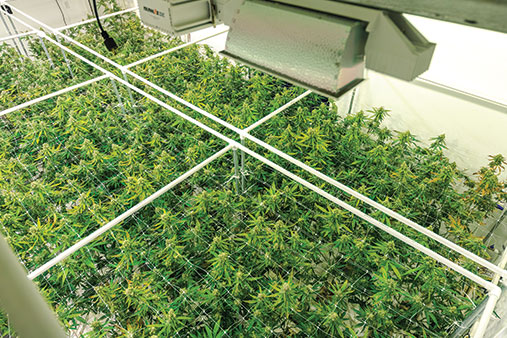
Over the last several years, an increasing number of states have voted to legalize and/or decriminalize cannabis, with several opting to make it fully legal. A mobile grow op, also known as “a marijuana grow room,” grows this legal cannabis in a facility, which handles everything from germination and trimming to processing and distribution.
Our guide is in 3 parts:
Because there is a lot to consider when setting up a grow op, a well thought-out business plan is advisable. Once you have determined the scope of your business, you will need to submit a state application for licensure. Application fees range from $150 to $20,000, with an average of $5,000. Most states require proof of a minimum of $250,000 in liquid capital.
As a mobile grow op, your business’ crop will be grown in an indoor space. Whether you choose to rent or purchase a facility, the space should provide an environment that ensures proper lighting, ventilation, water, and nutrients. Recent studies indicate indoor grow spaces average $75 per square foot.
Additional startup purchases include:
Permits and contractor expenses for facility buildout
Climate control and ventilation systems
Lighting
Plumbing fixtures
Proper soil and/or hydroponic equipment
Employee training
Waste removal system
Packaging and transport
Security
Legal fees
Insurance
This article is an excellent resource for calculating your lighting and insulation needs.
Ongoing expenses for an indoor cannabis grow facility are higher than you might expect. In addition to high taxes and lack of write-offs, you will need to consider costs such as business licensing fees, insurance, payroll, equipment maintenance, security, rent, cleaning, and utilities. In fact, one northwest power company suggests the average grow facility consumes between 2,000 and 3,000 kilowatt hours of energy per pound of product.
Some grow ops choose to include dispensaries as part of their business plan, while others stick to growing and distribution. Regardless of which path you take, your mobile grow op’s target market is anyone who purchases cannabis, whether for medical or recreational use.
As a mobile grow op, your customers will be the dispensaries you have partnered with. They act as the middleman, selling your business’ cannabis to consumers.
According to a Confident Cannabis study, wholesale flower prices average anywhere from $1,000 to $2,000 depending upon quality and location. Perhaps you could expand this paragraph by mentioning other products that can be produced, such as CBD preparations, concentrates, and edibles, along with pricing.
The average producer yields a profit of over $1 million annually, with top producers reaching profits of over $200 million.
With high start-up and ongoing expenses, entrepreneurs looking to maximize profits are encouraged to invest in money-saving strategies at the organization’s inception. Industry leaders have found success through solar power, closed-circuit desalination (CCD), reverse osmosis water systems, rainwater collection and storage, and energy-efficient facilities.
To ensure healthy crops, the facility’s plants and all grow equipment will need to be checked daily. The success rate of each strain should be analyzed and additional strains considered. When ready, the crops are harvested, trimmed, tested, and packaged for distribution.
While the health of your business’ crops is critical, there is much more that needs to be done to ensure success. Because cannabis is heavily taxed and regulated, industry participants must communicate regularly with state and local representatives, growers across the states, marketing representatives, suppliers, and vendors.
Most entrepreneurs who enter this industry do so because they have a true passion for the plant and its benefits. They possess extensive knowledge on the subject and genuinely enjoy educating others. As a mobile grow op business owner, you will need to be well versed in all aspects of the growing process. Experience with lighting, as well as exhaust and watering systems is also critical to your crop’s success. Additionally, this niche business requires general advertising and business knowledge. Successful entrepreneurs spanning every industry have one thing in common – they recognize their strengths and weaknesses and surround themselves with a strong team of support.
Already a multi-billion dollar industry, the legal cannabis industry has created over 300,000 jobs. While still in its infancy stages, this rapid growth is expected to continue, with an estimated worth of $26.3 billion by 2025. As more states opt to legalize marijuana, the growth potential for mobile grow ops is significant.
Because this is a highly regulated industry, with specifics varying from state to state, industry leaders reiterate the importance of a well-rounded, thought-out business plan. Entrepreneurs are encouraged to be well-funded, aiming for more liquid capital than is required by the state. This not only increases your chances for success, it helps solidify your application.
Unlike many new small businesses, you will require an educated and passionate team to support you. The first to join your team should be an attorney who understands both state and federal cannabis laws. Visit the National Organization for the Reform of Marijuana Laws (NORML) database for a list of cannabis lawyers in the United States.
As part of the application process, the state will require that you show proof that your team consists of reputable, quality individuals who are dedicated to serving the community. New business owners are encouraged to consider hiring physicians, engineers, horticulturists, security experts, and administrators whose knowledge and experience can help fill in your knowledge gaps.
Business Evaluation & Strategy Tool
We'll walk you through the four pillars every business needs: Points of Leverage, Marketing Strategy, Financial Model, and Personal Compatibility. At the end you'll see a personalized report and your action plan below will be tailored to your answers.
Every viable business has natural advantages. Below are common leverage points across four categories. Pick the ones that apply to your Mobile Grow Op business. We've pre-suggested a few based on your idea — review and adjust.
Without a way to connect with customers, even great businesses fail. Pick the channels you plan to use to reach your customers.
Enter your monthly baseline costs — the minimum overhead to keep the business running. Then we'll calculate how many sales per month you need to break even.
A business that doesn't fit your life will fail no matter how good the numbers look. Tell us how this business fits you.
Complete the four pillars and your personalized summary will appear here.
Nine concrete steps to take you from idea to open business, grouped into 30-day phases. Complete the planner above and we'll highlight what's most important for your situation.
An LLC keeps your personal assets separate from business debts and lawsuits — the most common reason small business owners choose this structure. Sole proprietorships and partnerships do not provide this protection.
Apply for your free Employer Identification Number through the IRS, then register for any state or local taxes that apply to your business (sales tax, franchise tax).
A dedicated business account is required to maintain personal asset protection. Mixing personal and business finances ('piercing the corporate veil') can void your LLC's liability shield.
Recording expenses and income from day one makes tax filing easier and lets you see when the business is actually profitable. Use software (QuickBooks, Wave) or a part-time bookkeeper.
State and local requirements vary widely. Brick-and-mortar businesses typically need a Certificate of Occupancy; service businesses may need specific professional licensing; food businesses need health permits.
General Liability Insurance is the most common starting point. If you'll have employees, most states require Workers' Compensation. Specific industries need additional coverage (product liability, professional liability, etc.).
Your brand is how customers perceive and remember you. A clear name, logo, and visual identity make every later marketing decision easier and protect you legally as you grow.
Every legitimate business needs a website. Social media pages are not a substitute — you don't own the platform. Modern website builders mean you can launch a clean site in a weekend without a developer.
A dedicated business number keeps your personal life private, makes the business look legitimate, and lets you route calls professionally. Cloud phone services start under $20/month.
Starting a Mobile Grow Op business typically costs $250,000. It is considered a very high capital-intensity business.
A Mobile Grow Op business runs roughly a 3% net profit margin, and most owners reach break-even in about 18 to 36 months.
You can usually launch a Mobile Grow Op business in about 12 to 36 weeks, and it is commonly run full time.
A Mobile Grow Op business is generally an intermediate-skill business to start, with stable demand. TRUiC rates it 38 out of 100 on our Idea Score.
Most Mobile Grow Op businesses register as an LLC or other legal entity and obtain a general business license. Depending on your state and city you may also need industry-specific permits, sales tax registration, and zoning or health approvals, so check your local requirements before you launch.