Startup cost
$250k–$750k
TRUiC Business Ideas
Decision Snapshot
Idea Score
50
Startup cost
$250k–$750k
Profit margin
36%
Break-even
18 mo–36 mo
Time to launch
12 wk–36 wk
Demand trend
Stable
5-yr failure rate
—
Capital intensity
Very high
Time commitment
Full time
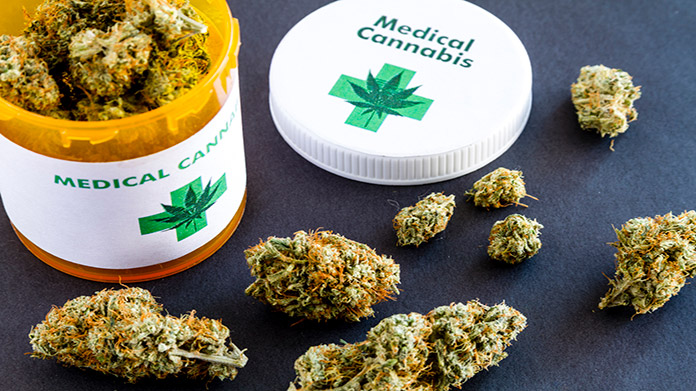
Medical marijuana dispensaries legally purchase marijuana from vendors and sell it to physician-approved patients. Dispensaries have a physician on the board of directors to ensure that patient treatment adheres to standard accepted practices. They also have highly trained staff who are continually educated about the many different strains and forms of cannabis and their medicinal purposes. Those forms include vapor, tinctures, balms, oils, juices, and edibles. A medical marijuana dispensary provides patients with an alternative to pain-killers and other drugs that can have harmful side effects when used long-term.
Our guide is in 3 parts:
Obtaining a business license is one of the most substantial startup costs of opening a medical marijuana dispensary. In most states where medical cannabis businesses are legal, the cost for an application for a license is $5,000. However, the cost varies from state to state, as does the minimum requirement for startup capital, which can be as high as $250,000. If you plan to grow your own product, additional grower’s license fees are required. Other common startup costs include:
Monthly rent, including a security deposit (for those who don’t own commercially zoned property)
Initial inventory (some growers are willing to accept a percentage of sales in lieu of a complete initial payment)
Display cases, bottles and jars
Office supplies
Security system
Signs that display your company name and logo to create brand recognition
Ongoing expenses to maintain a medical marijuana dispensary may include:
The cost of purchasing the product from growers
Rent and utilities
Staff salaries
Advertising and sales promotions
Clients and customers are all patients who have been referred by a physician who has prescribed cannabis as a medical treatment for an existing condition.
A medical marijuana dispensary makes money by selling cannabis products for medicinal purposes. Some dispensaries grow their own product to increase profits while others purchase the product from professional licensed growers and resell it at a higher price. Many also make money through the retail sale of pipes and vaporizers purchased in bulk at wholesale prices.
Customers are charged according to the quality and quantity of the product. The average cost of an ounce of medical marijuana is $200. However, high-grade organic medical marijuana can cost as much as $60 per gram. That does not include any state tax. Edibles such as cookies or brownies can sell from between $2 and $5 per single dose. Tinctures are priced from $15 to $50, depending on the strength.
According to Forbes, established businesses can earn up to 50% profits, while new ones commonly earn about 20%. Annual sales figures are not yet available since the medical marijuana dispensary industry is new and still illegal in some states. It is still considered high-risk due to the discrepancies between state and federal laws.
Many medical marijuana dispensaries offer a variety of foods containing medicinal marijuana. Brownies, cookies, and other edibles have become extremely popular, and customers are willing to pay more for the extra time, effort and ingredients needed to make them. Some dispensary owners also grow their own product, which results in fewer expenditures and higher profits. Many dispensaries also sell accessory products, such as pipes and vaporizers, which sell for prices ranging from $20 to $700.
Keeping abreast of federal and state laws and new legislation affecting the industry
Learning about the medicinal properties of existing strains of cannabis as well as those of new strains currently under development
Negotiating prices with growers and ordering products
Educating and training staff members
Communicating with patients about their needs and the effectiveness of your products in meeting them
Knowledge of the medicinal properties of cannabis
Negotiation skills for contracting the best prices from growers
Interpersonal skills for communicating with patients about their needs and experiences with your products
Managerial skills for training and supervising staff
Accounting skills
Advertising and promotional skills for competing successfully within the industry
A new report by a research firm revealed that legal cannabis sales rose 17% in 2015 to $5.4 billion and predicted that it would grow another 25% in 2016. Profits for individual dispensaries vary greatly. According to a recent industry survey, almost 60% of owners earn less than $500,000 annually. 27% of respondents reported sales between $100,000 and $250,000, and 15% reported earning less than $100,000. A little over 25% reported revenues of over $1 million, and 15% reported between $500,000 and $1 million.
It’s important to have a team in place before opening your business. At a minimum, the team should include a physician, growers, a knowledgeable and well-trained sales staff, and adequate security personnel. Other team members may include investors, accountants, and additional personnel for tracking inventory, website maintenance and secretarial duties.
Business Evaluation & Strategy Tool
We'll walk you through the four pillars every business needs: Points of Leverage, Marketing Strategy, Financial Model, and Personal Compatibility. At the end you'll see a personalized report and your action plan below will be tailored to your answers.
Every viable business has natural advantages. Below are common leverage points across four categories. Pick the ones that apply to your Medical Marijuana Dispensary business. We've pre-suggested a few based on your idea — review and adjust.
Without a way to connect with customers, even great businesses fail. Pick the channels you plan to use to reach your customers.
Enter your monthly baseline costs — the minimum overhead to keep the business running. Then we'll calculate how many sales per month you need to break even.
A business that doesn't fit your life will fail no matter how good the numbers look. Tell us how this business fits you.
Complete the four pillars and your personalized summary will appear here.
Nine concrete steps to take you from idea to open business, grouped into 30-day phases. Complete the planner above and we'll highlight what's most important for your situation.
An LLC keeps your personal assets separate from business debts and lawsuits — the most common reason small business owners choose this structure. Sole proprietorships and partnerships do not provide this protection.
Apply for your free Employer Identification Number through the IRS, then register for any state or local taxes that apply to your business (sales tax, franchise tax).
A dedicated business account is required to maintain personal asset protection. Mixing personal and business finances ('piercing the corporate veil') can void your LLC's liability shield.
Recording expenses and income from day one makes tax filing easier and lets you see when the business is actually profitable. Use software (QuickBooks, Wave) or a part-time bookkeeper.
State and local requirements vary widely. Brick-and-mortar businesses typically need a Certificate of Occupancy; service businesses may need specific professional licensing; food businesses need health permits.
General Liability Insurance is the most common starting point. If you'll have employees, most states require Workers' Compensation. Specific industries need additional coverage (product liability, professional liability, etc.).
Your brand is how customers perceive and remember you. A clear name, logo, and visual identity make every later marketing decision easier and protect you legally as you grow.
Every legitimate business needs a website. Social media pages are not a substitute — you don't own the platform. Modern website builders mean you can launch a clean site in a weekend without a developer.
A dedicated business number keeps your personal life private, makes the business look legitimate, and lets you route calls professionally. Cloud phone services start under $20/month.
Starting a Medical Marijuana Dispensary business typically costs $250,000 to $750,000. It is considered a very high capital-intensity business.
A Medical Marijuana Dispensary business runs roughly a 36% net profit margin, and most owners reach break-even in about 18 to 36 months.
You can usually launch a Medical Marijuana Dispensary business in about 12 to 36 weeks, and it is commonly run full time.
A Medical Marijuana Dispensary business is generally an intermediate-skill business to start, with stable demand. TRUiC rates it 50 out of 100 on our Idea Score.
Most Medical Marijuana Dispensary businesses register as an LLC or other legal entity and obtain a general business license. Depending on your state and city you may also need industry-specific permits, sales tax registration, and zoning or health approvals, so check your local requirements before you launch.